POS Software for Restaurants: A Practical Buyer's Guide
Choosing POS software for restaurants is a decision you live with daily. This guide covers the types, the features that actually matter, the pitfalls that catch owners, and the questions to ask before you sign.
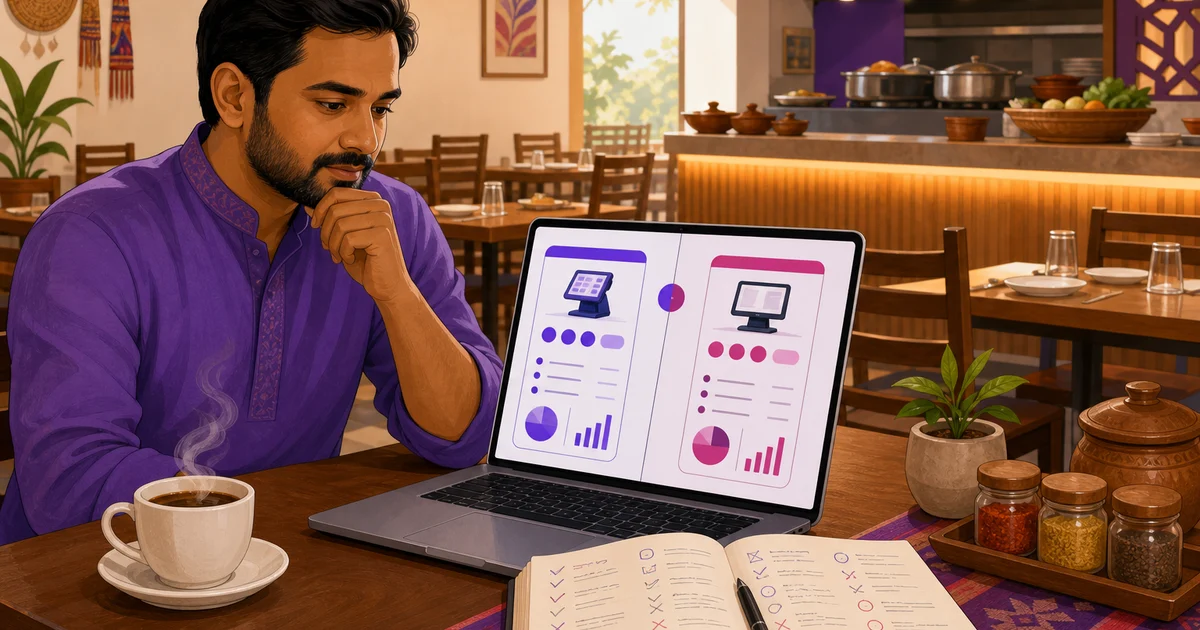
Picking POS software for restaurants is one of those decisions you only get to make every few years, and then you live with it through every dinner rush. The wrong choice slows your counter, hides your numbers and forces staff back to a paper copybook. The right one quietly runs orders, prices them correctly, feeds the kitchen and tells you what sold. This guide is for restaurant owners in Bangladesh who are evaluating options and want a clear way to compare them, free of sales spin.
We will walk through the types of POS software for restaurants, the features that genuinely matter, the pitfalls that trip up first-time buyers, and a short list of questions that will tell you more about a vendor than any brochure. We use Rosuii as the running example, described honestly for what it is.
Start with what POS software for restaurants is meant to do
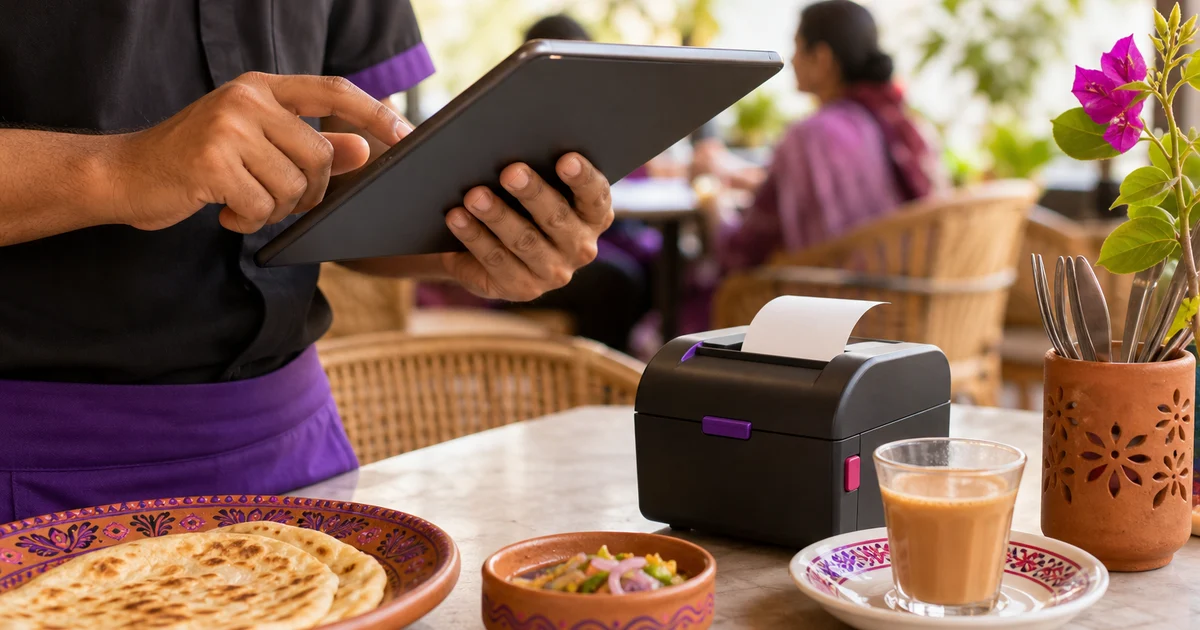
Before comparing brands, get clear on the job. A restaurant point-of-sale tool is the screen where staff build an order, but a real one reaches well past billing. It connects the counter, the kitchen, your menu, your payments and your reports into a single flow. A cashier taps in the order, fires it to the kitchen, takes a bKash payment, prints a receipt, and the sale lands in your reports without anyone writing it down. If you want the full concept first, our guide to the restaurant POS system covers the fundamentals, and our POS software hub maps out the wider category.
The types of POS software for restaurants
Most options fall into one of three shapes, and knowing which is which saves you a lot of confused vendor calls.
On-premise (legacy) POS
This is software installed on a specific PC behind your counter. It runs without internet, which some owners like, but your data lives on that one machine. Updates are manual and often paid, a second branch usually means a fresh licence, and a dead hard drive can wipe your records. The upfront licence can look cheap until the add-ons land.
Cloud POS
Cloud software runs through the internet and stores your data on secure servers. You log in from a phone, tablet or laptop, updates arrive automatically, adding a branch is a setting, and your data is backed up off-site. The old worry was that a cloud POS stops the moment the line drops, and that is the part Rosuii changed. Rosuii sits here: a cloud platform delivered as a browser app, so it installs like an app, and it keeps taking orders during an outage by caching your menu on the device and queuing each sale locally, then syncing automatically when the connection returns. Online-payment confirmation through bKash or Nagad and live multi-device updates still need a connection, so it keeps taking orders offline and catches up when you are back online, rather than running fully offline.
All-in-one restaurant platform
Some tools go beyond the till and fold in menu management, inventory, payroll, customer loyalty and your own online ordering page. For a growing restaurant this beats stitching three apps together. Rosuii is built this way, so the POS shares one set of menus, customers and reports with everything around it.
Must-have features in POS software for restaurants
Not every restaurant needs every feature, but this is the checklist that separates a real restaurant tool from a basic billing app.
- Dine-in, takeaway and delivery on one screen. Most kitchens serve all three at once. Staff should start any order type from the same place, assign a dine-in order to a table and waiter, and tag a delivery to a rider or marketplace without switching apps.
- Kitchen tickets and a kitchen display. When an order is confirmed, the line needs to know instantly. A kitchen order ticket should route to the right station and show on a kitchen display with items, notes and a timer so nothing sits forgotten.
- Real local payments. In Bangladesh that means bKash and Nagad, not just card. Cash should calculate change automatically. Rosuii has real, working bKash and Nagad integrations plus cash and cash on delivery; card is a placeholder for testing, so the rails your customers actually use are the ones that work.
- Controlled discounts, coupons and loyalty. Loose discounting at the counter eats profit. Pricing should follow a fixed order so the final figure is never guesswork.
- VAT and service charge. These must appear correctly on every bill and break out in reports, set once and applied automatically rather than typed in by hand.
- Clean receipts and printing. The tool should print an itemised receipt with your logo on the thermal sizes restaurants use. See our walkthrough on restaurant thermal printer setup if hardware is new to you.
- Reports and day close. This is where the software earns its fee. Sales, item sales, staff performance, expenses, a profit-and-loss view and a clean day-close total turn guesswork into figures you can act on.
- Bilingual Bangla and English. Your cashier, waiter and kitchen staff each work in the language they are comfortable in.
Common pitfalls when choosing
These are the mistakes that show up after the contract is signed, when they are hardest to undo.
- Buying for features you will never touch. A flashy demo full of modules a small café will never open is not a bargain. Match the tool to how you actually operate today.
- Ignoring the local fit. Software built for the United States or Europe often handles card beautifully and bKash not at all, prices in dollars, and bolts on tax as an afterthought. For a kitchen in Dhaka that is a daily headache.
- Underestimating total cost. The headline price is rarely the real one. Setup fees, per-branch charges, per-user charges, support contracts and forced hardware can double a tempting quote. We break the numbers down in our restaurant POS pricing in Bangladesh guide.
- Hardware lock-in. Being forced to buy a proprietary terminal ties you to one vendor and one repair shop. A browser-based tool runs on a phone, tablet or laptop you may already own.
- Skipping the offline question. If your area has unreliable internet, ask plainly how the tool behaves when the line drops. Many cloud tools simply stop; Rosuii keeps taking orders by caching the menu and queuing each sale on the device, then syncing automatically when the connection returns. Mobile-money payment confirmation still needs a connection, so most restaurants still pair broadband with a mobile-data backup.
- No clear owner of your data. Find out where your sales data lives and how you get it out. A tool that locks your history inside it is one you can never leave cleanly.
Questions to ask any POS vendor
A short, pointed list will tell you more than an hour of demo. Get written answers, not verbal promises, to these.
- Is this cloud or installed on one machine, and what happens to orders if my internet drops?
- Are bKash and Nagad real, working payment methods, and do I use my own gateway keys so the money reaches my account directly?
- Is there a setup or onboarding fee, and what does one extra branch and one extra user cost?
- Are updates and support included in the monthly price, or billed separately?
- Does it work fully in Bangla and English, across the counter, kitchen and reports?
- Can I export my sales and customer data anytime, in a usable format?
- Do I have to buy specific hardware, or does it run on devices I already own?
- How is VAT and service charge handled, and does it show clearly on the receipt?
If a vendor hedges on any of these, treat that as the answer. Good POS software for restaurants has nothing to hide on price, payments or data ownership.
Where Rosuii fits
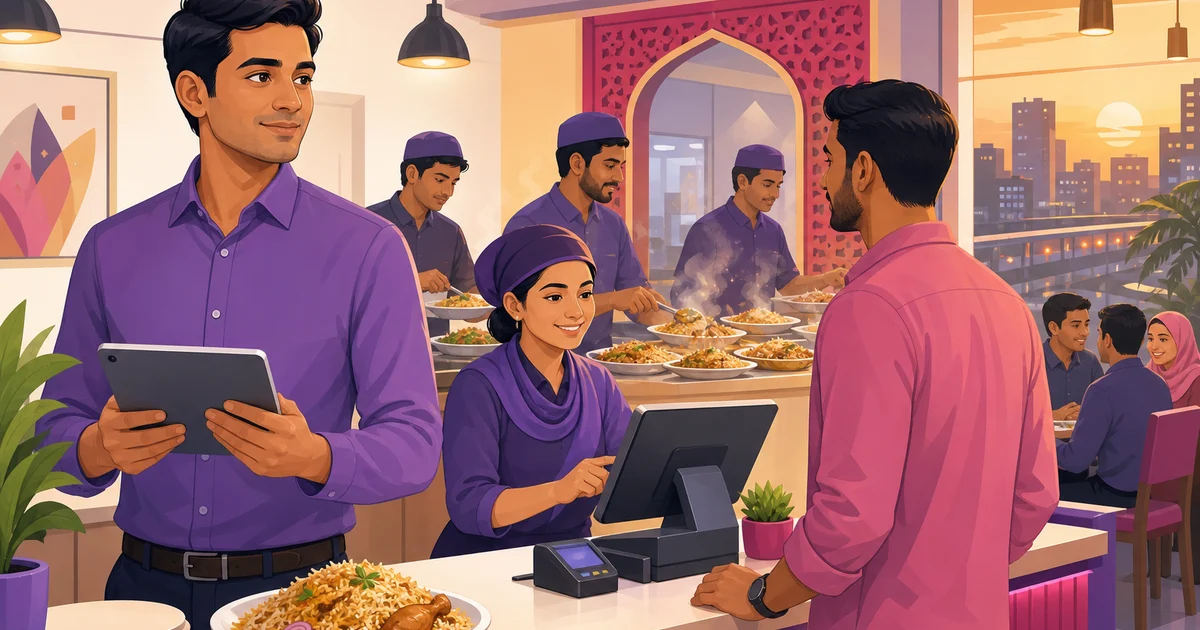
Rosuii is cloud POS software for restaurants built for Bangladesh. The POS handles dine-in, takeaway and delivery on one screen with table and waiter assignment, variations, add-ons and per-line notes, and prices every order on the server so a cashier cannot misprice it. It sends tickets to a kitchen display, takes cash, bKash and Nagad, applies VAT and service charge, and prints receipts in the sizes you need. Around the counter sit menu management, inventory, payroll, customer loyalty and your own online ordering page, with each restaurant on its own isolated database and branded subdomain. It runs in the browser on hardware you already own, free to start and then ৳500 to ৳2,500 a month with no setup fee. Browse the full set on the features page, and for a head-to-head with local options see our restaurant POS software overview.
Making the call
Work from your real needs, not a feature list. A single café wants fast billing, clean receipts and simple reports. A growing multi-branch kitchen wants kitchen displays, inventory, loyalty and one dashboard across locations. Whatever your size, hold firm on the Bangladesh essentials, real bKash and Nagad, Bangla and English, taka pricing and no hardware lock-in, and you will choose a tool that helps rather than fights you.
Want to test it against your own menu before deciding? Create your free Rosuii account and set up your POS, kitchen flow and online ordering in minutes.
Last updated:
Frequently asked questions
What should I look for first in POS software for restaurants?
Is cloud or on-premise POS software better for a restaurant?
How much does POS software for restaurants cost in Bangladesh?
What questions should I ask a POS vendor before buying?
Can POS software for restaurants run on a phone or tablet?
Run your restaurant on Rosuii
POS, menu, inventory, payroll and more — built for Bangladeshi restaurants.
Start free