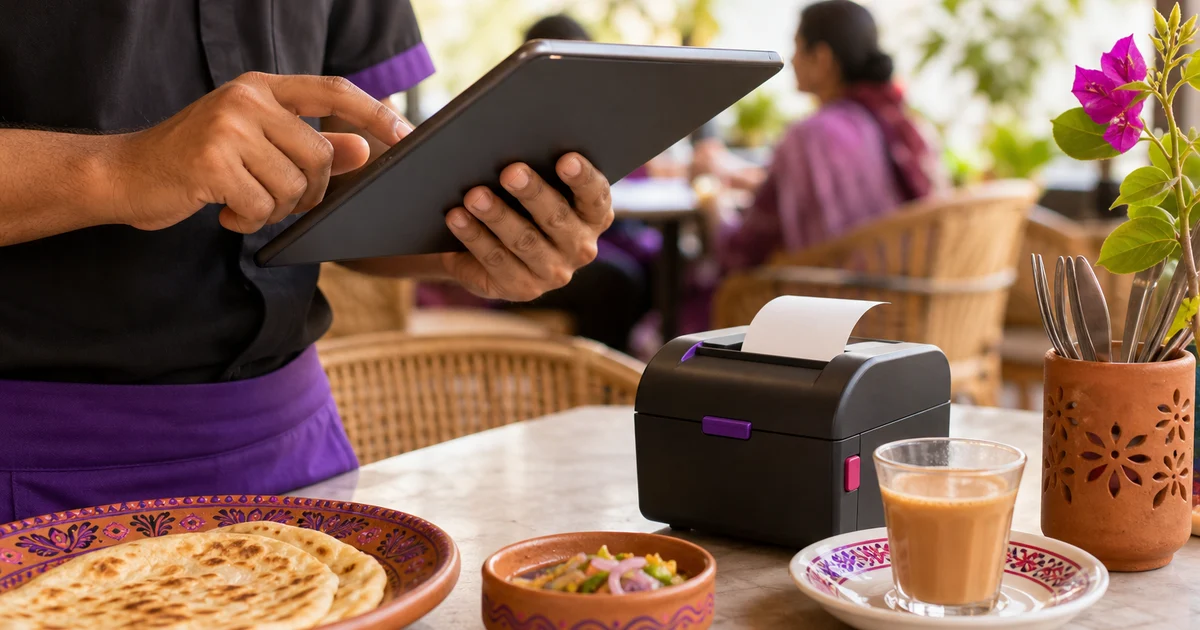
Restaurant KOT Error Tracking Sheet: Find Wrong Items, Delays and Remakes
A practical error log that turns wrong items, missing modifiers, delayed tickets and remakes into evidence and corrective action instead of blame.

Last verified: 2026-08-30
A restaurant KOT error tracking sheet should identify where an order first became wrong, not merely who noticed it last. A guest may receive the wrong dish because the order was entered incorrectly, the modifier was unclear, the ticket routed to the wrong station, the cook read it incorrectly, the expo combined the wrong plates or the bill was changed without a matching kitchen message.
Log the event quickly, resolve the guest first, preserve the order timeline and investigate patterns later. The purpose is to reduce repeat errors, food waste and delays. It is not to produce a league table that encourages staff to hide mistakes.
Copy-ready KOT error sheet
Record what the system and people actually show. Avoid labels such as careless or bad attitude in the factual description. A later review can identify a coaching or conduct issue after considering workload, equipment, menu design and instructions.
Protect customer data. The order ID is normally enough for analysis; personal contact details can remain in the authorised order system.
| Field group | Fields |
|---|---|
| Identity | Date, branch, shift, order ID, KOT ID, table/token and channel |
| Item | Item, quantity, variation, modifiers, note and station |
| Timeline | Order entry, send, acknowledge, start, ready, serve and error-found times |
| Error | Type, first incorrect stage, discovered by and factual description |
| Resolution | Stop, remake, replacement, refund/void, guest communication and approval |
| Impact | Delay minutes, discarded quantity, approved cost, revenue adjustment and complaint |
| Improvement | Root cause, action owner, due date, verification and recurrence |
Use a controlled error taxonomy
Choose the first incorrect stage as the primary category and record later detection separately. If a cashier entered the right modifier but the ticket printer omitted it, the root category is routing or configuration, not order entry.
| Error family | Examples |
|---|---|
| Order entry | Wrong item, quantity, variation, table or order type |
| Modifier communication | Missing allergy note, exclusion, add-on or doneness |
| Routing | No ticket, duplicate ticket, wrong station or printer/KDS offline |
| Production | Recipe, portion, cooking, sequence or quality error |
| Expo/handover | Wrong plate, incomplete order, token mismatch or rider handover |
| Billing mismatch | Kitchen change not reflected on bill or bill line with no valid production trail |
Resolve the live order before analysing it
Tell the kitchen clearly whether to stop, amend or remake. Confirm the new promised time and give the guest one responsible contact. Apply any refund, void or complimentary treatment through the authorised billing workflow rather than deleting the original line.
Link the replacement ticket to the original. Preserve the first KOT and amendment so the investigation can see what happened. If the error affects the customer bill or applicable VAT invoice, make the approved financial correction and keep the sales-record trail.
Sources for this section: NBR: 10 Responsibilities of Taxpayers
Measure rates with consistent denominators
Do not add the same order several times to the order error numerator. Keep item-level counts separately. Compare like periods: same branch, channel and similar volume. Small samples should show the raw count beside the percentage.
No universal acceptable rate is supplied. Establish a clean internal baseline and watch direction, severity and repeat causes.
| Measure | Formula |
|---|---|
| Order error rate | Orders with one or more confirmed errors ÷ completed orders × 100 |
| Item error rate | Incorrect item lines ÷ prepared item lines × 100 |
| Remake rate | Remake item lines ÷ prepared item lines × 100 |
| Error waste cost | Approved ingredient/production cost of discarded error items |
| Recovery time | Replacement ready time minus error confirmed time |
Run a five-question root-cause review
Do not stop at human error. If three experienced waiters miss the same modifier, inspect button labels, default selections and ticket layout. If errors rise at one station during peak time, inspect capacity and routing before repeating training.
- What was the first incorrect or missing event?
- What evidence proves the event and timing?
- What condition allowed it: interface, menu, equipment, staffing, training or workload?
- Why did the next control not detect it before service?
- What specific change will prevent or detect recurrence?
Match the action to the cause
Give each action an owner, due date and verification method. Closing a row because staff were reminded is not enough when configuration or capacity remains unchanged.
| Confirmed cause | Possible corrective action |
|---|---|
| Ambiguous menu button | Rename, regroup or require a modifier choice |
| Printer/network gap | Health check, fallback route and missing-ticket alert |
| Station overload | Rebalance routing, prep time or peak staffing |
| Unreadable ticket | Simplify layout and highlight changes/allergy notes |
| Verbal change | Require system amendment and station acknowledgement |
| Weak expo check | Use item/order completion and token confirmation |
Daily and weekly review rhythm
At shift close, confirm that every error has a resolution, linked remake or billing adjustment, and cost entry where applicable. Escalate food-safety, allergy, repeated equipment or material customer issues immediately under the restaurant's incident process.
Weekly, chart count and rate by error family, station, hour, item and channel. Review only categories with enough volume and context. Share system fixes with the team and avoid naming individuals in public dashboards.
Minimum manager checklist
- Guest resolution completed and documented
- Original KOT and all amendments preserved
- Remake linked without duplicate customer charge
- Waste or recovered stock recorded correctly
- Bill and sales records corrected through approval
- First incorrect stage and evidence agreed
- Action owner and verification date assigned
- Repeat pattern included in weekly review
How we calculated and verified this
This is a restaurant process-improvement template. No universal KOT error benchmark or legally required error taxonomy was found or claimed. The rate formulas compare a restaurant with its own periods and comparable branches.
NBR guidance is cited only where a KOT or billing error may affect sales records and the applicable VAT invoice. It is not the source of the root-cause categories or operational workflow.
A KOT error sheet is valuable when it connects the order timeline to a system change. Counts alone create blame; evidence, consistent categories and verified corrective action create improvement.
Start with order and KOT IDs, first incorrect stage, resolution, impact and root cause. Track rates against the restaurant's own baseline, then fix the menu, routing, capacity or training condition behind repeat errors.
Related guides
- What Is a Kitchen Order Ticket?
- KOT vs Customer Bill
- Restaurant Shift Handover Checklist
- Reduce Restaurant Food Wastage
See this workflow in Rosuii: Use Rosuii POS and KDS timestamps to investigate restaurant order errors
Sources checked
Last updated:
Frequently asked questions
What is a KOT error in a restaurant?
How is KOT error rate calculated?
Should remakes be deleted from the POS?
Who should review the error sheet?
What is a good restaurant KOT error rate?
Run your restaurant on Rosuii
POS, menu, inventory, payroll and more — built for Bangladeshi restaurants.
Start free