Table Turnover Rate: What It Is and How to Improve It
Table turnover rate measures how many times a table seats a fresh group of guests during a service period. This guide covers the formula, what a healthy rate looks like, and practical ways to improve it without rushing diners.
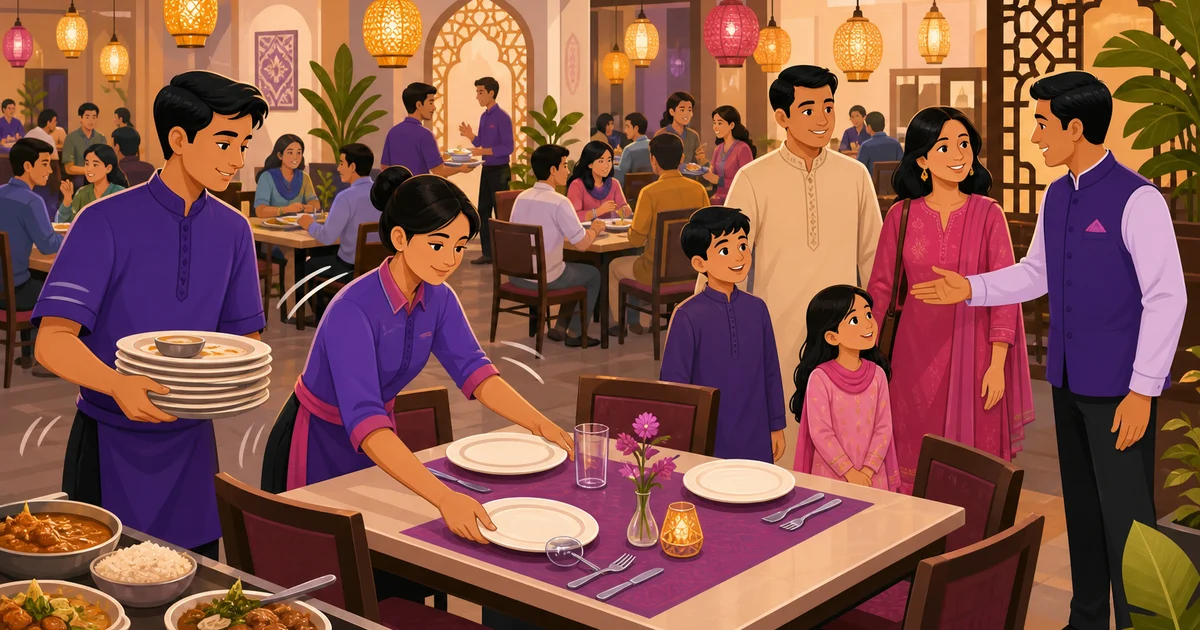
Table turnover rate is the number of times a single table is used by a new party during one service period, such as a lunch or a dinner. If a table seats three different groups over a dinner service, its turnover rate for that service is three. It is one of the most direct measures of how well a restaurant uses its seating, because empty or slow tables are lost revenue you can never get back. A higher table turnover rate, achieved without rushing guests, means more covers served from the same floor space.
This guide explains exactly what table turnover rate means, the simple formula to calculate it, how it connects to covers, and a set of practical changes that lift it. None of these are about hurrying people out the door. They are about removing the dead time between one guest leaving and the next sitting down.
What is table turnover rate?
Turnover rate answers a plain question: during a service, how many times did each table earn money? A table that sits empty for an hour earned nothing in that hour. A table that seated a couple, then a family, then two friends, worked three times as hard. Turnover rate puts a number on that, so you can compare days, shifts and sections instead of relying on a feeling that the floor was busy.
The rate matters most when a restaurant is full or close to it. If you have empty tables all evening, your problem is footfall, not turnover. But the moment a queue forms at the door, every minute a table sits dirty or uncleared is a guest you could have served. For a popular restaurant in Dhaka on a Friday night, small improvements in turnover translate straight into more sales without adding a single seat.
Table turnover rate and covers
Turnover rate and covers are close cousins. A cover is one guest served. If your dining room has 40 seats and each table turns over twice in an evening at full occupancy, you serve roughly 80 covers. Push the average turnover from two to two and a half, and the same 40 seats serve 100 covers. Nothing about the building changed; you simply lost less time between parties. This is why turnover is a core operational number, and it sits naturally alongside the other figures in our guide to restaurant KPIs.
The table turnover rate formula
The formula is straightforward. Over a chosen period, divide the number of parties served by the number of tables available:
Table turnover rate = parties served ÷ number of tables
Say you have 20 tables and over a dinner service you seated 50 separate parties. Your turnover rate is 50 ÷ 20 = 2.5. On average, each table turned over two and a half times that night.
You can also work it the other way to plan staffing or estimate sales. If you know your average turnover and your average spend per party, you can forecast a busy night. Here is how a few rates play out on a 20-table floor:
| Tables | Turnover rate | Parties served | Avg spend / party | Estimated sales |
|---|---|---|---|---|
| 20 | 1.5 | 30 | ৳800 | ৳24,000 |
| 20 | 2.0 | 40 | ৳800 | ৳32,000 |
| 20 | 2.5 | 50 | ৳800 | ৳40,000 |
| 20 | 3.0 | 60 | ৳800 | ৳48,000 |
The jump from a turnover of 1.5 to 3.0 doubles the night's sales on exactly the same floor. That is the prize, and it is why the number is worth tracking.
What is a good table turnover rate?
There is no single right answer, because it depends on the kind of restaurant. A fast-casual place where people order at the counter and eat quickly might turn tables four or five times in a service. A fine-dining restaurant where guests linger over a long meal might turn twice, and pushing harder would ruin the experience. A casual sit-down restaurant or cafe usually sits somewhere in between.
So the useful comparison is not against some industry figure. It is against yourself. Track your own turnover by day and shift, find your typical rate, and watch whether the changes you make move it up. A rate that drifts down over weeks usually points to a service bottleneck, a slow kitchen, slow billing, or tables that sit uncleared.
How to improve table turnover rate
Improving turnover is mostly about cutting the dead minutes around a meal, not the meal itself. Here are the changes that move the number, roughly in the order a guest experiences them.
Seat faster and manage the queue
The first delay is at the door. If a table is free but nobody knows, it sits empty. A live view of which tables are open, occupied, or ready to clear lets staff seat the next party the moment a table frees up. Our guide to restaurant table management and QR ordering covers how a visual table board keeps that information in front of the floor staff instead of in someone's head.
Take the order without a wait
Once seated, a guest who waits ten minutes just to order has already eaten into your turnover. Getting the order in quickly is the next lever. QR table ordering helps here: guests can scan a code at the table and place their order themselves, so the kitchen starts cooking sooner and a waiter does not have to reach every table before anything happens.
Speed up the kitchen, not the guest
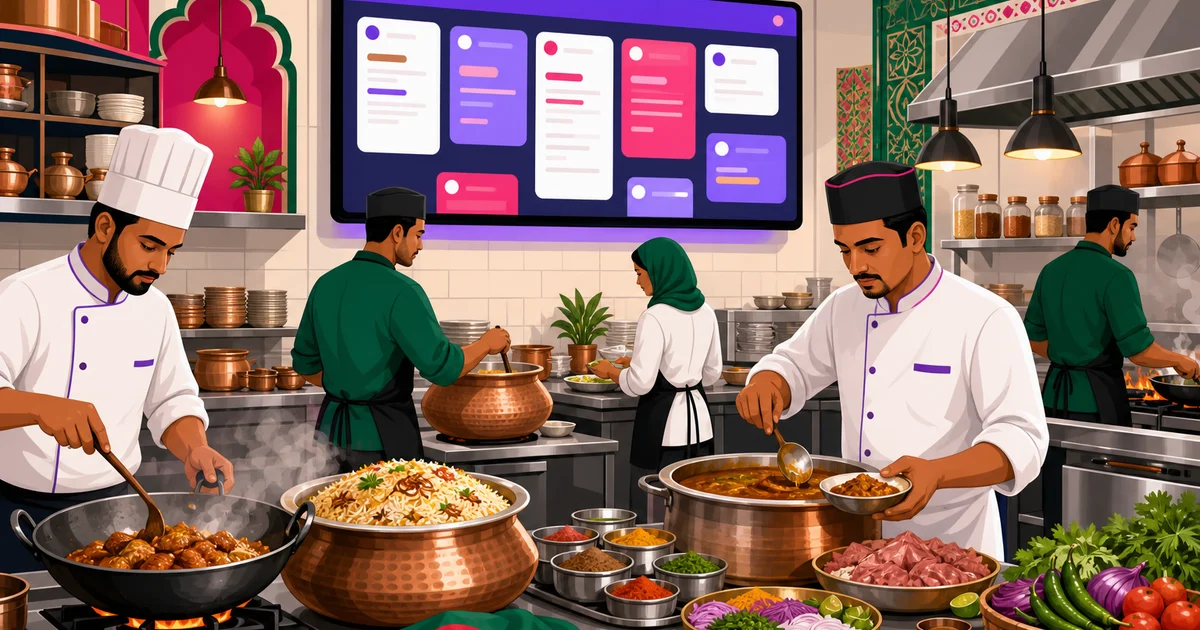
Food that comes out slowly stretches every visit. The fix is a smoother kitchen, not a rushed diner. When orders arrive at the line as clear, sequenced tickets instead of shouted instructions or messy slips, cooks waste less time and dishes come out in the right order. This is the job of the kitchen order ticket (KOT) and the kitchen display system (KDS): tickets that are legible, timed and routed to the right station.
Make billing and payment quick
The last and most common time sink is the end of the meal. Guests are ready to leave, but the bill takes a while to arrive, then payment drags. A POS that produces the bill in seconds, with the discount, service charge and VAT already worked out, and that accepts the payment methods people actually use, bKash, Nagad and cash, closes a table fast. Every minute saved at the end is a minute the next party could be seated.
Right-size your tables
A floor full of four-tops seating couples wastes seats and lowers effective turnover. A mix of table sizes, with a few two-seaters for the most common party size, means fewer empty chairs and more parties served. Reservations and table bookings help too, by spreading demand and reducing the crush at peak.
How Rosuii helps with turnover
Rosuii does not measure table turnover as a single named report, so this is about the tools that remove the delays turnover punishes, not a magic number on a dashboard. The visual table board shows each table's status with colour, so staff can see at a glance which tables are open and seat the next party without walking the floor to check. Tables and waiters are assigned to dine-in orders, so nothing falls between sections.
On the order side, the POS lets staff fire an order to the kitchen with one Send to Kitchen tap, and QR table ordering lets guests scan and order themselves, both of which shorten the gap between sitting down and the kitchen starting. Tickets land on the kitchen display as clear, timed cards that age from amber to red, so cooks keep the line moving and food does not stall. At the end, the bill is calculated on the server and the receipt prints quickly, with payment by bKash, Nagad or cash. The result is fewer dead minutes around each meal, which is what lifts turnover on a busy night.
You can also watch the effect indirectly. Sales and item-sales reports show your busiest hours and what sold, so you can match staffing and prep to your real peaks. Our guide to the restaurant POS system shows how the order, kitchen and billing parts connect into one flow.
Turnover is about respect, not rushing
It is worth saying plainly: improving table turnover should never feel like a guest is being pushed out. Diners notice when they are rushed, and they do not come back. The whole point of the changes above is that they speed up the restaurant, the seating, the kitchen, the billing, while leaving the meal itself unhurried. A guest who is seated promptly, served quickly and able to pay without waiting often has a better time, not a worse one. You serve more covers and they enjoy the visit more. That is the version of higher turnover worth chasing.
Want a clear view of your tables and a faster path from order to kitchen to bill? Create your free Rosuii account and set up your floor, menu and kitchen display today.
Last updated:
Frequently asked questions
What is table turnover rate?
How do you calculate table turnover rate?
What is a good table turnover rate?
How can I improve table turnover without rushing guests?
Does Rosuii report table turnover rate?
Run your restaurant on Rosuii
POS, menu, inventory, payroll and more — built for Bangladeshi restaurants.
Start free