BOT Meaning in Restaurants: Beverage Order Ticket
BOT means Beverage Order Ticket in restaurant service. See drink quantities, size and ice notes, and how it connects to the food order and bill.
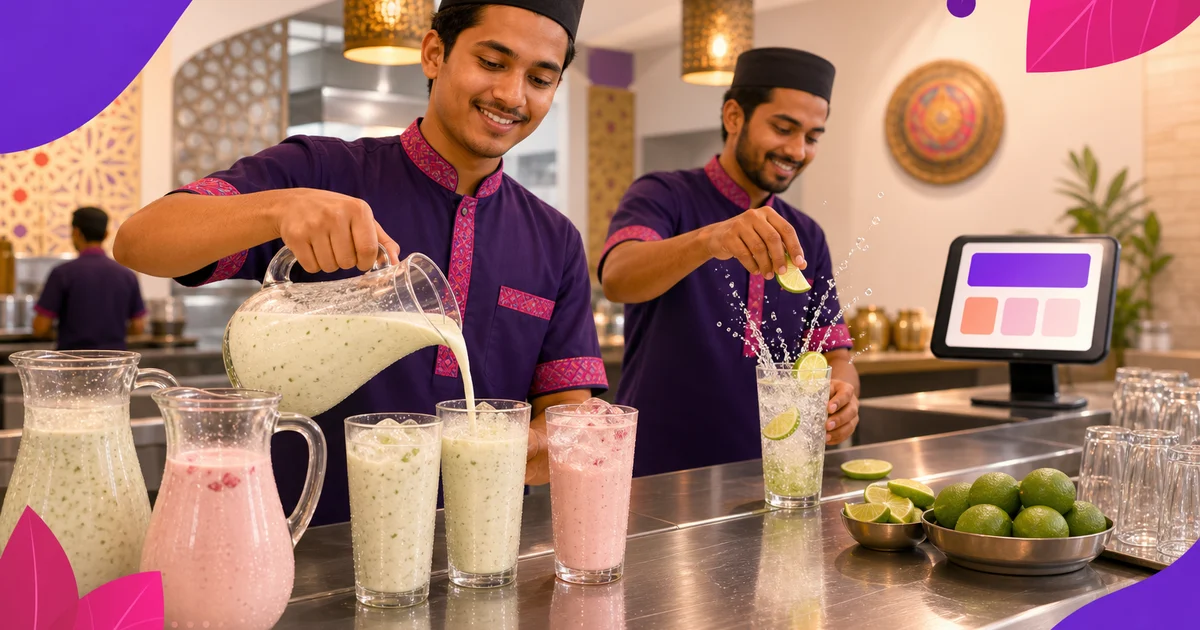
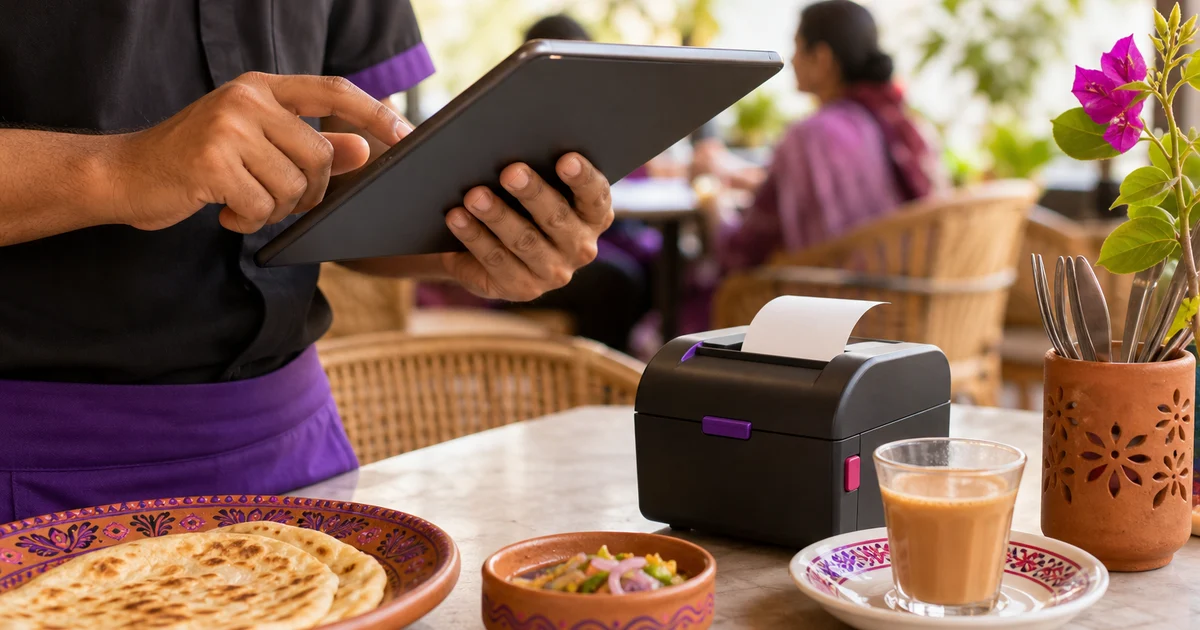
BOT commonly means Beverage Order Ticket in restaurant service; some teams use Bar Order Ticket. It tells the drinks station what to prepare, including quantity, size, ice and sweetness notes. A BOT can cover tea, coffee, juice or borhani; the term does not require alcoholic drinks. Keep its table or token and order reference connected to the food ticket.
This guide explains what a BOT is, why restaurants split drinks onto their own ticket, and how a digital BOT routes from the POS to the drinks station. We use Rosuii as the running example, where a single order can fan out to the right station automatically.
What is BOT in a restaurant?
A BOT, or beverage order ticket, is a record of the drinks a table or customer has ordered, written specifically for whoever makes them. In a place with a bar or a dedicated drinks counter, the food goes to the kitchen as a KOT and the drinks go to the bar as a BOT. The BOT lists the beverages and quantities, any options (no ice, less sweet, extra mint), and the table or token number so the drinks reach the right guest.
Like a kitchen ticket, a BOT is about communication, not money. It does not show prices, VAT or service charge. Its only job is to tell the bar what to make, in the order tickets arrive, so a cold lime soda and a hot tea both come out promptly and go to the correct table.
What a BOT carries
A clear beverage order ticket shows only what the bar needs:
- Drink names and quantities (2 borhani, 1 cold coffee, 3 lassi).
- Options and add-ons (no sugar, extra ice, double shot).
- The table or token number and the time ordered.
- Whether it is dine-in, takeaway or delivery, so packaging is right.
What it leaves out is the bill. The person at the drinks station does not need the total to pour a glass of borhani, and prices on a drinks ticket only get in the way.
BOT vs KOT: the difference
A BOT and a KOT are siblings. They work the same way and look similar, but they go to different people and cover different items. The split exists because food and drinks are made by different hands at different speeds.
| Aspect | KOT (kitchen order ticket) | BOT (beverage order ticket) |
|---|---|---|
| Covers | Food items | Drinks |
| Goes to | The hot kitchen line | The bar or drinks station |
| Typical items | Biryani, kebab, curry, naan | Borhani, lassi, tea, soft drinks, coffee |
| Shows prices? | No | No |
| Timing | Often longer to prepare | Usually quick to pour |
| Why separate | Keeps the kitchen queue clean | Keeps drinks moving without waiting on food |
Splitting them matters for timing. Drinks are usually faster than food, so a guest can get their borhani while the biryani is still cooking. If drinks sat in the same queue as a long food order, the bar might not notice them until the food was nearly done. Two tickets, two stations, two paces. To compare both against the screen that replaces paper, see KOT vs BOT vs KDS.
Do all restaurants use a separate BOT?
Not every place needs one. A small tea stall or a single-counter café where the same person makes food and drinks does fine with one ticket. A BOT earns its keep when drinks are made at a separate spot or by separate staff: a restaurant with a juice and borhani counter, a café with an espresso bar, or any place busy enough that mixing food and drinks on one ticket slows everyone down.
In Bangladesh, plenty of restaurants sit in the middle. They have a small drinks setup for borhani, lassi, fresh lime and soft drinks next to a busy kitchen. For them, a separate beverage order ticket keeps the drinks person from scanning a food-heavy ticket for the one cold coffee buried in it.
What goes on a BOT, and what does not
Drawing the line between food and drinks is usually obvious, but a few items sit on the edge, so it is worth a quick guide. The rule of thumb is simple: if it is poured or assembled at the drinks counter, it belongs on the BOT.
- Clearly on the BOT: borhani, lassi, fresh lime soda, tea, coffee, soft drinks, milkshakes, juices. Anything the drinks station makes.
- Clearly on the KOT: biryani, curry, kebab, naan, rice, anything cooked on the hot line.
- Depends on your setup: faluda or kulfi might come from the drinks station in one place and the kitchen in another; a dessert with a hot element may belong to the kitchen. The right answer is whoever actually makes it in your restaurant.
The point is not a universal rulebook but consistency in your own place. Once each item is tied to the station that makes it, the BOT and KOT sort themselves out, and a new staff member does not have to guess where the cold coffee goes.
From paper BOT to digital BOT
Once you understand what is BOT on a screen, the old paper version shows its limits. A paper BOT has the same weaknesses as a paper KOT. Handwriting gets misread, slips get wet or lost near the ice, and during a rush the drinks order they arrive in is not always the order they get made. There is also the routing problem: someone has to physically split the slip, food copy to the kitchen, drinks copy to the bar.
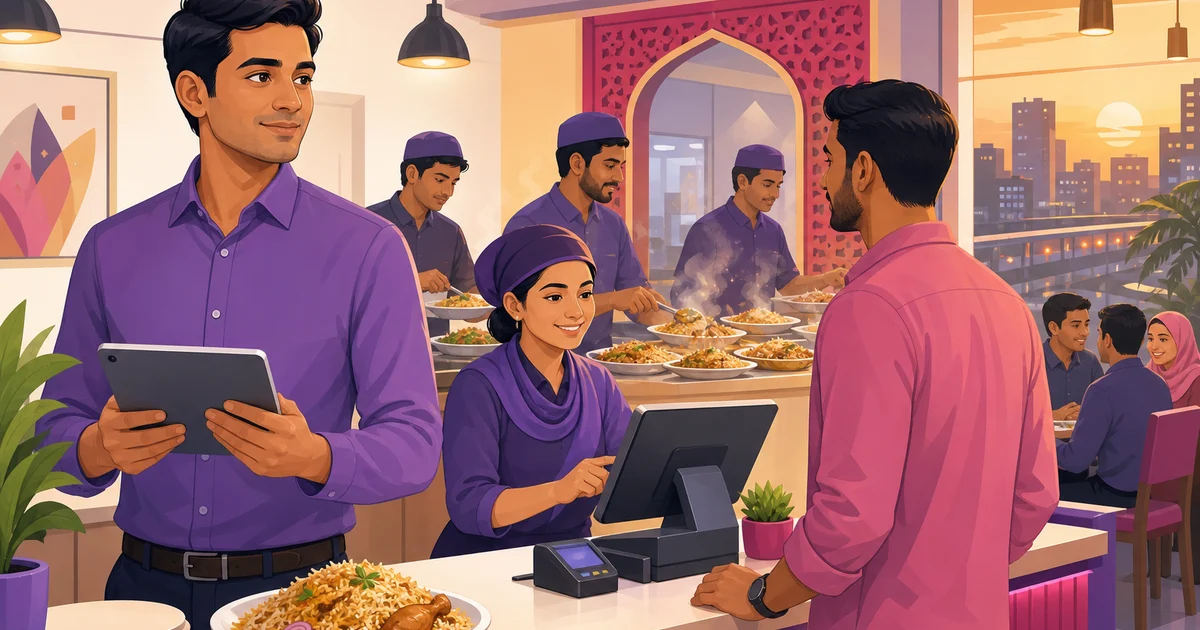
A digital system removes the splitting step entirely. Staff build one order on the POS, and the system sends each item to its assigned station on its own. Food items become a KOT on the kitchen display; drink items become a BOT at the bar. Nobody tears a slip in half or walks anything across the floor. The order is entered once and lands in the right two places at once.
How a digital BOT flows from POS to bar
- Staff build the order on the POS: add the biryani and the borhani to the same order, set options like no ice, attach the table.
- They tap to send the order. The POS reads each item's assigned station.
- Food routes to the kitchen as a KOT; drinks route to the drinks station as a BOT, each on its own screen.
- The bar makes the drinks from its clean, drinks-only ticket while the kitchen works the food.
- The bill stays separate at the counter and adds both together at the end, with service charge and VAT.
How Rosuii handles beverage tickets with stations
Rosuii does not have a button literally labelled BOT; instead it achieves the same result through stations, which is how modern systems handle this. When you set up the menu, each item is assigned to a station: biryani to the curry or main station, borhani and lassi to a drinks station, and so on. When a waiter taps Send to Kitchen on the POS, the order is split by station automatically.
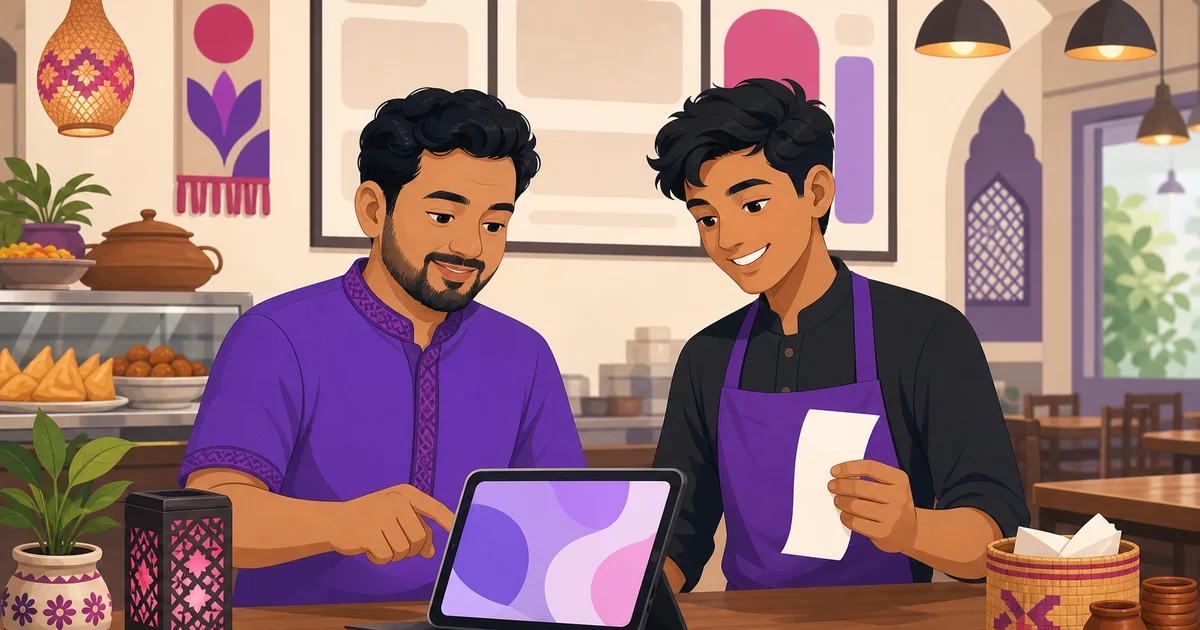
That means the drinks station only sees the drinks. On its kitchen display, the drinks person gets a card with the beverages, any options like no sugar or extra ice, the table or token number, and a timer counting up. The hot kitchen, on its own display, never sees the drinks at all. Each station works its own clean queue, which is exactly what a separate beverage order ticket is meant to give you, without anyone tearing paper.
Because every drink is also a line on the same order, the bill is correct without re-entry. When the table pays, the server-side total adds the food and drinks together and applies discount, coupon, loyalty, service charge and VAT in a fixed order. The bar got a clean drinks queue; the customer gets one accurate bill. For how the ticket sits inside the wider setup, read our guide to the restaurant POS system, and to understand the food side first, see what is KOT.
Why a separate beverage ticket helps your restaurant
Splitting drinks onto their own ticket is a small habit that smooths a busy service. The drinks person stops scanning long food tickets for one cold coffee, so drinks come out faster and fresher. Cold drinks reach the table while the food is still cooking, which is what guests expect. And because food and drinks are timed by different stations, a slow grill order does not hold up a quick round of borhani.
There is a reporting benefit too. When drinks are tracked as their own items, your item-sales report shows exactly how many borhani and lassi you sold, which drinks move and which do not, and how beverage sales add up over a week. That is useful for buying, pricing and deciding which drinks to keep on the menu. A torn paper slip in the bin tells you none of it.
Want food and drinks to split to the right station with one tap, no torn slips? Create your free Rosuii account and set up your menu, stations and displays.
Check the software separately from this example
The layouts and cancellation controls here are operational templates, not a promise that every POS automates every field or approval. Rosuii KDS starts on Starter; core POS and KOT printing are available on Free within limits. Automatic network printing needs a supported configured setup. Test Bangla text, added items, reprints and cancellations before service. Live kitchen updates need connectivity.
Editorial and product-source review: 2026-09-27
Continue with the right guide
- KOT meaning and full form
- Ticket format and samples
- Order-to-kitchen workflow
- KDS setup checklist
- Restaurant POS explained
Sources and limits
Try your own order in a free POS account. KDS, online ordering and inventory start on Starter; plan limits apply.
Updated:
Frequently asked questions
What does BOT stand for in a restaurant?
What is the difference between a BOT and a KOT?
Does every restaurant need a separate BOT?
How does Rosuii handle a beverage order ticket?
Are drink prices shown on a BOT?
Run your restaurant on Rosuii
POS, menu, inventory, payroll and more — built for Bangladeshi restaurants.
Start free