KOT vs BOT vs KDS: Tickets, Stations and Screens
Compare KOT food tickets, BOT beverage tickets and KDS screens. See which staff use each and how the same order stays connected to the bill.
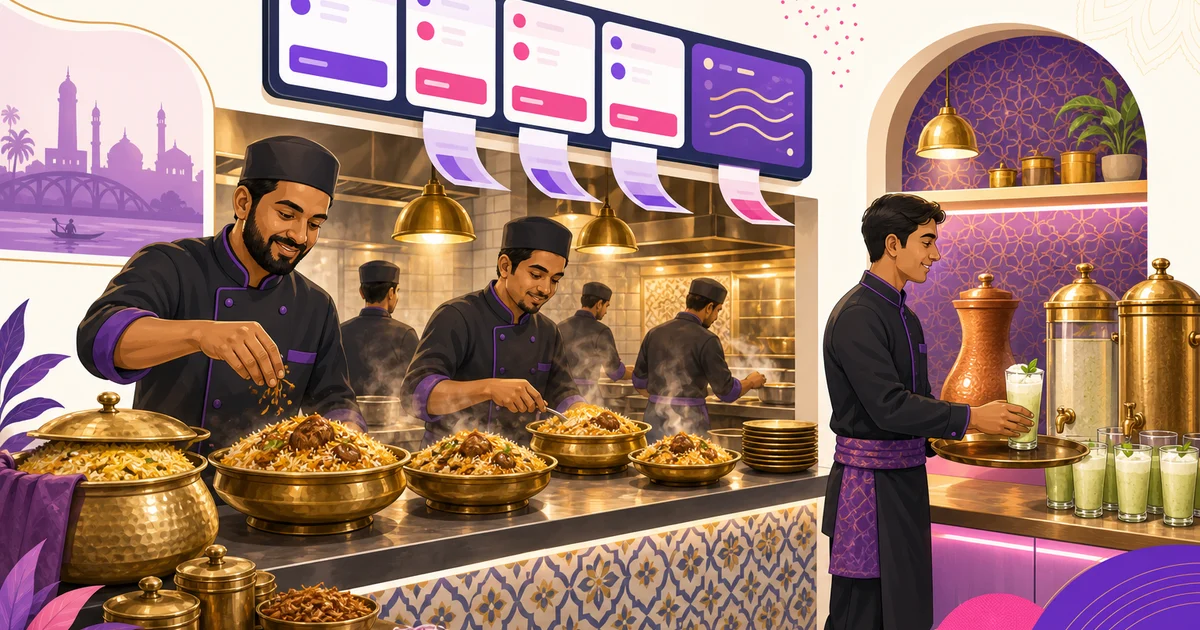
KOT and BOT are preparation tickets; KDS is a display system. KOT usually goes to the food kitchen, while BOT goes to the beverage station. A KDS can display either type according to configuration. This comparison is about their roles; the main KOT definition guide covers the generic full-form question.
This guide defines each term, lays them side by side in a table, and shows how all three move together on a single order. We use Rosuii as the running example, where one order is split into food and drink tickets and shown on the right display automatically.
KOT vs BOT vs KDS at a glance
Here is the core difference before we go deeper. Notice that KOT and BOT sit in the same column because they are the same type of thing, while KDS is a different category.
| Term | What it is | What it covers | Where it lives |
|---|---|---|---|
| KOT | Kitchen order ticket (a document) | Food items and cooking notes | The hot kitchen line |
| BOT | Beverage order ticket (a document) | Drinks and their options | The bar or drinks station |
| KDS | Kitchen display system (a screen) | Displays the tickets above | Mounted at each station |
So KOT and BOT answer "what was ordered and for whom to make it", while KDS answers "how do the cooks see it". A KOT or BOT can exist on paper or on a screen. The KDS is the screen.
What is a KOT?
A KOT, or kitchen order ticket, is the record of food a table ordered, written for the kitchen. It lists items, quantities, variations and notes (2 chicken biryani, less spicy), with the table or token number, and no prices. Its job is to tell the line what to cook and in what order. One order can create several KOTs over time, for example starters first and mains later. For the full breakdown, read what is KOT.
What is a BOT?
A BOT, or beverage order ticket, is the same idea for drinks. It sends borhani, lassi, tea, coffee and soft drinks to the bar or drinks station, with quantities and options like no ice or less sweet. Splitting drinks onto their own ticket keeps the drinks queue clean and lets cold drinks come out fast while food is still cooking. For more, read what is BOT. A small café where one person makes everything may not need a separate BOT at all; a busy place with a drinks counter usually does.
What is a KDS?
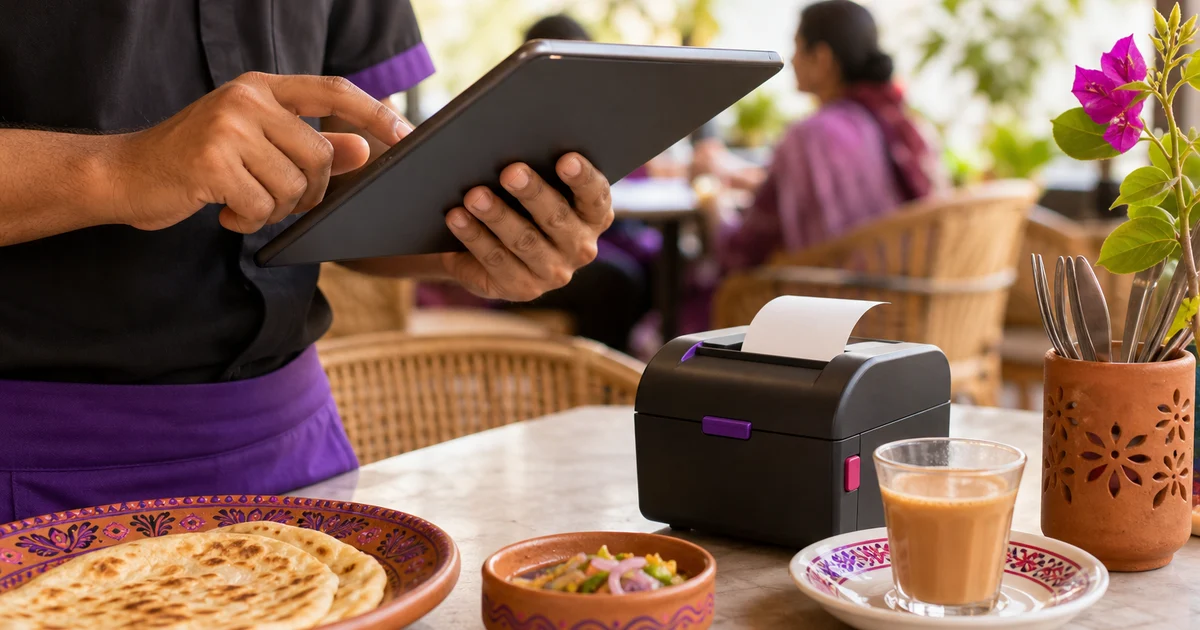
A KDS, or kitchen display system, is a screen at the kitchen (or bar) that replaces paper tickets. Instead of printing or handwriting a KOT or BOT, the system shows it as a card on a display: items, notes, table number and a timer counting up. Cooks tap each card from new to preparing to ready. Nothing gets lost, soaked or misread, and the order they arrive in stays in order. A KDS can show KOTs at the kitchen and BOTs at the bar, each station seeing only its own tickets. For the full guide, read kitchen display system (KDS).
The key relationship
This is the part worth fixing in your head: a KOT and a BOT are content, and a KDS is where that content appears. Ask "is this a list of items or a screen?" If it is a list of items the kitchen cooks, it is a KOT. If it is a list of drinks for the bar, it is a BOT. If it is the physical display showing either, it is the KDS. You can have a KOT without a KDS (on paper), but a KDS exists to display KOTs and BOTs.
How the three work together on one order
The clearest way to see KOT vs BOT vs KDS is to follow a single table. Say four guests order three biryani, one grilled fish and four borhani.
- A waiter builds the whole order on the POS: three biryani and the fish (food), four borhani (drinks), with a note of less spicy on one biryani, attached to table 6.
- The waiter taps send. The POS reads each item's station.
- The food becomes a KOT and appears on the kitchen KDS: three biryani, one fish, the less-spicy note, table 6, a timer running.
- The drinks become a BOT and appear on the drinks-station KDS: four borhani, table 6, its own timer. The hot kitchen never sees the drinks.
- Cooks work their KOT, the drinks person works the BOT, and each taps cards forward as items get done.
- When the table pays, the bill (a separate document at the counter) adds food and drinks together with service charge and VAT.
One order, two tickets (KOT and BOT), shown on KDS screens at two stations, plus one bill at the end. Each piece does one job and nothing gets entered twice.
Do you need all three?
It depends on your setup, and it is fine to use only what fits.
- Small stall or single counter: one person makes food and drinks. You may run with one ticket and a printer, no separate BOT and no KDS needed.
- Busy restaurant, food only: a KOT plus a KDS is the core. The display keeps tickets in order at a busy line. No drinks station means no BOT.
- Restaurant with a drinks counter: KOT for food, BOT for drinks, and a KDS at each so both queues stay clean. This is the full picture.
The point is not to collect acronyms. It is to match the tools to how your kitchen actually splits work.
Common confusions, cleared up
Because the three names rhyme, a few wrong assumptions come up again and again. Here are the ones worth correcting.
"A KDS replaces the KOT"
Not quite. A KDS replaces the paper the KOT used to be printed on, but the KOT itself, the list of food to cook, still exists. It just lives on a screen now instead of a slip. The information did not go away; the medium changed. Saying a KDS replaces a KOT is like saying a phone replaces a letter, when really it replaces the paper, not the message.
"You need a BOT for every restaurant"
No. A BOT only earns its place when drinks are made separately from food. A small biryani shop where the same person serves the borhani straight from a fridge does not need a separate drinks ticket at all. The split is about who makes what, not about looking professional.
"KOT and BOT are different systems"
They are the same kind of thing pointed at different stations. In a modern setup you do not buy a KOT system and a separate BOT system; you set up one menu, assign each item a station, and the system produces whichever tickets the order needs. Food items make a KOT, drink items make a BOT, both from the same order.
"More screens means more complexity"
Usually the opposite. One screen per station means each cook sees a shorter, cleaner list of only their own work. A single shared screen showing every food and drink item is harder to read at a glance than two focused ones. The aim of splitting tickets across displays is less noise per person, not more hardware for its own sake.
How Rosuii handles KOT, BOT and KDS together
Rosuii ties the three together through stations, so you do not manage them separately. When you set up the menu, each item is assigned to a station: biryani and fish to the kitchen, borhani and lassi to the drinks station. When a waiter taps Send to Kitchen on the POS, the order is split by station behind the scenes. Food items form the kitchen ticket (the KOT), drink items form the drinks ticket (the BOT), and each is pushed to that station's display.
The KDS in Rosuii is the screen that shows it: a kanban board where cards move from new to preparing, with per-line notes, table or token number, and a timer that turns amber around eight minutes and red at fifteen so a cook can see what has waited too long. Big touch buttons let staff with busy hands move cards forward, a chime announces new tickets, and the board goes fullscreen for a wall-mounted screen. A separate customer display (CDS) can call the token number when food is ready.
Because every item is also a line on the same order, billing needs no re-entry. The server-side total adds food and drinks and applies discount, coupon, loyalty, service charge and VAT in a fixed order, then prints the receipt. So you get clean KOTs and BOTs on the KDS, and one correct bill. To see how this sits in the bigger system, read our restaurant POS system guide.
Want food and drink tickets split to the right display, with one bill at the end? Create your free Rosuii account and set up your menu, stations and displays.
Check the software separately from this example
The layouts and cancellation controls here are operational templates, not a promise that every POS automates every field or approval. Rosuii KDS starts on Starter; core POS and KOT printing are available on Free within limits. Automatic network printing needs a supported configured setup. Test Bangla text, added items, reprints and cancellations before service. Live kitchen updates need connectivity.
Editorial and product-source review: 2026-09-27
Continue with the right guide
- KOT meaning and full form
- Ticket format and samples
- Order-to-kitchen workflow
- KDS setup checklist
- Restaurant POS explained
Sources and limits
Try your own order in a free POS account. KDS, online ordering and inventory start on Starter; plan limits apply.
Updated:
Frequently asked questions
What is the difference between KOT, BOT and KDS?
Is a KDS the same as a KOT?
Do I need a BOT if I already have a KOT and a KDS?
How does Rosuii create KOTs and BOTs?
Can a small restaurant skip the KDS and BOT?
Run your restaurant on Rosuii
POS, menu, inventory, payroll and more — built for Bangladeshi restaurants.
Start free