
Restaurant Recipes
Commercial Bangladeshi Egg Curry Recipe
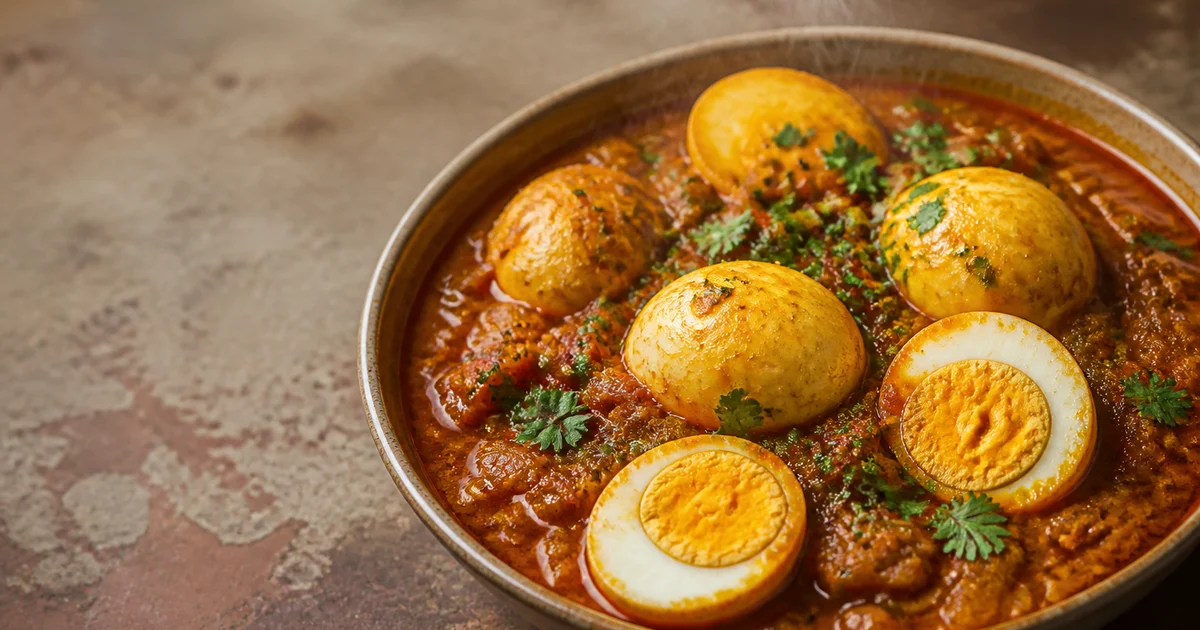
A commercial egg curry recipe yielding 40 one-egg plates, with blister-fried boiled eggs, reusable onion gravy and practical service controls.
- Prep
- 35 min
- Cook
- 1 hr 10 min
- Total
- 1 hr 45 min
- Yield
- about 40 plates
- Difficulty
- Medium
- Cuisine
- Bangladeshi
Method
- 1
Boil the eggs evenly
Place the eggs in one layer in the stockpot, cover with cool water by 3 cm and heat until the water reaches a rolling boil near 100°C. Lower to a steady boil and cook for 11 minutes; the shells should remain intact without violent knocking against the pot.
- 2
Chill peel and inspect
Transfer the eggs immediately to water below 10°C and chill for 10 minutes to stop yolk discolouration. Peel carefully, rinse away shell fragments and reject eggs with exposed or broken yolks; acceptable whites should be firm and smooth.
- 3
Season eggs for frying
Dry the peeled eggs completely, then coat them with 10 g turmeric and 20 g salt. Hold them below 5°C if frying is delayed, but bring out only one frying batch at a time; the coating should look thin and dry rather than wet.
- 4
Fry eggs until blistered
Heat the oil to 175°C and fry 6 to 8 eggs at a time for 2 to 3 minutes, turning continuously. Remove them when the surfaces show scattered golden blisters without a dark, hard crust, then strain the oil to remove burnt particles.
- 5
Temper the whole spices
Return the strained oil to the heavy pan and maintain approximately 150°C. Add bay leaves, cinnamon and cardamom and fry for 30 to 45 seconds, stopping when they smell aromatic and the cardamom begins to swell.
- 6
Brown onions without burning
Add the sliced onions and cook at 165°C to 175°C for 18 to 25 minutes, stirring and scraping the bottom frequently. They are ready when evenly deep golden, reduced in volume and free of black edges.
- 7
Cook ginger and garlic
Reduce the pan to medium heat, add the garlic and ginger pastes and cook for 6 to 8 minutes. Keep the masala around 140°C to 150°C and stir until the raw smell disappears and the paste no longer looks watery.
- 8
Fry ground spice masala
Mix the remaining turmeric, chilli, cumin and coriander powders with 300 ml water, then add the slurry with the remaining salt. Cook at 130°C to 145°C for 4 to 6 minutes, stirring until the colour deepens and oil starts appearing at the edges.
- 9
Reduce tomatoes into base
Add the tomatoes and cook at a steady 95°C to 100°C simmer for 12 to 15 minutes. The base is ready when no firm tomato pieces remain, the masala looks glossy and a spoon drawn through it leaves a brief clear track.
- 10
Dilute and simmer gravy
Add the remaining measured water gradually and bring the gravy to at least 90°C. Simmer uncovered for 15 to 20 minutes, stirring every few minutes, until it is smooth enough to coat a spoon but still pours cleanly from a ladle.
- 11
Finish eggs in gravy
Add the fried eggs and green chillies, then simmer gently at 90°C to 95°C for 8 to 10 minutes. Fold rather than stir hard; the eggs should remain whole and take on the gravy colour while the centre reheats to at least 74°C.
- 12
Season garnish and portion
Stir in garam masala and half the fresh coriander, then taste after 2 minutes at approximately 85°C and correct only if required. Garnish with the remaining coriander and hold above 60°C; each saleable plate receives one egg and one level 170 ml ladle of gravy.
Notes for your kitchen
Why egg curry works commercially
Egg curry gives a cart or restaurant a filling main-course plate with a controlled protein portion and a gravy that can be produced in advance. Each plate receives one whole egg, so counting stock, forecasting sales and checking kitchen variance are simpler than with meat cut into uneven pieces. Rice, khichuri, paratha or roti can be sold with the same curry without changing the main production batch.
This batch is designed for about 40 plates with one egg and approximately 170 ml gravy per plate. The two additional eggs are a production allowance for cracked shells, poor peeling or service damage. If both remain saleable, record them as usable closing stock rather than silently increasing portions.
Egg curry can be the lowest-priced protein plate on a cart menu, but it must still look deliberate. A properly fried egg, glossy gravy, visible green chilli and measured garnish make the portion look complete. A pale boiled egg dropped into thin gravy looks unfinished and encourages staff to compensate with excessive gravy.
Ingredient quality matters most in the eggs, onions and oil
Uniform, uncracked eggs matter more than premium spice brands for this egg curry recipe. Buy one consistent egg grade so boiling time, plate appearance and portion value remain stable. Reject leaking, heavily soiled or cracked eggs, and rotate egg stock by delivery date.
Use firm onions without sprouting or wet rot because onions provide the body and sweetness of the gravy. Very watery onions take longer to brown and increase fuel use, while burnt onion makes the entire batch bitter. Tomatoes should be ripe enough to break down fully; pale, hard tomatoes leave sour pieces and weak colour.
Use fresh ginger and garlic paste without a fermented smell. Ground chilli, turmeric, cumin and coriander should have a clear aroma and no damp clumps. Frying oil must be clean and neutral-smelling because damaged oil gives the eggs a stale flavour that the gravy cannot hide.
Frying creates flavour and protects the eggs
Brief shallow-frying gives boiled eggs a lightly blistered surface that holds masala better than a wet, smooth egg. Drying the peeled eggs is essential because water causes dangerous splashing and prevents browning. The turmeric and salt coating should be thin rather than pasty.
Maintain the oil near 175°C and work in small batches. If too many cold eggs enter the kadai together, the temperature falls, the eggs absorb oil and the surface stays pale. Turn them continuously with a perforated spoon and remove them when scattered golden patches appear; a dark brown crust becomes leathery during holding.
Strain the frying oil before using it for the gravy. Small egg fragments and burnt turmeric continue cooking in the pan and can make the base bitter. Do not return oil that smells burnt or has smoked heavily.
The onion masala is a reusable base gravy
The cooked onion, tomato and spice masala can be managed as a separate production item before it is diluted and finished with eggs. This helps a kitchen prepare one controlled base for egg curry and compatible vegetable or chicken dishes, provided the final seasoning is adjusted for each item. Rosuii can record that base through its productions feature, turning issued raw materials into a measured finished-gravy stock.
The key control point is onion browning. Cook until the onions are evenly deep golden, not merely soft, then fry ginger and garlic until their raw smell disappears. Add ground spices as a slurry with a little water so they cook without scorching. The masala is ready for dilution when the tomatoes have disappeared, the colour has deepened and oil is visible around the edges.
For repeatable batches, weigh the concentrated base before adding the final water. A reasonable production target from this formula is approximately 4.5 kg, although onion moisture and pan width will change the result. If it is heavier and still watery, continue reducing; if it is lighter because of excessive evaporation, restore only the measured difference with hot water.
Scaling requires pan capacity, not just multiplication
This recipe can be scaled by ingredient weight, but onions and eggs must still be cooked in manageable batches. For 20 plates, use half the formula and a narrower pot so the gravy does not evaporate too quickly. For 80 plates, double the formula but brown the onions and fry the eggs in at least two batches before combining them in a suitable steam kettle or stockpot.
Start large batches with about 80 percent of the calculated salt and chilli, then correct them after reduction. Salt and heat become stronger as water evaporates. Whole spices, ground spices, tomatoes and aromatics can otherwise be scaled in direct proportion.
Do not fill a pot beyond roughly two-thirds of its working volume. Overfilled curry heats slowly, spits during stirring and develops uneven seasoning. When scaling above 80 portions, divide the finished curry between two service pans so one pan is not repeatedly opened and cooled.
Holding and reheating must protect both safety and texture
Finished egg curry should be hot-held at 60°C or above and served within four hours for the best egg texture and gravy colour. Keep the lid closed between service periods and stir gently from the bottom every 20 to 30 minutes. Add only small amounts of boiling water if evaporation makes the gravy too thick.
For slower service, hold most of the gravy separately and finish smaller quantities with eggs. This reduces broken eggs and prevents the whites becoming rubbery. Never leave peeled eggs or curry at room temperature while waiting for the next rush.
Cool unsold curry rapidly in shallow containers, moving it from 60°C to 21°C within two hours and from 21°C to 5°C or below within a further four hours. Refrigerate covered, use within 48 hours and reheat only once to at least 74°C throughout. Bring the gravy up slowly and stir around the eggs rather than cutting through them.
Portion control protects the advertised yield
The controlled serving is one egg with approximately 170 ml gravy, producing about 40 plates from the batch. Use one standard ladle and verify its filled volume with water before service. Train staff to place the egg first and ladle gravy over it so every plate visibly contains the protein.
A two-egg option should be configured as a separate variation or add-on because it changes the protein yield even if the gravy portion stays similar. Do not let servers provide a second egg as an informal larger portion. Follow a written portion control method and reconcile eggs boiled, eggs rejected, eggs sold and eggs remaining after each shift.
For takeaway service, choose containers that hold the egg and gravy without being filled to the rim. A container that is too large makes the plate look short, while an undersized container leaks and causes refunds or replacement orders.
Common mistakes increase food cost
The costliest mistakes are broken eggs, burnt masala, uncontrolled ladling and gravy discarded after poor holding. These failures consume ingredients without creating a saleable plate and should be entered in a wastage log rather than hidden inside normal usage.
- Overcooking the eggs: A grey-green yolk ring and rubbery white indicate excessive boiling or slow cooling.
- Frying wet eggs: Surface moisture causes splashing, patchy colour and avoidable oil loss.
- Rushing the onions: Pale onions produce thin, sharp gravy, while black edges make the whole batch bitter.
- Burning ground spices: Dry spices placed directly in very hot oil can scorch in seconds; use a water slurry and controlled heat.
- Adding water without measurement: Unrecorded dilution changes flavour, ladle yield and plate consistency.
- Repeated reheating: Heating the same pan through several service periods damages egg texture and raises food-safety risk.
Stable cost comes from counting eggs and standardising gravy
Egg purchasing price is the main cost movement, followed by cooking oil and the onion-heavy gravy base. Compare suppliers on usable egg count and size consistency, not only tray price, because cracks and undersized eggs reduce saleable yield.
Maintain a batch sheet showing concentrated-base weight, finished-gravy volume and number of acceptable eggs. Use recipe costing when supplier packs or egg grades change, and review the resulting food cost percentage against actual item sales. Stable portions are more effective than quietly thinning the gravy, which weakens the dish and makes customers notice inconsistency.
What drives the cost
Eggs dominate the cost, with cooking oil and onions forming the next important share. Egg grade, cracked-shell loss, oil recovery and seasonal onion prices move the batch cost most. Standard egg counts and ladled gravy portions keep that movement visible.
Ingredient rates move with the market, so this describes what drives the cost rather than quoting a figure.
Questions from kitchens
Can this egg curry recipe be doubled for 80 plates?
How long can egg curry stay in a hot-holding pan?
Can mustard oil replace soybean oil?
How long does chilled egg curry keep?
What should the actual saleable yield be?
Related recipes
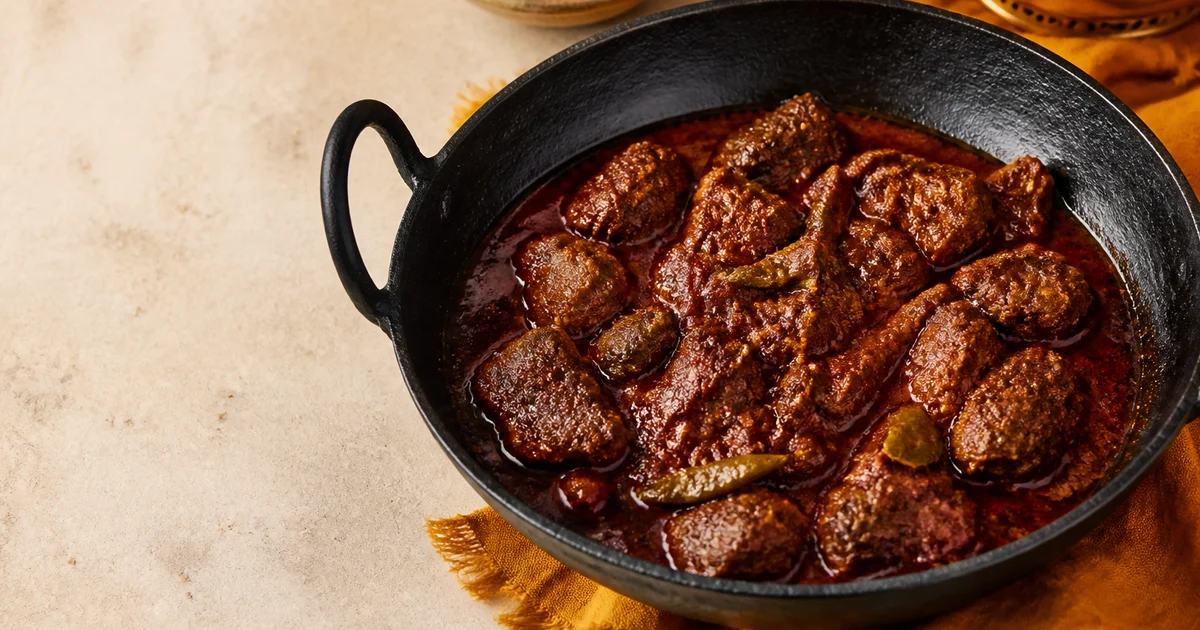
Commercial Beef Bhuna Recipe
A commercial beef bhuna recipe for about 40 plates, with a long bhuna stage, clear oil-separation cues, controlled portions and service-safe reheating.
- Yield:
- about 40 plates
- Total:
- 4 hr 15 min
- Difficulty:
- Medium
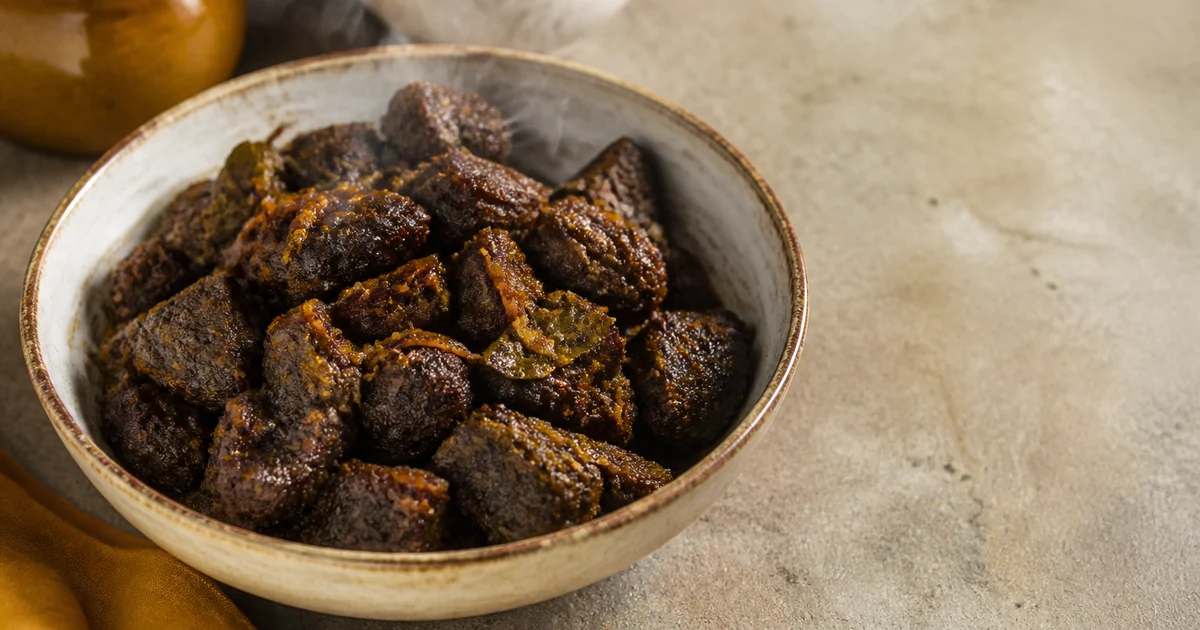
Commercial Beef Kala Bhuna
A commercial Chattogram-style beef kala bhuna recipe producing about 40 controlled portions with deep browning, roasted spices and service guidance.
- Yield:
- about 40 plates at 175 g
- Total:
- 4 hr 15 min
- Difficulty:
- Hard
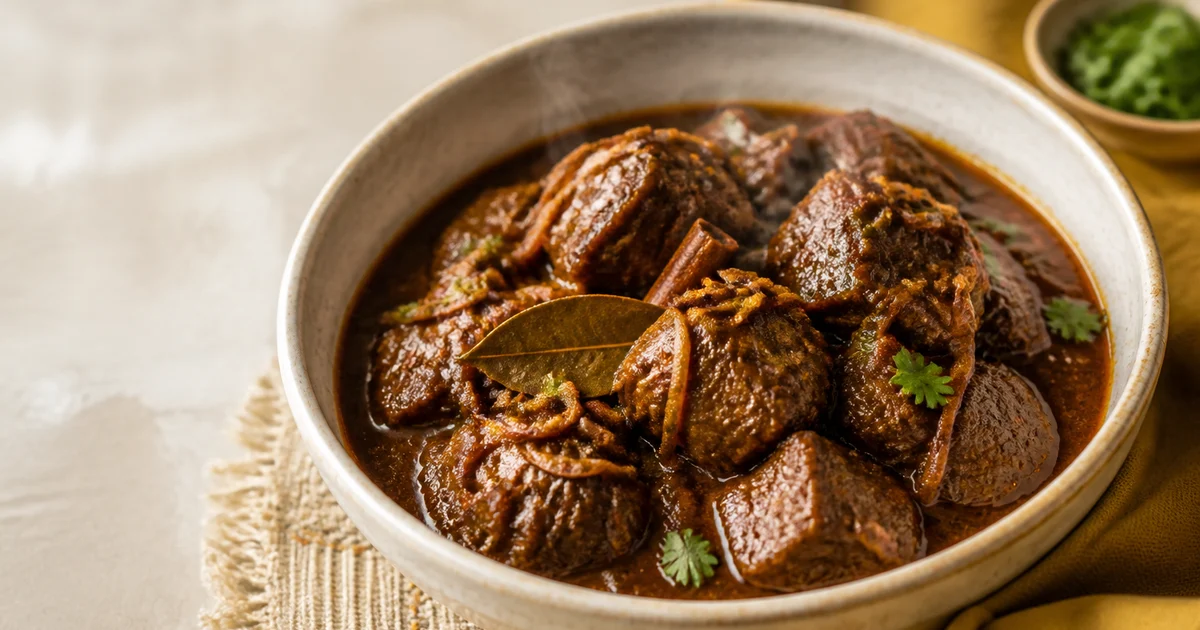
Commercial Beef Kalia Recipe
A commercial beef kalia recipe for about 40 plates, with tender bone-in beef, festive ghee-rich gravy, controlled portions and service guidance.
- Yield:
- about 40 plates
- Total:
- 4 hr
- Difficulty:
- Medium
Run your restaurant on Rosuii
POS, menu, inventory, payroll and more — built for Bangladeshi restaurants.
Start free