Restaurant Upselling Techniques: Increase Average Order Value
Practical ways to increase average order value by helping guests complete or improve their meal—without pressure, hidden charges or irrelevant pitches.
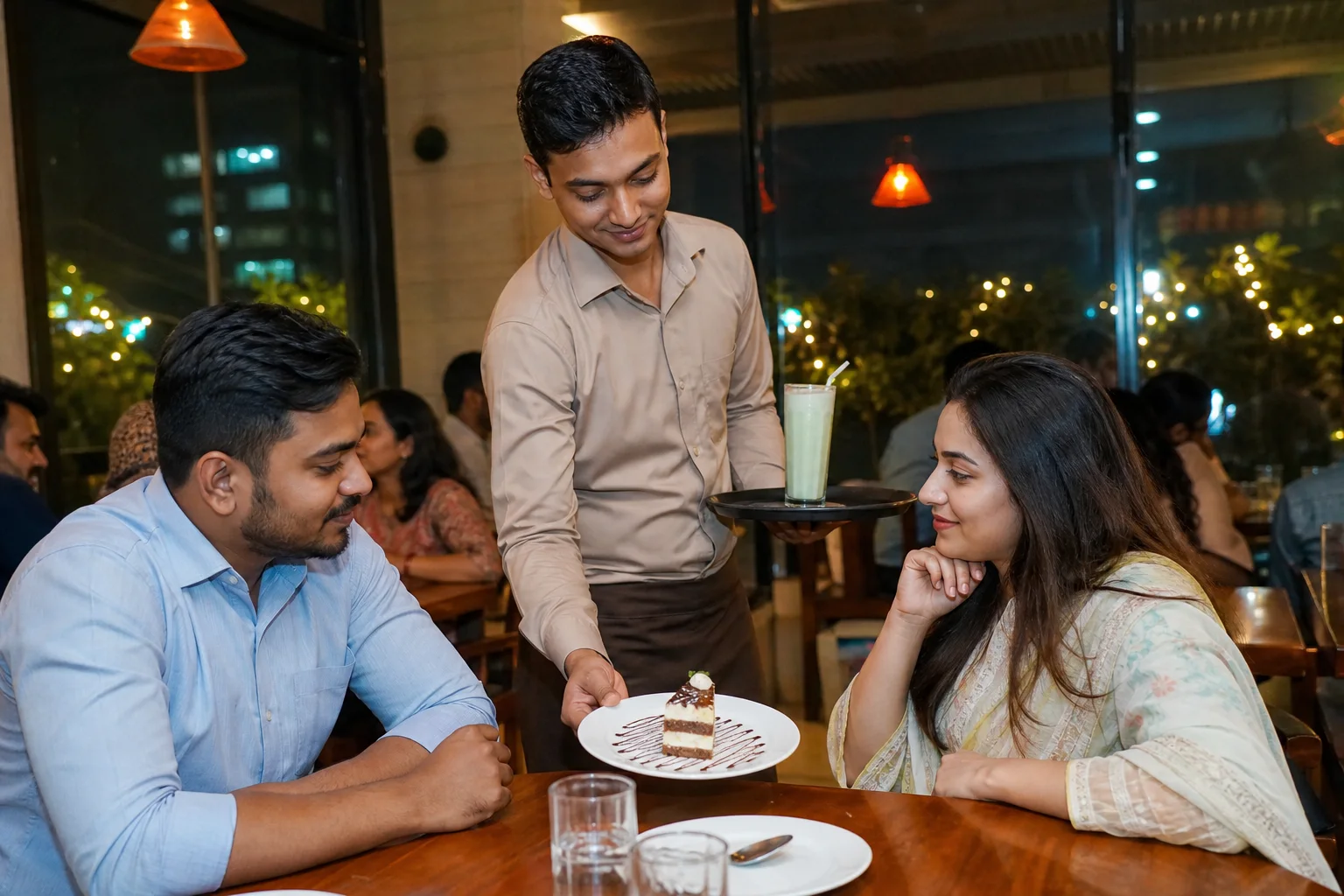
Restaurant upselling means helping a guest choose a higher-value version, relevant add-on or complementary item that improves the order. Done well, it increases average order value and guest satisfaction. Done badly, it feels like pressure and can reduce trust.
The best upsell is specific, timely, easy to understand and operationally reliable. It should fit the guest’s meal, show the price before confirmation and be recorded as a real item or modifier so the kitchen, bill and report all agree.
Upselling versus cross-selling
An upsell moves the guest to a higher-value choice in the same category: regular to large, standard to premium protein, single item to a meal version. A cross-sell adds a complementary category: drink with biryani, fries with a burger or dessert after dinner.
Both should solve a decision. Avoid offering every possible extra. Choose one relevant question at the point where the guest can act without restarting the order.
Seven restaurant upselling techniques
Build the suggestions from real menu pairings and contribution, then train the same concise language across floor, counter and online ordering.
- Offer one useful size or quality upgrade
- Turn popular mains into clearly priced meals or combos
- Suggest a beverage that matches the dish
- Offer a relevant add-on at item selection
- Recommend a shareable side for the table size
- Time dessert or tea after the main course
- Use a second-item prompt for takeaway only when it fits
Use specific, guest-first scripts
Weak: ‘Anything else?’ Better: ‘Would you like the meal version with fries and a drink for ৳___ more?’ Weak: ‘Make it large?’ Better: ‘The large serves two; the regular serves one. Which fits your table?’ Give information, then let the guest decide.
Use real prices and quantities. Never describe a mandatory charge as optional or add an item before consent. For dietary or allergy questions, staff should follow verified information and escalate uncertainty to the kitchen instead of improvising.
- Counter: ‘Would you like the combo or only the burger?’
- Dine-in: ‘This side is enough for two and pairs with the curry.’
- Beverage: ‘The lassi balances the spice; shall I add one?’
- Dessert: ‘Would you like to share one dessert, or should I bring the bill?’
- Takeaway: ‘Do you need drinks or cutlery with this order?’
Choose items by contribution and reliability
Do not train staff to push the highest price. Review contribution, popularity, preparation time, waste risk, stock reliability and complaint history. A profitable add-on that is frequently unavailable or delays the kitchen is a poor recommendation.
Start with five to ten approved pairings. State which main item triggers the offer, which option is suggested, the price difference, portion or benefit and any time when the offer should stop because of capacity or stock.
Design menu and POS prompts carefully
On a printed or digital menu, place variations, add-ons and combo choices beside the parent item. Use plain labels and visible prices. Do not force an optional extra into a confusing default selection.
In Rosuii, menu variations, modifiers, add-ons and combos can be configured so the cashier or online guest sees a structured choice and the order reaches the kitchen correctly. Keep per-branch availability updated and avoid free-text notes for standard chargeable options.
Upsell at the right moment
Size and add-ons belong during item selection. A shareable side belongs after the main choices are known. Dessert or tea belongs when guests have finished or are close to finishing. Repeating the pitch after a clear no feels disrespectful.
During a rush, use the shortest high-confidence suggestions and stop offers that strain the bottleneck. More average bill is not valuable if it creates delayed mains, remakes or refunds.
Train and coach without scripts becoming robotic
Explain the reason behind each pairing, let staff taste or see the portion where practical and role-play common guest responses. Train pronunciation and clear BDT pricing in Bangla and English. Staff should sound helpful, not memorize a speech.
Review suggestion rate and acceptance at team level first. Listen for quality and consent. Do not encourage unauthorized discounting or shame staff whose section, shift or guest mix has fewer opportunities.
Measure the upselling programme
Track average order value, items per order, attachment rate for each offer, contribution after cost, discount rate, refund or complaint rate, order time and stock-outs. Compare a defined test group or period rather than crediting every sales change to the upsell.
Attachment rate = orders containing the add-on ÷ eligible orders × 100. Incremental contribution matters more than incremental sales: subtract ingredient, packaging, channel fee, discount and added labour or waste.
A four-week upselling test
Week one: choose three reliable pairings and record the baseline. Week two: configure POS options and train one concise script per pairing. Week three: run the test on defined shifts and watch kitchen capacity. Week four: compare attachment, average bill, contribution, complaints and order time.
Keep the winning offer, revise unclear prompts and remove anything that harms trust or operations. Then test one new variable at a time—placement, wording, price or bundle—not all of them together.
Common upselling mistakes
Common failures include pitching an unavailable item, hiding the price, suggesting too many extras, ignoring the guest’s budget, using generic ‘anything else’, adding without consent, measuring staff only on sales and promoting an item that slows the kitchen.
Ethical upselling makes the meal easier to choose and fulfills what was promised. The guest should understand what is added, why it may help and what the final price changes by.
Keep an offer decision record
For each approved offer, record the eligible order, suggested item, visible price difference, expected guest benefit, stock or capacity stop condition and review owner. This prevents an old combo or unavailable add-on from surviving only because it was once configured in the POS.
At review, retain, revise or remove the offer using attachment, contribution, timing and complaint evidence. Change one major variable at a time. The record makes the programme teachable across shifts without turning a recommendation into a mandatory sales script.
Upselling works when menu design, staff language, POS choices, kitchen capacity and measurement support the same small set of relevant offers. Begin with three pairings, state the price, ask once and let the guest decide. Trust is worth more than a forced add-on.
Related guides
- Menu Engineering for Restaurant Profit
- Modifiers, Add-ons and Combos in Restaurant POS
- Restaurant Menu Design in Bangladesh
See this workflow in Rosuii: Build menu add-ons and combos in Rosuii
Updated:
Frequently asked questions
What is restaurant upselling?
How can waiters upsell without being pushy?
What are good restaurant items to upsell?
How do you measure restaurant upselling?
Can a restaurant POS help with upselling?
Run your restaurant on Rosuii
POS, menu, inventory, payroll and more — built for Bangladeshi restaurants.
Start free