
Restaurant Recipes
Commercial Jorda Recipe
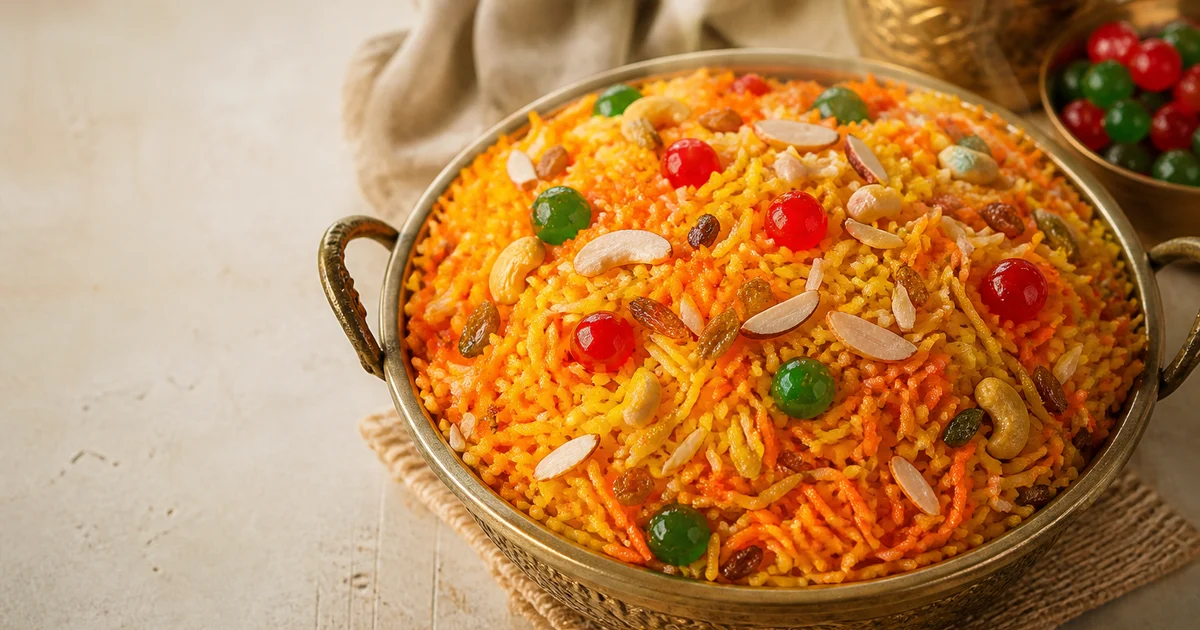
A commercial jorda recipe for about 50 portions, with separate rice grains, controlled sugar syrup, even colour and practical wedding scaling.
- Prep
- 40 min
- Cook
- 55 min
- Total
- 1 hr 35 min
- Yield
- about 50 plates at 150 to 160 g
- Difficulty
- Medium
- Cuisine
- Bangladeshi
Method
- 1
Wash and soak rice
Rinse the rice in several changes of cool water until the runoff is nearly clear, using gentle movements to avoid broken grains. Soak in fresh water for 30 minutes, then drain for 5 minutes while the boiling pot comes to temperature.
- 2
Prepare coloured boiling water
Dissolve the food colour completely in 100 ml warm water with no visible powder lumps. Bring 12 litres of water to a rolling boil, add the dissolved colour and salt, and maintain approximately 98 to 100°C.
- 3
Parboil rice until firm
Add the drained rice and allow the water to return to a rolling boil before starting the cooking time. Boil for about 6 to 8 minutes, stirring gently only twice, until a grain bends but retains a thin opaque core.
- 4
Drain and release steam
Drain the rice immediately into a large commercial colander and leave it undisturbed for 8 to 10 minutes. The grains should release visible steam and feel dry on the surface, with no water collecting below the colander.
- 5
Fry nuts and raisins
Heat 150 g of the ghee over medium heat at approximately 150°C. Fry the cashews for 2 to 3 minutes until pale golden, add the raisins for the final 30 seconds until swollen, then remove both without burning them.
- 6
Build the sugar syrup
Add the remaining ghee, cinnamon, cardamom and cloves to the heavy pot and cook for 60 to 90 seconds over medium-low heat. Add the sugar, 1 litre water and lemon juice, then simmer for 5 to 8 minutes until fully clear and 103 to 105°C, with a lightly tacky consistency.
- 7
Fold rice into syrup
Reduce to low heat and add the drained rice in three additions, folding from the bottom with a flat paddle after each addition. Cook uncovered for 4 to 6 minutes until no free syrup pools at the bottom and the grains are evenly glossy.
- 8
Steam on low heat
Cover the pot tightly and cook on the lowest flame for 20 to 25 minutes, using a heat diffuser if the burner is concentrated. Check once after 15 minutes; the rice should be tender and separate, with steady steam but no scorched-sugar smell.
- 9
Finish and rest batch
Turn off the heat and gently fold in the fried cashews, raisins, morobba, boondi, rose water and kewra water. Cover and rest for 10 minutes, then loosen once, check that the colour is even, and weigh the finished batch before portioning.
Notes for your kitchen
This commercial jorda recipe produces approximately 7.5 to 8 kg, enough for about 50 dessert portions of 150 to 160 g. It is designed as one manageable production module for restaurants, food carts and wedding caterers. Actual finished weight must be recorded because rice age, soaking time, drainage and syrup reduction can change yield.
Why jorda suits commercial service
Jorda works commercially because it can be produced before service, portioned quickly and sold without last-minute assembly. One trained cook can prepare a large batch while service staff only weigh, garnish and dispatch portions. The bright colour also gives the dish a clear visual identity on a dessert counter or wedding buffet.
The dish is less forgiving than it appears. Overcooked rice, wet syrup or an overloaded cooking pot can turn an entire batch into a sticky mass. A standard batch size, fixed portion weight and written cooking cues are therefore more important than relying on a cook's memory.
Ingredient selection and quality
Rice quality has the greatest effect on grain separation, while ghee and aromatic ingredients control the finished flavour. Use aged basmati for long, distinct grains. Chinigura can be used for a more traditional aroma, but its shorter and softer grains require gentler handling and a shorter boiling time.
Choose rice from one regular supplier and test every new lot. Newly harvested rice usually absorbs less water and breaks more easily, while aged rice expands better. Reject bags with excessive broken grains because broken pieces release starch and make the syrup cloudy and sticky.
Use pure ghee with a clean dairy aroma. Low-quality ghee remains noticeable after the rice cools. Cashews, raisins, morobba and boondi should taste fresh and have no stale-oil smell. Use only food-grade colour made for cooking and follow its strength guidance. Textile colour must never enter a commercial kitchen.
Technique beyond the basic steps
Successful jorda depends on stopping the rice before it is fully cooked and completing it inside a correctly reduced syrup. The boil, drain and dum stages must be treated as one connected process. If the rice is already soft before entering the syrup, sugar and folding will break it.
Keeping the grains separate
Rice for jorda should leave the boiling water at roughly 70 percent doneness. A grain should bend slightly and break under firm pressure, but the centre should retain a narrow opaque line. Do not wait until it tastes ready to eat.
Use at least five to six litres of boiling water per kilogram of raw rice so the temperature recovers quickly after loading. Keep the water at a rolling boil and stir only enough to prevent settling. Drain immediately and spread the rice loosely in the colander for 8 to 10 minutes. Trapped water is a major cause of diluted syrup and clumped grains.
Controlling the sugar syrup
The syrup should reach 103 to 105°C and look clear, glossy and lightly tacky before the rice is added. Below this range, excess water remains in the pot and makes the finished jorda wet. A heavily reduced one-string syrup is also unsuitable because it tightens quickly and prevents even absorption.
Lemon juice helps limit crystallisation, but it cannot repair sugar stuck to a dirty or repeatedly scraped pot wall. Dissolve the sugar fully over moderate heat, then avoid aggressive stirring. Use a clean probe thermometer for repeatable results, especially when several wedding batches are being made by different cooks.
Applying colour evenly
Colour is most even when it is dissolved completely and dispersed through the rice cooking water. Never drop concentrated powder directly onto cooked rice. That creates dark spots which cannot be removed without breaking the grains.
The drained rice should appear slightly lighter than the target colour because it deepens during syrup cooking and holding. Record the approved colour dosage for the specific product used because different brands have different strengths. Changing brands without a test batch can produce an unacceptable orange or red result.
Scaling for restaurants and weddings
Scale jorda in repeated modules rather than filling one pot beyond safe working capacity. Sugar, rice, ghee, flavourings and garnish can be multiplied directly, but cooking time and boiling water should not be multiplied blindly. A wider burner and heavier pot may reduce syrup faster than a smaller setup.
A 20 to 25 litre heavy pot is suitable for one 2 kg rice module, provided the pot remains below 60 percent full during folding. For 100 portions, cook two modules. For 250 portions, prepare five modules in parallel or staggered production. This controls grain damage and makes it possible to reject or correct one batch without losing the full wedding order.
For every scaled module, check the rice visually and measure the syrup temperature. Do not extend boiling time simply because the batch is larger. Assign one cook to syrup control and another to boiling and draining rice when producing several batches at once.
Holding, cooling and reheating
Hot jorda should be held at 60°C or above and served within four hours for the best grain texture. Keep it in shallow covered pans rather than a deep stockpot. Stirring repeatedly during holding breaks the rice, so loosen only the quantity needed for immediate service.
For refrigerated storage, transfer leftovers into shallow food-grade containers. Cool from 60°C to 21°C within two hours and from 21°C to 5°C within the next four hours. Label and refrigerate at 5°C or below, use within 48 hours, and discard any batch with uncertain time or temperature history.
Reheat once to a core temperature of 74°C. Cover the pan and use gentle steam or a combi oven at approximately 120°C, adding only 15 to 25 ml hot water per kilogram if the rice is dry. Direct high flame scorches the sugar before the centre becomes hot.
Portioning and yield control
A 150 to 160 g serving gives this batch approximately 50 controlled dessert portions. Use a digital scale during setup and choose a fixed serving spoon only after its average filled weight has been tested. A heaped spoon is not a reliable portion standard.
Weigh the complete batch after its resting period, subtract the container weight and divide by the approved serving weight. Follow a written portion control method for dine-in plates, takeaway cups and wedding buffet pans. Garnish should either be mixed evenly through the batch or issued at a fixed weight per pan so early portions do not receive all the cashews and morobba.
Mistakes that cost money
The most expensive jorda mistakes are overcooked rice, weak syrup, concentrated colour spots and uncontrolled portions. Overcooked rice cannot be restored by adding ghee. Wet jorda should not be corrected with more sugar because that increases sweetness without repairing the grain structure.
- Overloading the pot: Folding becomes forceful, lower grains crush and the top remains unevenly coated.
- Skipping drainage time: Surface water dilutes the syrup and creates sticky rice.
- Using strong heat during dum: Sugar catches on the base while the upper layer stays wet.
- Adding fragrance too early: Rose and kewra aromas evaporate during prolonged boiling.
- Mixing garnish unevenly: Portion value changes from plate to plate and premium ingredients disappear early.
- Keeping unrecorded leftovers: Staff cannot separate saleable stock from unsafe or poor-quality stock.
Keeping food cost stable
Stable jorda cost comes from fixed purchasing specifications, measured garnish and recorded finished yield. Track aged rice, ghee, cashews and other premium additions by supplier and pack specification rather than buying only by the lowest quotation. Use recipe costing whenever the rice grade, garnish mix or portion size changes.
Record broken rice, burnt syrup, returned buffet stock and overproduction instead of hiding them inside general consumption. Rosuii can record a production that converts measured raw materials into finished jorda and keep wastage entries for review. Compare the controlled serving weight with your target food cost percentage before changing garnish or menu positioning.
What drives the cost
Aged basmati rice, pure ghee and cashews usually dominate the ingredient cost, while morobba and boondi affect the cost according to garnish level. Cost moves most when rice grade, ghee quality, nut quantity or serving weight changes.
Ingredient rates move with the market, so this describes what drives the cost rather than quoting a figure.
Questions from kitchens
How should this jorda recipe be scaled for 100 or 250 servings?
How long can jorda stay on a wedding buffet?
Can Chinigura rice replace basmati rice?
What is the refrigerated shelf life of cooked jorda?
Why does the finished yield change between batches?
Related recipes
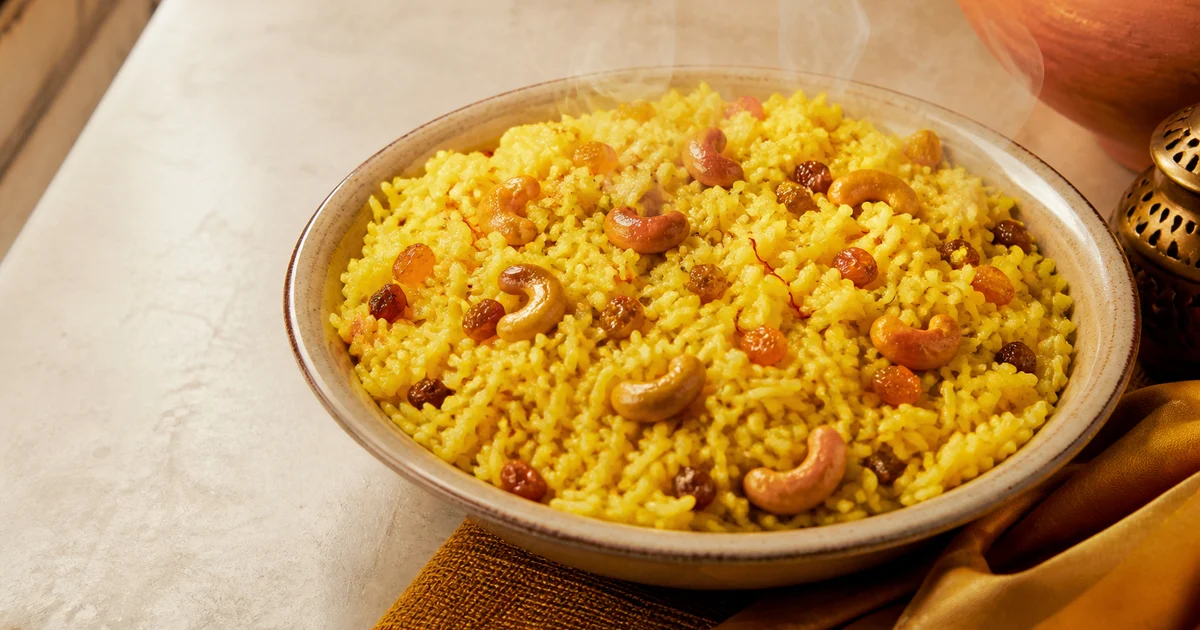
Commercial Basanti Polao Recipe
A 2 kg rice batch of golden, mildly sweet Basanti Polao for about 40 controlled portions, with practical cooking, holding and reheating guidance.
- Yield:
- about 40 plates
- Total:
- 1 hr 15 min
- Difficulty:
- Medium
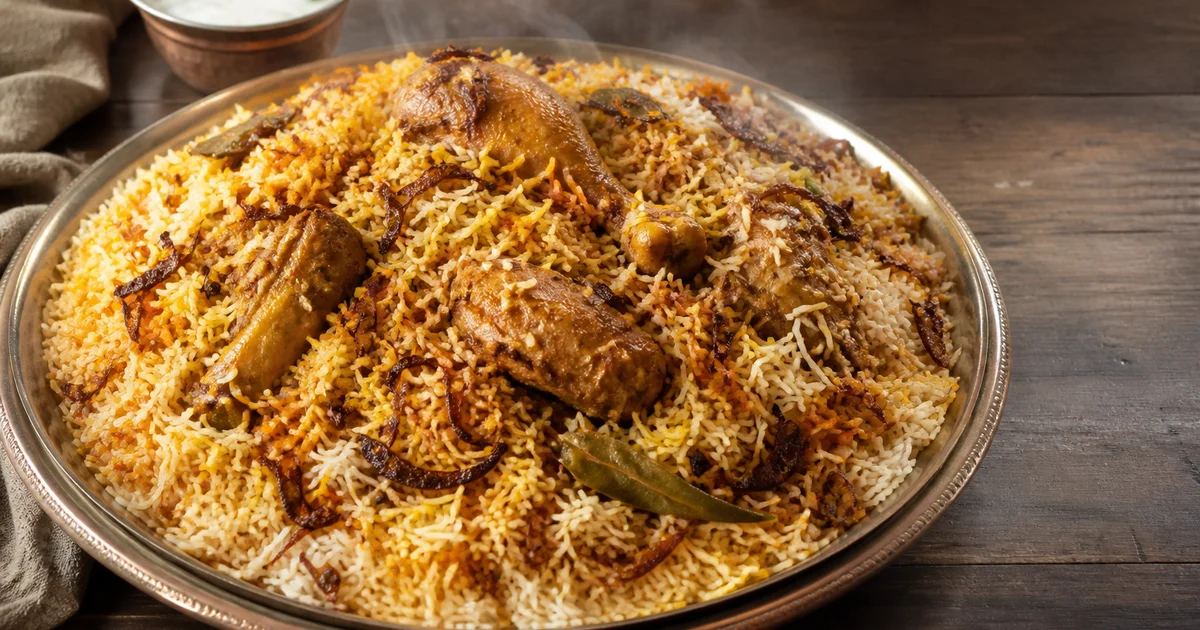
Commercial Chicken Biryani Recipe
A commercial pakki chicken biryani recipe yielding about 40 controlled portions, with guidance on par-cooking rice, dum, holding and scaling.
- Yield:
- about 40 plates
- Total:
- 4 hr 35 min
- Difficulty:
- Medium
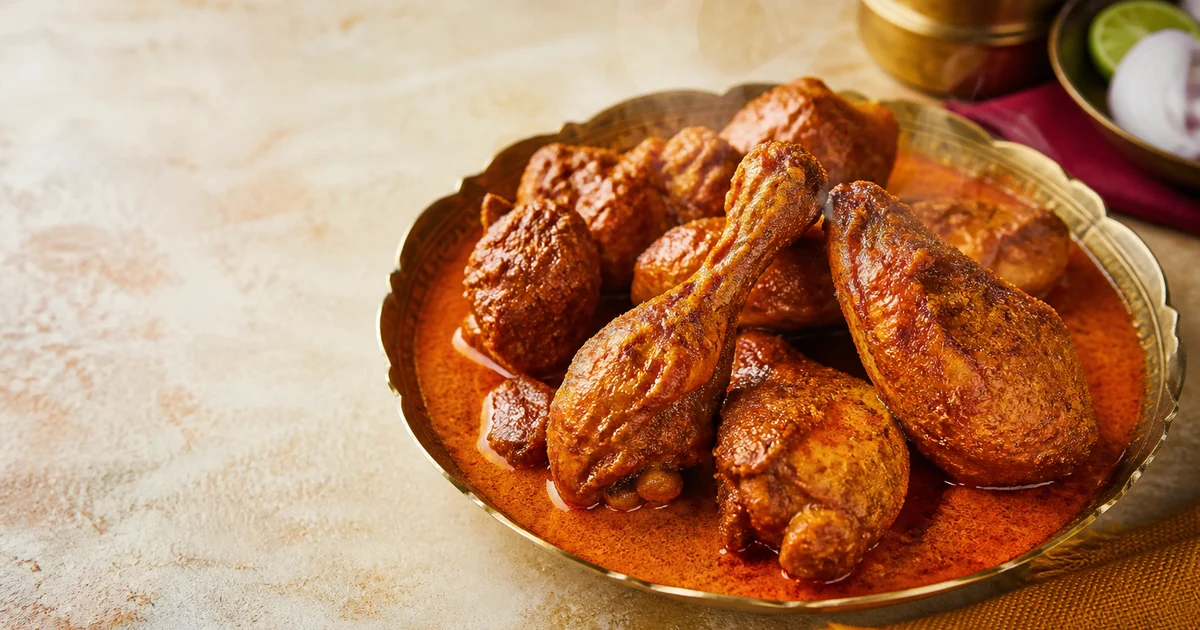
Commercial Bangladeshi Chicken Roast
A 40-portion biye-bari style chicken roast with first-fried chicken, controlled sweet-savoury gravy, catering yield guidance and service holding.
- Yield:
- about 40 plates
- Total:
- 2 hr 15 min
- Difficulty:
- Medium
Run your restaurant on Rosuii
POS, menu, inventory, payroll and more — built for Bangladeshi restaurants.
Start free