
Restaurant Recipes
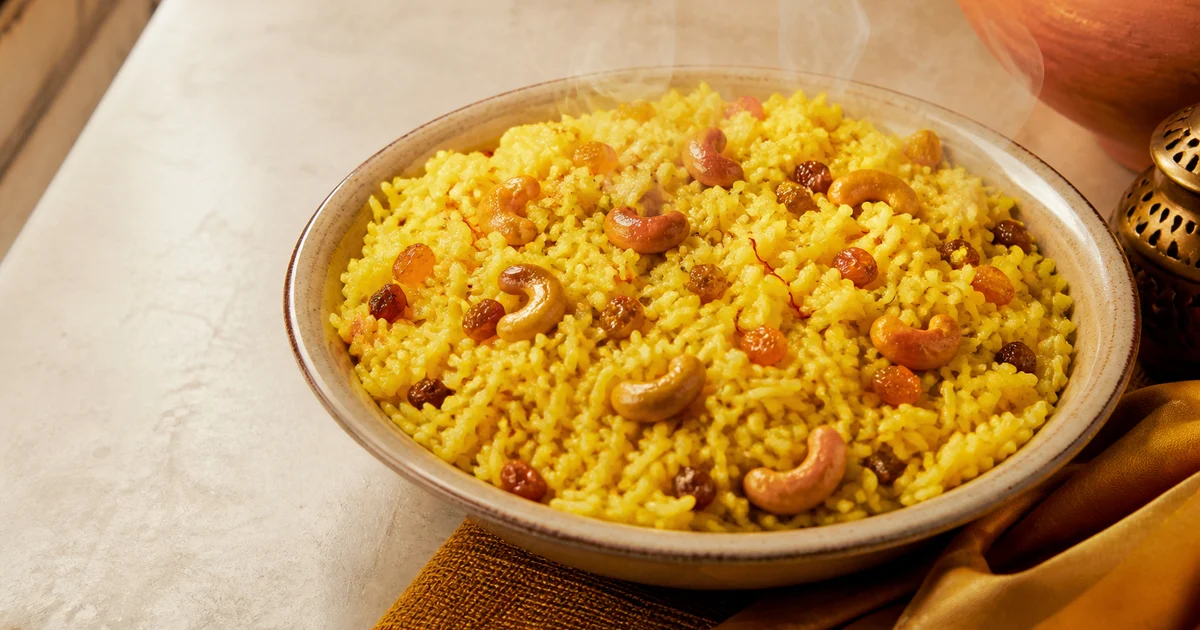
Commercial Basanti Polao Recipe
A 2 kg rice batch of golden, mildly sweet Basanti Polao for about 40 controlled portions, with practical cooking, holding and reheating guidance.
- Prep
- 30 min
- Cook
- 45 min
- Total
- 1 hr 15 min
- Yield
- about 40 plates
- Difficulty
- Medium
- Cuisine
- Bangladeshi
Method
- 1
Wash and drain rice
Wash the rice gently in three changes of cool water without rubbing the grains. Drain in a wide colander for 20 minutes until no water drips from the base. Do not soak, as softened short grains can break during frying.
- 2
Prepare hot liquids
Heat 2.7 litres of water to 90 to 95°C. Remove 300 ml to a separate jug and keep both portions hot. Cold water would slow the return to a simmer and cook the rice unevenly.
- 3
Fry nuts and raisins
Heat the ghee and soybean oil in the pot over medium heat to about 155 to 160°C. Fry the cashews for 2 to 3 minutes until pale golden, then remove them. Fry the raisins for 20 to 30 seconds only, removing them as soon as they swell.
- 4
Temper the whole spices
Reduce the heat to medium-low and add bay leaves, cinnamon, cardamom and cloves. Fry for 30 to 45 seconds until fragrant and lightly bubbling. Do not allow the cardamom or cloves to turn black.
- 5
Cook ginger and turmeric
Add the ginger paste and cook at medium-low heat for 60 to 90 seconds until its raw smell disappears. Add the turmeric and stir for 10 seconds only. The fat should look evenly golden, not brown or smoky.
- 6
Coat and fry rice
Add the drained rice and fold gently through the seasoned fat. Fry over medium heat for 5 to 7 minutes, lifting from the bottom with a flat paddle. The grains should look glossy, separate easily and make a faint clicking sound against the pot.
- 7
Start water absorption
Pour in 2.4 litres of the hot water, then add salt and green chillies. Bring to a steady boil, cover and cook over medium-low heat for 7 to 8 minutes. The rice should absorb most visible water but still have firm, chalky centres.
- 8
Add the sugar syrup
Dissolve the sugar in the reserved 300 ml hot water at 80 to 90°C. Pour it evenly around the edge of the pot and fold the rice once without scraping or compressing it. Cover and cook on low heat for 8 to 10 minutes until steam holes appear and no free liquid remains.
- 9
Finish on low dum
Scatter the fried cashews and raisins over the rice, sprinkle in the kewra water and cover tightly. Cook on the lowest heat for 6 to 8 minutes, then switch off and rest covered for 15 minutes. The grains should be tender at the centre, separate and golden without a wet bottom layer.
Notes for your kitchen
This basanti polao recipe produces about 5.2 kg of finished polao, enough for approximately 40 controlled 130 g portions served with roast. It is designed for a restaurant, food cart or event kitchen using one heavy commercial pot. The flavour is aromatic and mildly sweet, while the grains remain separate enough for clean portioning and transport.
Why Basanti Polao Works Commercially
Basanti Polao works commercially because it can be cooked ahead, portioned quickly and sold as part of a high-value roast combination. Its yellow colour is visible from the service counter, and the ghee aroma carries well when a hot pan is opened. It also uses a repeatable base that can accompany chicken roast, beef roast, mutton rezala, korma or a mixed event menu.
The dish is especially practical for wedding, office and community catering. A measured portion provides enough richness beside gravy without needing a large rice serving. Unlike plain steamed rice, however, it has narrow limits for sweetness, turmeric and fat. A poorly controlled batch can become bitter, greasy or sticky, so the kitchen should use a written batch sheet rather than seasoning by eye.
Ingredient Selection and Quality
Rice and ghee are the two ingredients where quality makes the largest difference. Use one consistent lot of aged Chinigura rice with a clean aroma and a low percentage of broken grains. Mixed rice lots absorb water differently, which creates hard grains in one batch and soft grains in the next.
Choose Rice for Aroma and Strength
Commercial Basanti Polao needs aromatic rice that can survive frying, covered cooking, holding and transport. Chinigura is appropriate for Bangladeshi service because its aroma matches roast and korma. Gobindobhog can be used, but it is softer and may need less water, so do not substitute it during a large event without a test batch.
Wash gently only until loose surface starch is removed. Aggressive rubbing creates broken grains, while long soaking makes short aromatic rice fragile. After washing, the draining period matters because water clinging to the rice changes the effective cooking ratio.
Balance Ghee, Turmeric and Sugar
The correct balance is enough ghee for aroma, enough turmeric for a warm golden colour and enough sugar for mild sweetness rather than a dessert taste. Soybean oil supports the ghee by reducing scorching and keeping the finished rice slightly lighter. Replacing all the ghee with oil lowers aroma, while using only ghee increases both cost and the risk of a heavy mouthfeel.
Fresh turmeric powder gives an even yellow colour at a low dose. Too much produces an earthy, bitter finish and can stain the rice a harsh orange-yellow. Turmeric strength varies by supplier, so approve one brand and colour standard before event production. The sugar level in this formula is restrained because roast gravy often contains sweetness from browned onion, milk or sugar.
Whole spices should smell fresh when crushed, but they should not dominate individual mouthfuls. Cashews must be pale, crisp and free from rancid odour. Raisins should be dry and separate rather than wet or heavily coated, as sticky raisins burn quickly in hot fat.
Technique for Intact Grains
Intact grains come from controlled draining, gentle frying, measured hot water and minimal stirring. Frying the drained rice coats its surface with fat and removes some remaining moisture. The rice is ready when the grains look glossy, move freely and make a light clicking sound against the pot.
Turmeric needs only a brief bloom in the fat. If it sits over high heat, it darkens before the rice is added and the entire batch tastes bitter. Ginger paste must first lose its raw smell, but it should remain pale rather than brown.
Add water hot so the pot returns to a simmer quickly. A long wait for cold water to boil gives the lower rice more cooking time than the upper layer. The sugar is introduced in reserved hot water after the first stage of absorption. This distributes sweetness without forcing the kitchen to stir dry sugar through partly cooked grains.
Use a heavy pot with a flat base and keep the rice layer below about 10 cm. Once covered, use low heat and avoid repeated checking. During the final rest, trapped steam finishes the centres and firms the grain surfaces. Fluff from the edge with a flat rice paddle, lifting rather than pressing or circling.
Scaling the Batch Safely
Scale the rice, ghee, sugar, salt, turmeric and garnish linearly, but adjust water according to pot width and batch depth. For a half batch in a similar pot, slightly more water per kilogram may be needed because a larger proportion escapes as steam. For a double batch, begin with 3 to 5 percent less water per kilogram because a deep pot loses proportionally less moisture.
Do not cook 4 kg of rice in a pot tested for 2 kg merely because the ingredients fit. Excess depth creates a soft bottom and a hard top. For large catering orders, two matched 2 kg batches are safer than one overloaded batch and are easier to move into hot-holding pans. Keep the same rice supplier, draining time, pot model and burner setting whenever possible.
Before changing rice variety or supplier, cook a 500 g trial and record water absorption. The finished test should show cooked centres without splitting, standing liquid or a wet layer at the base.
Holding and Reheating for Service
Hold Basanti Polao covered at 60°C or above, and aim to sell it within two hours for the best grain quality. It may remain under controlled hot holding for up to four hours, but the rice gradually dries and the ghee aroma weakens. Use shallow gastronorm pans no deeper than 6 cm and keep the lid closed between service periods.
For event delivery, transfer the rested polao to preheated insulated carriers. Do not pack it tightly, because compression breaks grains and creates dense portions. Keep roast gravy in a separate container so steam and sauce do not soften the polao during transport.
If cooked rice is not being held hot, cool it immediately in shallow pans. Bring it from 60°C to 21°C within two hours and from 21°C to 5°C within a further four hours. Refrigerate covered and use within 24 hours. Rice left warm at room temperature is unsafe because bacterial spores can survive cooking and grow during slow cooling.
Reheat only once. Add 50 to 80 ml of hot water per kilogram, cover and steam or heat in a combi oven until the centre reaches at least 74°C. A 5 cm-deep pan generally takes 8 to 12 minutes in strong steam, but temperature must be checked with a clean probe rather than assumed from time.
Portioning and Yield Control
A 130 g cooked portion is suitable when Basanti Polao is served with one piece of roast and gravy. This batch should provide about 40 portions after normal evaporation and careful handling. For a rice-led main plate without another starch, test a 160 to 180 g portion and recalculate the number of sellable plates.
Weigh the first several portions with the actual service spoon, then mark or standardise that spoon. Do not estimate yield from pot volume because loose and compressed rice occupy different volumes. Record the finished batch weight after resting, subtract any staff meal or tasting quantity, and divide the remaining weight by the approved serving size. A clear portion control system prevents oversized early servings from causing shortages at the end of an event.
Pairing with Roast for Events
Basanti Polao should support roast with aroma and mild sweetness rather than compete with its gravy. Keep the polao slightly drier for buffet service because roast gravy will add moisture on the plate. Position the rice first in the service line, followed by roast and gravy, so servers can see the portion and avoid flooding the entire plate.
For chicken roast, one controlled rice portion, one roast piece and a measured gravy ladle create a dependable catering plate. Avoid mixing roast gravy into the rice pan, even near closing time, because the remaining polao becomes difficult to hold, portion or reuse safely.
Mistakes That Cost Money
The most expensive mistakes are broken rice, unmeasured water, excess ghee, oversized portions and batches held longer than demand requires. These problems reduce sellable yield even when no ingredient is visibly thrown away.
- Too much turmeric: The colour becomes harsh and the bitter flavour cannot be removed without diluting the whole batch.
- Stirring during absorption: Soft grains break, release starch and turn an aromatic polao into a sticky mass.
- Guessing the water: Different cooks using different mugs create inconsistent texture and unpredictable yield.
- Adding all garnish early: Cashews soften, raisins split and both become harder to distribute evenly across portions.
- Overfilling holding pans: The lower rice compresses while the upper layer dries, producing uneven plate quality.
- Cooking without a sales forecast: Unsold cooked rice has a short safe life and loses quality after reheating.
Track rice, ghee, cashews and cooked yield through regular recipe costing. Ghee usage and garnish portions should be issued by batch rather than left open beside the stove. In Rosuii, the productions feature can record raw materials turned into the finished polao batch, while wastage records can identify burnt, leftover or rejected quantities. Compare that information with food cost percentage reports before changing the selling portion or garnish standard.
What drives the cost
Aromatic Chinigura rice and ghee dominate the cost, while cashew quantity can also move the batch cost noticeably. Cost changes mainly with rice grade, ghee purity, garnish size and whether portions are weighed consistently.
Ingredient rates move with the market, so this describes what drives the cost rather than quoting a figure.
Questions from kitchens
Can this Basanti Polao batch be doubled for 80 plates?
How long can Basanti Polao stay in a buffet warmer?
Can Gobindobhog rice replace Chinigura rice?
How should leftover Basanti Polao be stored and reheated?
Why did the batch produce fewer than 40 portions?
Related recipes
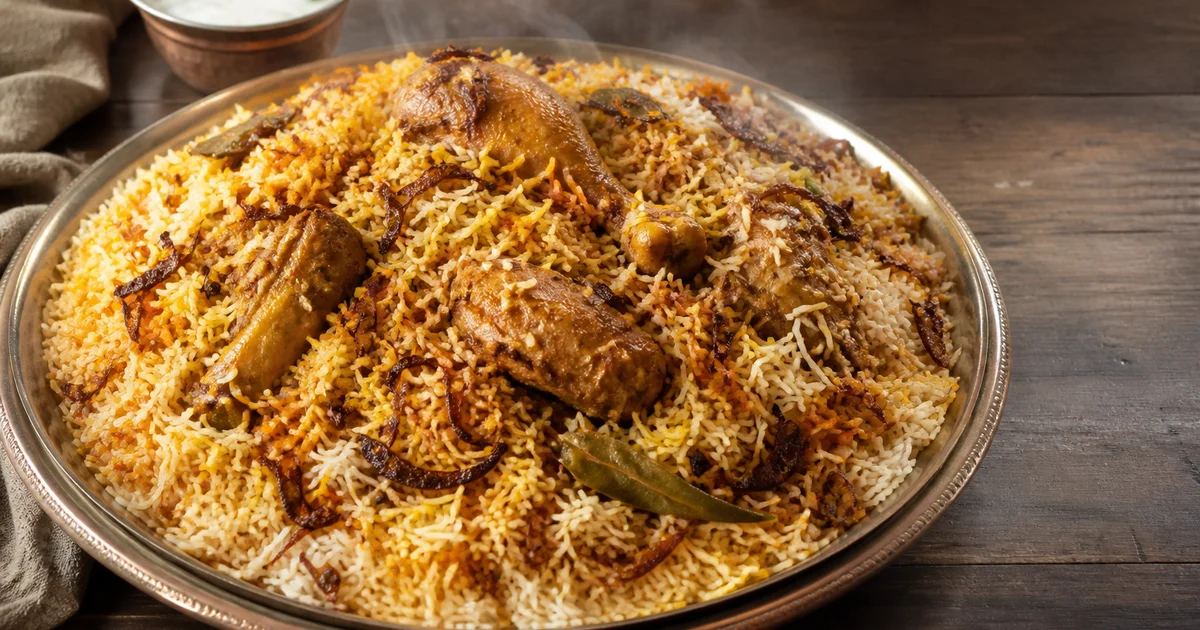
Commercial Chicken Biryani Recipe
A commercial pakki chicken biryani recipe yielding about 40 controlled portions, with guidance on par-cooking rice, dum, holding and scaling.
- Yield:
- about 40 plates
- Total:
- 4 hr 35 min
- Difficulty:
- Medium
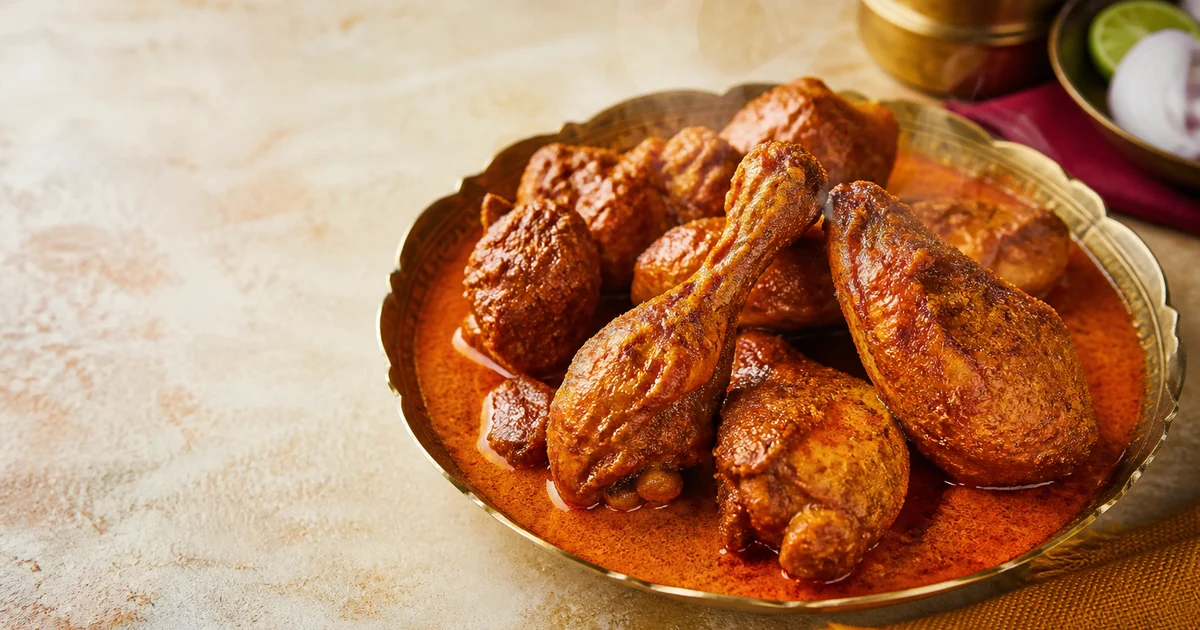
Commercial Bangladeshi Chicken Roast
A 40-portion biye-bari style chicken roast with first-fried chicken, controlled sweet-savoury gravy, catering yield guidance and service holding.
- Yield:
- about 40 plates
- Total:
- 2 hr 15 min
- Difficulty:
- Medium
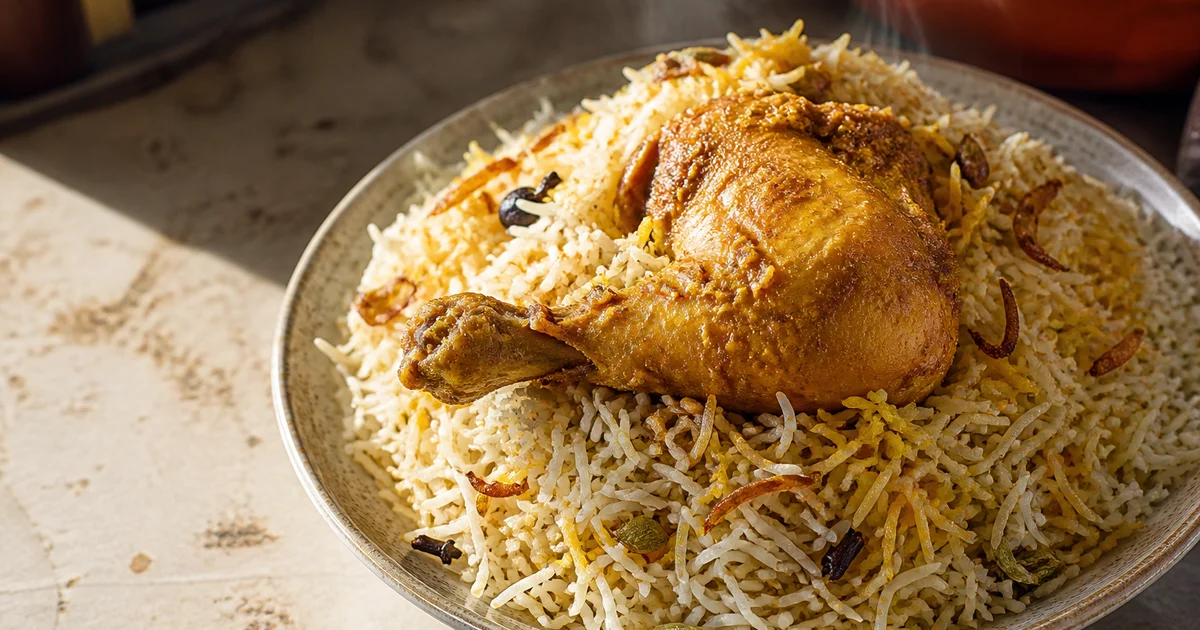
Commercial Morog Polao Recipe for 32 Plates
A commercial morog polao recipe yielding 32 controlled plates, with consistent chicken portions, milk-based korma, separate rice and service guidance.
- Yield:
- about 32 plates
- Total:
- 2 hr 35 min
- Difficulty:
- Medium
Run your restaurant on Rosuii
POS, menu, inventory, payroll and more — built for Bangladeshi restaurants.
Start free