Fire License for Restaurant in Bangladesh: Requirements, Cost and How to Apply
A practical guide to restaurant fire licensing in Bangladesh, covering documents, inspections, safety equipment, costs, renewal and enforcement risks.
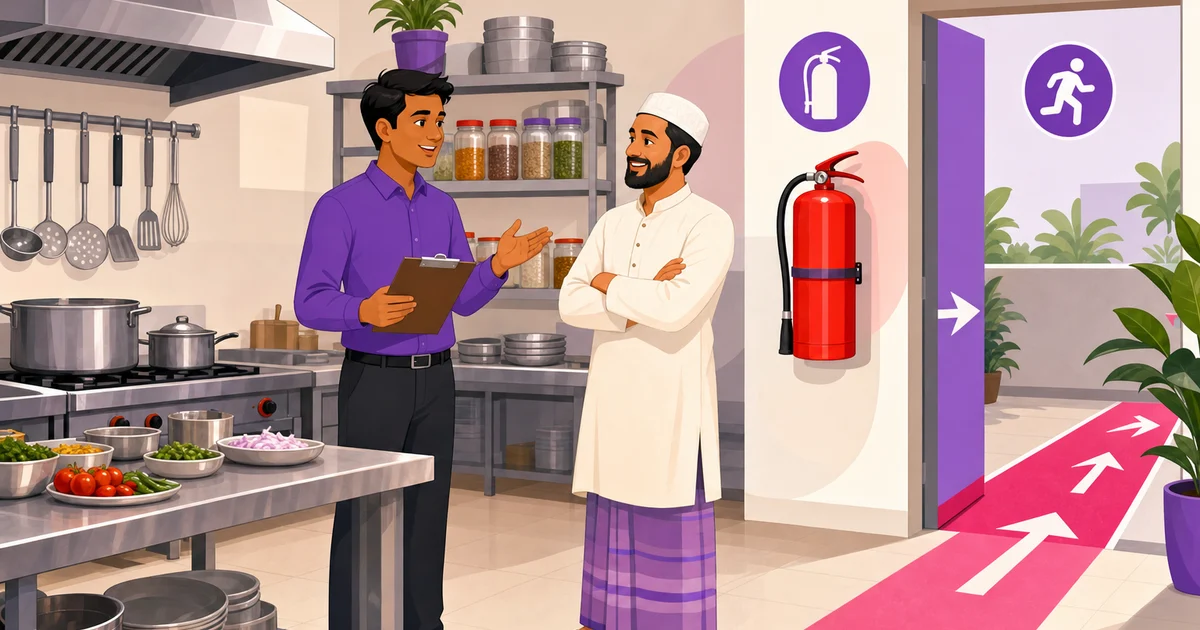
Getting a fire license for restaurant in Bangladesh is no longer paperwork that owners can safely postpone. After deadly restaurant fires and repeated enforcement drives, the Fire Service and Civil Defence, city corporations and other authorities are paying closer attention to commercial kitchens, emergency exits, building use and gas safety.
A licence alone does not make a restaurant safe. Inspectors will look at the actual condition of the premises, including extinguishers, cooking fuel, electrical risks and escape routes. This guide explains the practical steps, likely costs and preparation work, while recognizing that requirements can vary by location, building type and risk category.
What is a restaurant Fire Licence?
A Fire Licence is an approval issued by the Bangladesh Fire Service and Civil Defence, commonly known as FSCD, under the applicable fire prevention laws and rules. It confirms that the establishment has been assessed against the fire-safety requirements set for its use and risk profile.
Owners sometimes use the terms Fire Licence, Fire Safety Licence, fire certificate and Fire Service NOC interchangeably. They are not always the same document. A Fire Service NOC or clearance may be required for a building project, high-rise property, occupancy approval or specific business category. The operating restaurant may also need its own Fire Licence. Ask the local Fire Service office which approvals apply to both the building and the restaurant business.
A Fire Licence does not correct an unauthorized building use. If a property was approved as residential but is being operated as a restaurant, the owner may face objections from other agencies even after purchasing fire equipment. Confirm the approved use, occupancy permission and landlord documents before signing a long lease. Our guide to opening a restaurant in Bangladesh covers the wider sequence of registrations and operational planning.
Who needs a fire license for restaurant in Bangladesh?
A restaurant is a commercial establishment where open flames, hot oil, electricity, crowds and combustible materials can exist in the same space. Owners should therefore not assume that a small dining room, takeaway counter or café is automatically exempt.
Fire Service scrutiny is particularly important for:
- Restaurants using LPG, piped gas, charcoal, wood-fired ovens or other cooking fuel.
- Restaurants in multi-storey, mixed-use, shopping-centre or high-rise buildings.
- Venues with substantial seating, banquet activity or a high number of staff and guests.
- Basement kitchens, rooftop restaurants and premises with limited access or only one practical exit.
- Businesses storing several LPG cylinders, packaging, cooking oil or other combustible stock.
- Food courts and shared buildings where evacuation depends on common stairs and exits.
There is no safe universal seating number that every restaurant can use as an exemption threshold. Occupant-load and seating thresholds may affect the required number and width of exits, alarms, stairs and other measures, but the assessment also depends on floor area, building height, approved use and cooking arrangement. Ask the Fire Service station responsible for your area to classify the premises before relying on a number quoted by an agent, landlord or another restaurant.
Documents commonly required
The precise checklist can change, and an online application may request different attachments depending on the establishment. Prepare clear, current copies rather than photographs with missing corners.
- Completed Fire Licence application form or online application.
- Valid trade licence showing the correct business name, address and activity.
- National ID and photographs of the proprietor, partners or authorized representative, as requested.
- Partnership deed, company incorporation papers or other ownership documents where applicable.
- e-TIN and related business identification documents if requested.
- Rent agreement, lease deed or proof of ownership.
- Landlord or building-owner NOC where applicable.
- Approved building plan, floor layout or architectural drawing showing the kitchen, dining area, stairs and exits.
- Fire-safety or firefighting layout for larger or higher-risk premises.
- Details of LPG storage, gas lines, electrical supply and installed safety equipment.
- Previous licence and payment evidence for a renewal application.
The restaurant address and legal name should match across the trade licence, lease and application. Correcting a mismatch after inspection can waste time. If the trade licence is not ready, review the restaurant trade licence process in Bangladesh first.
How to apply for a restaurant Fire Licence
- Confirm the building can legally host a restaurant. Check the approved use, lease conditions, shared exit arrangements and any restrictions imposed by the building owner, city corporation or development authority.
- Speak to the responsible Fire Service office. Describe the floor, seating, cooking fuel, cylinder count and building height. Request the current document checklist and applicable application channel.
- Prepare the layout and safety plan. Mark the kitchen, dining room, storage, electrical panel, gas shut-off, cylinder location, extinguishers and every route to a safe exit.
- Submit the application and documents. Applications may be handled through the designated online system and relevant Fire Service office. Keep the application number, payment receipt and copies of every attachment.
- Arrange the inspection visit. The premises should be operationally ready enough for the inspector to assess real conditions. Boxes, furniture or construction materials must not block exits.
- Correct any observations. If the inspector asks for another extinguisher, safer cylinder storage, exit signs or electrical corrections, complete the work and keep invoices and photographs.
- Collect and display the licence. Check the business name, address, conditions and expiry date. Keep the original safely and a visible copy on the premises if instructed.
What inspectors actually look for
Buying two red extinguishers and placing them beside the cash counter is not enough. Equipment must suit the hazard, remain accessible and be maintained.
Correct fire extinguishers
Cooking-oil fires require an extinguisher suitable for the specific kitchen hazard, commonly a wet-chemical unit for high-temperature oils and fats. Dry-powder or other approved extinguishers may be specified for LPG and general risks, while CO2 units are commonly used around electrical equipment. The final selection, capacity and placement should follow Fire Service instructions and qualified fire-safety advice.
Never throw water on burning cooking oil or energized electrical equipment. Extinguishers should be mounted or positioned visibly, carry valid service information and remain reachable without moving stock.
Clear exits and evacuation routes
Inspectors may check exit width, travel path, stair access, door operation, emergency lighting and signs. An exit that passes through a locked shutter, crowded storeroom or active cooking line may not be acceptable. Keep stairs and corridors free of cartons, spare chairs and delivery stock.
Gas cylinders and fuel lines
LPG cylinders should remain upright, secured, ventilated and away from flames, hot surfaces and electrical ignition sources. Regulators, hoses, manifolds and shut-off valves must be suitable and maintained. Do not hide cylinders in an unventilated cabinet simply to improve the dining-room appearance. The Fire Service may require cylinders to be placed outside the kitchen or in a designated cage, depending on the premises.
Kitchen hoods, ducts and housekeeping
Grease inside a hood, filter or duct can carry a small pan fire through the building. Set a documented cleaning schedule based on cooking volume. Inspectors may also notice grease beside burners, overloaded sockets, loose electrical connections, stock beside heat sources and poor separation between the kitchen and escape route.
Alarms and larger-building systems
Depending on building size and risk, requirements may include smoke or heat detection, manual alarm points, hose reels, hydrants, pumps, emergency lighting, fire-rated separation, sprinkler systems or a dedicated water supply. A small ground-floor café and a rooftop restaurant in a multi-storey building will not receive the same assessment.
Government fees and the real-world cost
There is no reliable single fee that applies to every restaurant. Official charges can depend on the business category, risk classification, floor area, location, licence period and current government schedule. VAT or other prescribed charges may also appear. Use the amount generated by the official process or confirmed by the local Fire Service office, and insist on a government receipt.
| Cost area | What it may include |
|---|---|
| Government charges | Application, licence, renewal and prescribed taxes or fees. |
| Drawings and professional support | Floor plans, fire-safety layout, engineering review or lawful application assistance. |
| Safety equipment | Extinguishers, signs, emergency lights, alarm devices, cylinder cage and approved gas fittings. |
| Building upgrades | Exit corrections, electrical work, fire-rated separation, hydrant, pump or detection system. |
| Ongoing maintenance | Extinguisher servicing, alarm testing, hood cleaning, drills and replacement of damaged items. |
For a small, straightforward outlet, equipment and minor corrections may cost tens of thousands of taka. A large restaurant or an unsuitable multi-storey property can require several lakh taka or more in building systems and remedial work. These are planning ranges, not government quotations. Get itemized quotes and avoid anyone promising approval without inspection.
Renewal, records and ongoing compliance
Fire Licences are generally issued with an expiry date and require periodic renewal, commonly annually. Follow the date printed on your own licence rather than assuming the cycle. Apply before expiry because an inspection, updated payment or correction may be required.
Maintain a file containing the licence, application, drawings, inspection observations, equipment invoices, service tags, hood-cleaning records, gas maintenance records and staff drill notes. Store scanned copies in a controlled cloud folder. Record extinguisher servicing, safety repairs and renewal payments in your expense system so management can budget for them and produce evidence when needed.
Fire compliance sits alongside tax and business registrations. For the tax side, see our practical guide to BIN registration for restaurants in Bangladesh.
Penalties and closure risk
Operating without the required licence, allowing it to expire or ignoring serious hazards can lead to notices, fines, prosecution or closure under the powers of the relevant authorities. During coordinated enforcement drives, unsafe restaurants may be sealed or ordered to stop operating, particularly where the building use, exits and fire arrangements create an immediate risk.
Do not wait for a mobile court or inspection campaign. Review exits at opening and closing, assign staff to check gas shut-off procedures, train employees to raise the alarm and use extinguishers only when safe, and keep emergency numbers visible. Confirm current rules, fees and forms directly with your local Fire Service station because procedures can change.
Keep the business side organized
Fire safety depends on suitable premises, trained people and maintained equipment. Digital restaurant tools cannot replace those duties, but they can make the administrative side easier. Rosuii helps Bangladeshi restaurants record expenses, manage employees, control branches and review operating reports in English or Bangla. Keep your official compliance documents separately, then use accurate expense records to track renewals, repairs and safety-equipment spending.
Ready to organize your restaurant operations from one cloud platform? Register for Rosuii and start free.
Updated:
Frequently asked questions
Is a Fire Licence mandatory for a small restaurant in Bangladesh?
How much does a restaurant Fire Licence cost in Bangladesh?
How often must a restaurant Fire Licence be renewed?
Which fire extinguisher is suitable for a restaurant kitchen?
Can a restaurant operate while its Fire Licence application is pending?
Run your restaurant on Rosuii
POS, menu, inventory, payroll and more — built for Bangladeshi restaurants.
Start free