Restaurant Opening Equipment Checklist Bangladesh: Kitchen, POS and Safety
A zone-by-zone equipment list that begins with menu and service capacity, then checks utilities, food safety, POS, handover and replacement parts.

Last verified: 2026-08-30
A restaurant opening equipment checklist in Bangladesh should be built from the menu, expected peak orders, cooking method, floor plan, utilities and service model. Buying a generic package first often creates the wrong capacity, blocked movement, overloaded circuits, missing wash facilities or equipment that cannot be cleaned and maintained locally.
Use the checklist below to create a schedule with quantity, specification, load, location, supplier, warranty, spare parts, installation, testing and owner. Then have qualified professionals and the relevant authorities review safety, food-establishment, fire, gas, electrical, ventilation and structural requirements for the actual premises.
Start with an equipment schedule
Give each item an ID that appears on the layout, quote, delivery note and asset register. A supplier description such as commercial oven is not enough to confirm capacity or utility compatibility.
Mark must-open, can-open-with-fallback and post-opening items. Protect the equipment needed for a safe core menu before spending on decorative or rarely used machines.
| Field | What to record |
|---|---|
| Need | Menu/process served and peak quantity per hour |
| Specification | Capacity, dimensions, material, temperature/power and controls |
| Site | Zone, clearance, drainage, ventilation and operator space |
| Utility | Electrical load/phase, gas, water, drain, network or exhaust |
| Commercial | Supplier, quote, tax, delivery, installation, warranty and payment |
| Readiness | Inspection, calibration, test batch, training and acceptance owner |
| Continuity | Cleaning parts, consumables, spare part, service contact and fallback |
Menu-to-equipment matrix
List every menu family and map receiving, cold or dry storage, prep, cooking, holding, plating, washing and waste steps. Record batch size, cycle time and peak concurrent demand. Shared equipment needs a combined load calculation, not a separate optimistic assumption for each dish.
Test bottlenecks with the real ticket mix. A fryer may meet average demand but fail when three combos arrive together. A refrigerator may have enough litres yet lack separate, accessible storage for the restaurant's safe process.
Zone-by-zone opening list
| Zone | Equipment categories to assess |
|---|---|
| Receiving | Scale, inspection surface, trolley, probe/record tools and quarantine area |
| Cold storage | Chiller/freezer, shelving, monitoring, backup plan and door/airflow clearance |
| Dry storage | Raised cleanable shelving, bins, labels, pest-safe layout and lighting |
| Preparation | Food-safe tables, boards/tools, sinks as approved, processors and portion tools |
| Cooking | Range, oven, fryer, grill, rice/steam equipment, hood/exhaust and suppression as required |
| Holding/pass | Approved hot/cold holding, heat lamps if suitable, shelves, KDS/printer and expo space |
| Washing | Warewashing, pre-rinse, sinks, drying racks, chemical control and handwashing |
| Waste/cleaning | Covered bins, segregation, cleaning store, tools and drainage controls |
| Front/POS | POS device, receipt printer, cash drawer if used, router/network, UPS and customer display if selected |
Food-safety and cleanability check
Inspect food-contact material, damaged joints, inaccessible gaps, drainage, splash and cross-traffic. Confirm that staff can dismantle, clean, rinse, sanitise where required, dry and reassemble the equipment with the supplied tools and time. A machine that looks impressive but cannot be cleaned in the site workflow is a liability.
BFSA publishes a restaurant grading evaluation form and food-establishment materials. Use the current documents with professional advice to convert requirements into the site's handwashing, storage, pest, waste, temperature and hygiene controls.
Sources for this section: BFSA restaurant grading evaluation form
Utility and site verification
Do not rely on plug shape or supplier assurance. Give equipment data sheets to the qualified designer and installer. Confirm the unit can physically enter the building and be removed for major service without demolishing finished work.
| System | Verify before purchase |
|---|---|
| Electricity | Available load/phase, circuit, earthing, isolation, cable route and backup priority |
| Gas/fuel | Approved supply, isolation, ventilation, detection and qualified installation |
| Water | Supply, quality need, pressure, heater demand and shut-off |
| Drainage | Connection, fall, traps, grease control and cleaning access |
| Ventilation | Heat/smoke load, hood, make-up air, duct route and discharge approval |
| Network | POS/KDS coverage, wired points, router, failover and protected cabling |
| Space | Delivery route, doorway/lift, operating clearance, service access and escape path |
POS, printing and kitchen screens
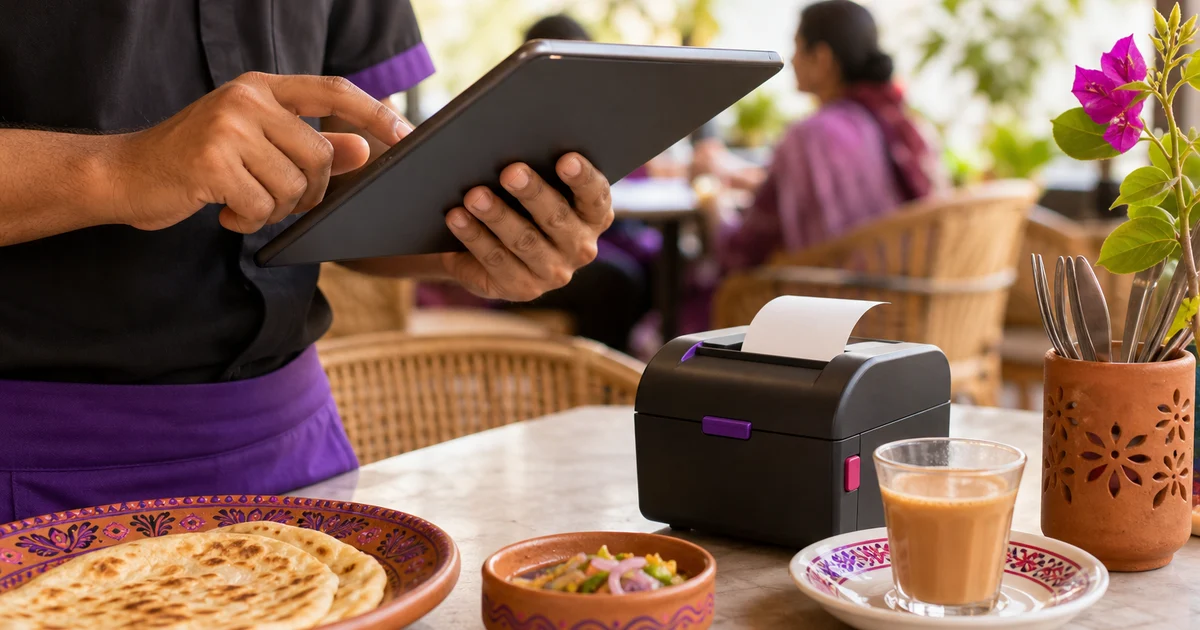
Choose devices for the workflow: fixed cashier, waiter tablet, kitchen display, kitchen printer, receipt printer, customer display, barcode or label printer and network equipment only where needed. Confirm print width, interface, driver compatibility, paper availability and heat/moisture placement.
Plan offline order-taking and fallback printing, but do not assume every online function works during an outage. Put networking and UPS equipment where it can be maintained, label cables and keep administrator credentials controlled.
Compare total ownership, not purchase price
A cheaper machine can be more expensive if parts, service or consumables are unavailable. Ask for warranty exclusions and who pays transport. Verify claims in writing and speak with operators using the same model in a similar workload.
| Cost group | Questions |
|---|---|
| Acquisition | Unit, tax, freight, lift, installation and commissioning included? |
| Fit-out | Power, gas, water, drain, exhaust, platform or wall change needed? |
| Operation | Energy, labour, cleaning chemical and consumable demand? |
| Maintenance | Local technician, response, preventive service and spare price? |
| Downtime | Safe fallback, backup item and revenue/menu impact? |
| End of life | Removal, resale, disposal and replacement access? |
Commission before opening night
- Delivery quantity, model, serial and damage checked
- Qualified installation and required approvals documented
- Safety guards, isolation and emergency steps demonstrated
- Temperature, weight or timer controls checked/calibrated as applicable
- Full-load and representative menu test completed
- Cleaning and daily/weekly maintenance practised
- Staff training and authorised-user list signed
- Manuals, warranty, invoice and service contacts filed
- Spare parts and consumables received
- Defects assigned with deadline before final acceptance
Opening-day readiness board
Review the board with kitchen, service, safety and finance owners. Do not turn a red safety or utility blocker green because opening invitations have been sent.
| Status | Meaning |
|---|---|
| Green | Installed, tested, trained, cleaned and documented |
| Amber | Safe approved fallback exists; owner and completion time recorded |
| Red | Safety, capacity, utility or approval blocker; affected menu/process cannot open |
| Deferred | Not required for safe core opening; budget and trigger documented |
How we calculated and verified this
This is a planning and commissioning checklist, not an approved engineering design, procurement specification or licence list. Equipment quantity and capacity must come from the menu, forecast, layout, utilities, local approvals and qualified fire, electrical, gas, ventilation and food-safety advice.
BFSA sources are linked for the current food-establishment and responsible-person context. No equipment price, mandatory brand, cooking capacity or legal certification is invented.
The right equipment list begins with what the restaurant must produce safely at peak demand. It ends with installed, tested, cleanable and maintainable assets, not unopened boxes and supplier promises.
Build the menu-to-equipment matrix, verify utilities and total ownership, then commission with the people who will operate and clean each unit. Let qualified professionals and authorities approve the premises-specific safety and compliance decisions.
Related guides
- Restaurant Opening Cost in Bangladesh
- Restaurant Opening Timeline
- Restaurant Kitchen Layout Design
- Restaurant Fire Safety Checklist
See this workflow in Rosuii: Run restaurant POS, menu, stock, purchasing and kitchen operations in Rosuii
Sources checked
Last updated:
Frequently asked questions
What equipment is needed to open a restaurant?
Should equipment be bought before the kitchen layout is final?
How should restaurant equipment capacity be calculated?
What POS equipment does a restaurant need?
What should be checked during commissioning?
Run your restaurant on Rosuii
POS, menu, inventory, payroll and more — built for Bangladeshi restaurants.
Start free