
Restaurant Recipes
Beef Chilli Onion
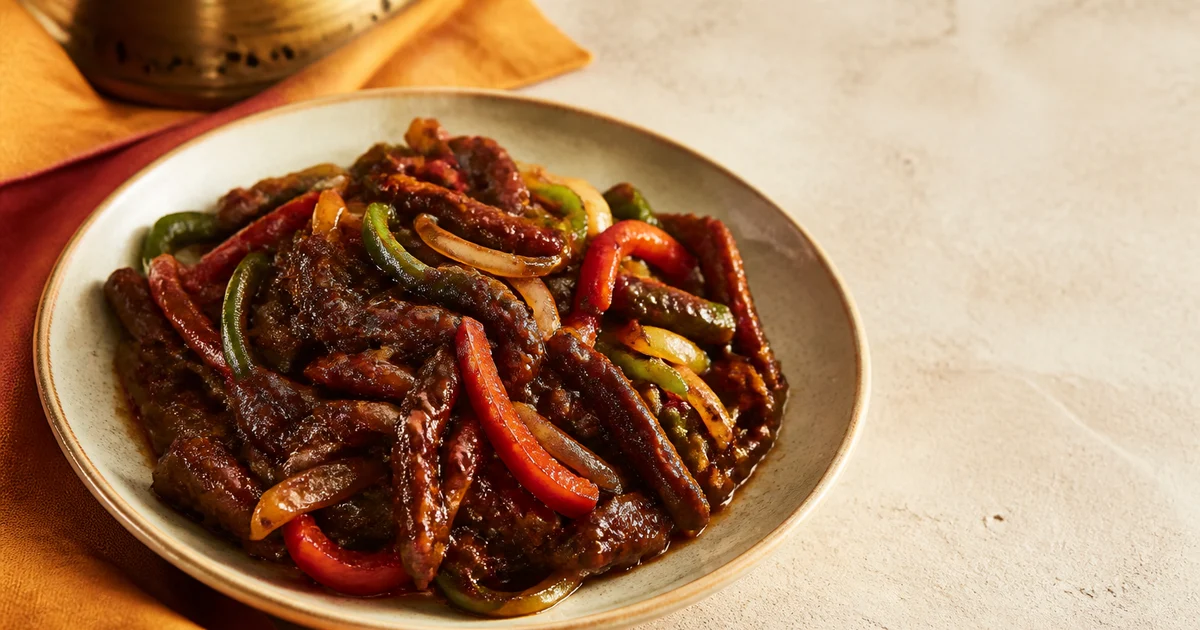
A commercial beef chilli onion recipe for 40 plates, covering tender beef slicing, velveting, fast wok finishing, portion control and safe service holding.
- Prep
- 1 hr
- Cook
- 45 min
- Total
- 1 hr 45 min
- Yield
- about 40 plates
- Difficulty
- Medium
- Cuisine
- Chinese
Method
- 1
Trim and slice beef
Hold the beef at 0°C to 2°C for 30 to 45 minutes until firm but not frozen solid. Identify the grain and slice across it into pieces about 3 mm thick and 5 to 6 cm long. Remove all silver skin and hard fat; the slices should bend easily without long visible fibres.
- 2
Apply the velvet marinade
Mix baking soda, salt and 400 ml cold water into the beef for 2 to 3 minutes until the water is absorbed. Add 120 ml light soy sauce and the egg white, mix for 1 minute, then fold in 200 g cornflour and 160 ml oil. Cover and hold at 5°C or below for 20 to 30 minutes; the coating should look even and tacky.
- 3
Prepare vegetables and sauce
Keep the prepared onion, capsicum, chilli, garlic, ginger and spring onion in separate covered containers at 5°C or below. Mix 1.5 litres stock with the oyster sauce, remaining light soy, dark soy, white pepper, sugar and vinegar. Mix the reserved 300 ml cold stock with the remaining cornflour, and keep this slurry separate at 5°C or below.
- 4
Water velvet the beef
Heat 12 litres of water in the stockpot to 88°C to 92°C without allowing a rolling boil. Add no more than 500 g beef at a time, separate the slices immediately and cook for 60 to 75 seconds. Remove when the coating has set and the outside is grey but the centre remains underdone.
- 5
Drain and cool quickly
Drain each batch for 2 minutes without pressing the beef. For immediate service, keep it covered and complete cooking promptly; for later service, spread it no deeper than 3 cm in shallow trays. Cool from 60°C to 21°C within 2 hours and to 5°C or below within another 4 hours.
- 6
Heat the service wok
Preheat a clean carbon-steel wok over maximum flame for 60 to 90 seconds until the surface exceeds about 220°C and shows a faint haze. Add 20 to 25 ml oil for a two-portion order and swirl it around the cooking surface. The oil should move freely and shimmer without producing heavy smoke.
- 7
Flash cook the vegetables
Add about 15 g combined garlic and ginger and stir for 5 to 8 seconds. Add 120 g onion, 60 g capsicum and about 15 g chilli for two portions, then toss for 25 to 35 seconds. The onion edges should blister lightly while the centres remain crisp.
- 8
Finish beef and sauce
Add the velveted beef prepared from 200 g raw meat and toss for 20 seconds. Add about 120 ml sauce base, bring it to a strong boil, then stir the slurry and add 15 to 20 ml as needed. Cook for 30 to 45 seconds until the sauce is clear, glossy and clings thinly, with the beef reaching at least 74°C if it was chilled.
- 9
Season and portion immediately
Add measured sesame oil and spring onion, toss for 5 to 10 seconds and remove the wok from the flame. Taste the first service batch and correct only the sauce base, not individual plates. Serve two equal portions immediately, each containing the beef yield from 100 g raw trimmed meat.
Notes for your kitchen
This beef chilli onion recipe produces about 40 controlled restaurant portions with tender beef, crisp onion and a glossy savoury sauce. It is designed for advance preparation followed by fast finishing in a hot wok. Each plated portion should contain beef prepared from 100 g raw trimmed meat, vegetables and enough sauce to coat without flooding the plate.
Why the dish suits commercial service
Beef chilli onion works commercially because most labour can be completed before service while the final cooking takes less than three minutes. The beef can be sliced, velveted and pre-portioned during preparation hours. Vegetables and sauce can also be measured in advance, leaving the wok cook to combine one or two orders quickly.
The dish uses familiar Bangladeshi restaurant ingredients and can be sold with fried rice, steamed rice, noodles or a set meal. Onion provides volume without hiding the beef, while green chilli lets the kitchen offer mild and hot variations from the same prepared base. A two-portion wok limit keeps the meat tender and helps a food cart work with a medium commercial burner.
Ingredient quality and selection
The quality of the beef and the direction of slicing matter more than buying an expensive imported sauce. Use a reasonably lean boneless cut such as topside, knuckle, rump or tender shoulder muscle. Remove silver skin, thick connective tissue and large seams of hard fat because these remain chewy after quick cooking.
Buy beef in muscles large enough to show a clear grain. Small mixed trimmings are difficult to slice consistently and create uneven cooking loss. Chill the meat until firm but not frozen solid, then cut across the visible muscle fibres. A slice cut with the grain can remain stringy even after correct velveting.
Use firm onions that separate into clean wedges. Soft onions release water and collapse before the beef is hot. Capsicum should be dark green and crisp, while green chillies should be selected by heat level rather than size alone. Light soy sauce supplies seasoning, dark soy supplies colour, and oyster sauce supplies body. Excess dark soy makes the dish bitter-looking and can hide poor browning.
Slicing and velveting technique
Correct slicing and controlled velveting make ordinary restaurant beef tender without turning it soft or spongy. Cut slices about 3 mm thick and 5 to 6 cm long. Keep the knife slightly angled to create a wider surface, but maintain one thickness throughout the batch.
Baking soda raises the surface pH and limits tightening during cooking. It must be weighed accurately because excess soda causes an alkaline taste and an unnaturally soft texture. Water is massaged into the beef before the starch and oil are added. The beef is ready when the surface looks moist and tacky rather than surrounded by loose liquid.
Water velveting is suitable for a cart or kitchen that does not maintain a dedicated oil-passing station. Keep the water below a rolling boil and work in small batches. The starch coating should set on the outside while the centre remains undercooked. Overcrowding drops the water temperature, washes off the coating and makes the beef release juice later in the wok.
Wok speed at order time
A fast wok finish depends on heat recovery, small loads and every component being within reach before cooking starts. Heat the empty wok until a faint haze appears, then add oil and begin immediately. For two portions, use beef prepared from 200 g raw meat, about 120 g onion, 60 g capsicum and the corresponding chilli.
Cook the aromatics briefly without browning them. Toss the onion and capsicum only until their cut edges brighten and show light blistering. Add the beef, sauce base and measured slurry, then boil until the sauce becomes clear and glossy. The wok should finish one or two portions in roughly two minutes; a larger load steams instead of searing.
Scaling the batch safely
Scale preparation by weight, but keep each velveting and wok load the same size. For a half batch, divide every ingredient by two. For a double batch, prepare twice the sauce, vegetables and marinade, but do not put twice as much beef into one bowl or wok.
Large tubs make even marinade distribution difficult. Divide beef into containers holding no more than 4 to 5 kg and record the weight added to each one. Sauce can be multiplied directly, but cornflour slurry should remain separate and be stirred before every measure because starch settles quickly.
Test a new beef supplier with a small cooked sample before scaling the entire production. Different muscles can release different amounts of water, affecting tenderness, sauce thickness and final yield. Record trimmed weight and cooked velveted weight to improve recipe costing.
Holding and reheating for service
The best service system holds components separately and cooks the completed dish only after an order is received. Keep marinated raw beef at 5°C or below and use it within 24 hours. If the beef is water-velveted in advance, spread it in shallow trays and cool it from 60°C to 21°C within two hours, then to 5°C or below within a further four hours.
Store velveted beef covered at 5°C or below and use it within 24 hours. Keep cut vegetables dry and chilled, sauce base in a separate covered container, and slurry in a labelled bottle or jug. Do not mix sauce with vegetables before service because salt draws out water.
A completed wok batch loses quality quickly. If unavoidable, hold it above 60°C for no more than 30 minutes, understanding that the onion will soften and the sauce will continue thickening. Reheat chilled components in the wok until the centre of the beef reaches at least 74°C. Do not repeatedly cool and reheat returned portions.
Portioning and yield control
Portion control starts with raw trimmed beef rather than estimating cooked meat by eye. This batch allocates 100 g raw trimmed beef per plate and should produce about 40 portions. After velveting, calculate the actual cooked yield and divide it into 40 equal containers or tray sections.
Use a scale for beef and vegetables and a fixed ladle for sauce. The finished serving will normally weigh about 190 to 220 g depending on beef moisture loss and sauce reduction. Rice or noodles should be portioned separately so staff cannot compensate for an oversized or undersized beef serving.
Track trim, dropped food, overcooked batches and unsold preparation as wastage rather than hiding them inside normal usage. The portion control process becomes more accurate when prep cooks record both input and usable output. Rosuii can record raw materials, suppliers, productions and wastage while its sales and profit reports help compare actual movement with planned yield.
Mistakes that cost money
The most expensive mistakes are slicing with the grain, overcrowding the wok and serving uncontrolled beef portions. Thick or incorrectly sliced beef creates complaints even when a good cut was purchased. Overcrowding lowers the wok temperature, releases liquid and extends cooking until the meat becomes dry.
- Using untrimmed weight: Costing portions from purchase weight ignores fat, membrane and unusable trim.
- Guessing the baking soda: An oversized spoon damages flavour and texture across the full batch.
- Boiling during velveting: Violent water strips the coating and fully cooks the centre before service.
- Adding wet vegetables: Washing immediately before cooking introduces water and prevents light blistering.
- Holding mixed sauce: Cornflour settles, so early orders may be thin and later orders excessively thick.
- Cooking large wok loads: Saving one minute on loading can create several portions of steamed, watery beef.
Keeping food cost stable
Stable food cost comes from controlling trimmed beef yield, portion weight and supplier consistency. Beef is the dominant cost, so compare suppliers by usable trimmed kilograms rather than purchase weight alone. A cheaper cut can cost more after heavy trimming or high cooking loss.
Use standard containers for each service portion and count them before opening. Purchase onions, capsicum and chilli to a written specification so substitutions do not silently change yield. Review actual plate sales against beef issued and investigate unexplained differences through inventory management.
Sauce cost moves mainly with oyster sauce and soy sauce brand, while vegetable cost changes with season and quality. Do not weaken the sauce to offset rising costs because it creates inconsistent flavour. Instead, protect the fixed beef portion, reduce avoidable trim and adjust the menu structure when sustained ingredient changes require it.
What drives the cost
Beef dominates the cost, and its usable yield changes with cut, trimming loss, supplier consistency and moisture loss during cooking. Oyster sauce and capsicum are the next important variables, while oversized beef portions and discarded trim cause the largest avoidable increases.
Ingredient rates move with the market, so this describes what drives the cost rather than quoting a figure.
Questions from kitchens
Can this beef chilli onion recipe be doubled for 80 plates?
How long can finished beef chilli onion be held?
Can chicken replace beef in the same production system?
What is the refrigerated shelf life of the prepared components?
Why did the batch produce fewer than 40 portions?
Related recipes
Commercial Chicken Chowmein Recipe
A 40-plate chicken chowmein recipe designed for fast counter service, with par-boiled noodles, measured bulk sauce and strict wok batch limits.
- Yield:
- about 40 plates
- Total:
- 2 hr 15 min
- Difficulty:
- Medium
Commercial Chicken Fried Rice Recipe
A commercial chicken fried rice recipe for about 40 plates, with controlled wok batches, safe pre-cooked chicken, day-old rice and fixed portions.
- Yield:
- about 40 plates
- Total:
- 1 hr 15 min
- Difficulty:
- Medium
Restaurant Chicken Soup Recipe for 40 Portions
A commercial chicken soup recipe producing about 10 litres, with daily chicken stock, controlled cornflour thickening, egg ribbons and safe hot holding.
- Yield:
- about 40 plates
- Total:
- 2 hr 30 min
- Difficulty:
- Medium
Run your restaurant on Rosuii
POS, menu, inventory, payroll and more — built for Bangladeshi restaurants.
Start free