
Restaurant Recipes
Commercial Chicken Tikka Recipe
A commercial chicken tikka recipe using 10 kg chicken, two-stage marination, controlled skewer loading, coal or oven cooking and buffet-safe holding.
- Prep
- 45 min
- Cook
- 45 min
- Total
- 9 hr 30 min
- Yield
- about 40 plates
- Difficulty
- Medium
- Cuisine
- Bangladeshi
Method
- 1
Trim and cut chicken
Trim visible cartilage, loose fat and bone fragments, then confirm 10 kg of usable chicken. Cut into uniform 35 to 40 g pieces and keep the meat at 0 to 5°C; the pieces should look firm rather than wet or ragged.
- 2
Apply first marinade
Mix the chicken with 80 g salt, lime juice, ginger paste, garlic paste and half the chilli powder. Coat every surface and refrigerate at 0 to 5°C for 30 minutes; liquid may appear lightly in the bottom, but the meat should not be swimming.
- 3
Mix second marinade
Whisk the strained yoghurt, remaining salt and chilli, mustard oil, roasted besan, cumin, coriander, garam masala, turmeric, black pepper and kasuri methi until smooth. The mixture should cling heavily to a spoon without releasing watery whey.
- 4
Marinate under refrigeration
Fold the second marinade through the chicken until every piece has an even coating. Cover, label and refrigerate at 0 to 5°C for 6 to 12 hours; do not leave it at room temperature or exceed 24 hours total marination.
- 5
Load measured skewers
Assign 240 to 250 g of marinated chicken to each skewer for controlled portions. Leave about 1 cm between pieces and keep similar thicknesses together; tightly compressed pieces will appear pale at their touching surfaces.
- 6
Prepare cooking station
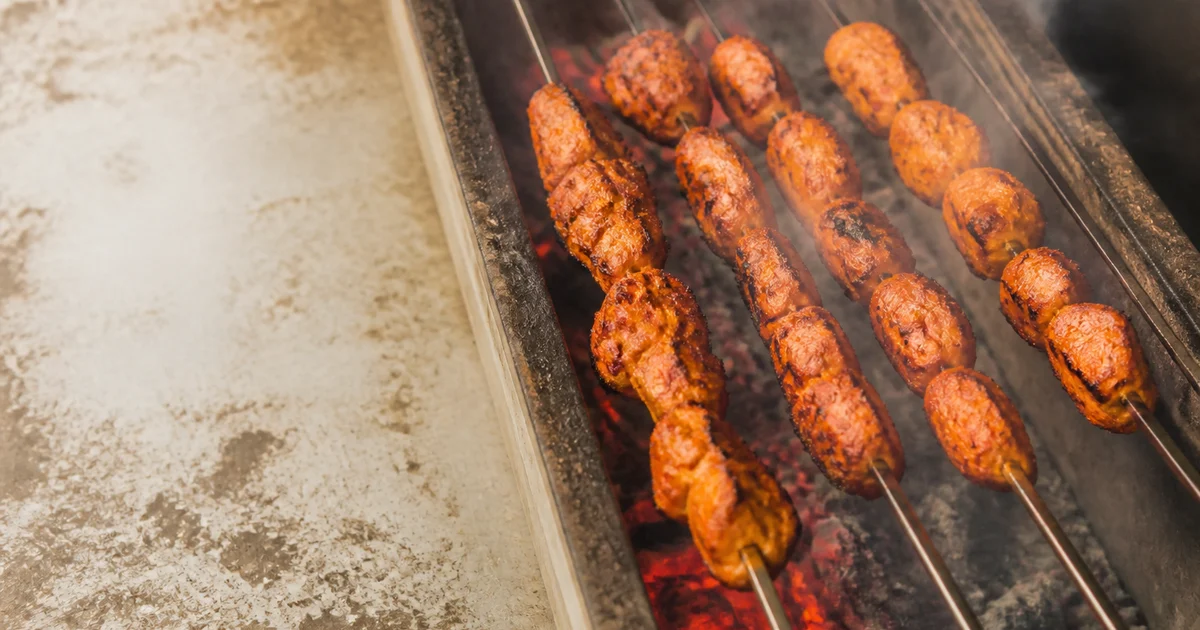
For coal, establish an even red bed with light grey ash and no continuous flames. For a convection oven, preheat to 250°C and place wire racks over lined trays so released liquid cannot pool around the chicken.
- 7
Cook over high heat
Cook over coal for 10 to 14 minutes, turning every 2 to 3 minutes and moving skewers away from flare-ups. Alternatively, oven-cook at 240 to 260°C for 12 to 16 minutes, turning once; the coating should be set, browned and lightly charred at the edges.
- 8
Check core temperature
Probe thick pieces from several skewers and continue cooking until every tested centre reaches at least 74°C. Do not judge doneness from red colour alone because Kashmiri chilli can keep fully cooked meat looking pink.
- 9
Baste and portion
Brush the hot tikka lightly with melted butter and rest for 2 to 3 minutes before weighing. Target about 180 g cooked chicken per plate; the surface should remain glossy and firm without collecting liquid.
- 10
Hold or cool safely
Hold buffet tikka at 60°C or hotter and replenish in small pans, aiming to serve each pan within 90 minutes. If storing, cool from 60°C to 21°C within 2 hours and to 5°C within another 4 hours, then reheat once to 74°C in a 180 to 200°C oven.
Notes for your kitchen
This chicken tikka recipe turns 10 kg of boneless chicken into about 40 controlled restaurant portions. It is designed for a Bangladeshi food cart, kebab counter, buffet or restaurant kitchen rather than a small household batch. The active preparation takes about 45 minutes, but the chicken needs at least 6 hours in the second marinade. A finished plate can be sold as tikka alone or combined with naan, paratha, rice, salad and sauce.
Why chicken tikka works commercially
Chicken tikka sells well because one prepared batch can support several menu formats without changing the core production. The same cooked chicken can serve a plated main course, kebab platter, wrap filling, rice bowl or combo. Boneless pieces also cook quickly, making tikka practical where customers expect short ticket times.
The main operational risk is inconsistent portioning. A cook who loads skewers by eye may put 190 g on one and 290 g on another, creating uneven cooking and uncontrolled food cost. Weigh the raw meat assigned to every skewer or plate before service. A standard of 240 to 250 g marinated raw chicken should produce roughly 180 g cooked tikka, although the exact loss depends on trimming, meat composition and cooking intensity.
Ingredient quality and selection
The quality of the chicken matters more than using a long list of spices. Use chilled, boneless, skinless chicken thigh with firm flesh, a clean smell and little surface water. Thigh tolerates coal heat and buffet holding better than breast because it contains more fat and connective tissue. Breast can be used, but it needs tighter temperature control and should not be held as long.
Purchase against a usable-meat specification. If suppliers deliver pieces with heavy fat, cartilage or bone fragments, the kitchen loses yield during trimming. Record both received weight and usable weight so purchasing decisions reflect actual production yield, not only the supplier's quoted rate.
Use thick strained doi rather than watery yoghurt. Excess whey makes the marinade slide off, delays browning and causes chicken to steam in an oven. Fresh ada and roshun paste should smell clean and sharp, without fermentation. Kashmiri morich provides colour with manageable heat, while kasuri methi gives the familiar roasted aroma. Mustard oil should be fresh because stale oil creates a bitter aftertaste that spices cannot hide.
Why the two-stage marinade matters
The first marinade seasons the meat, while the second marinade builds the coating and roasted flavour. Lime juice, part of the salt, ginger, garlic and chilli contact the chicken first for 30 minutes. This short stage seasons exposed surfaces and removes the flat taste that results when every ingredient is mixed into thick yoghurt at once.
Do not extend the acidic first stage for several hours. Lime begins changing the outer protein before the centre is seasoned, which can produce a soft surface and a firm middle. After 30 minutes, add the thick second marinade and refrigerate at 0 to 5°C for 6 to 12 hours. Keep the container covered, labelled and on a lower refrigerator shelf to prevent raw-chicken drips from contaminating ready-to-eat food.
Roasted besan helps bind the marinade, particularly in an electric or gas oven where there is no direct coal heat to dry the coating quickly. It must be cooled before mixing. Too much besan makes tikka pasty and masks the chicken flavour.
Skewer loading and cooking control
Even skewer loading is the difference between browned tikka and a mixture of burnt edges and raw centres. Cut pieces to approximately 35 to 40 g and keep them similar in thickness. Fold thin pieces once before skewering. Leave about 1 cm between pieces so heat can reach the sides, and keep the loaded section centred over the heat source.
For coal cooking, wait until the charcoal has a red core and a light grey ash coating. Flames should not touch the chicken continuously. Start close enough to the coal to set the marinade, then move the skewers slightly higher if fat causes flare-ups. Turn every 2 to 3 minutes rather than leaving one side exposed until dark.
Coal produces stronger smoke and edge charring, but it also increases variation between cooks. A convection oven at 240 to 260°C gives more repeatable output and is easier for larger batches. Use wire racks over trays so hot air circulates and liquid drains away. Finish under a salamander or very hot top element for 1 to 2 minutes if additional colour is required.
Colour is not a food-safety test. Check several thick pieces from different skewers with a sanitised probe thermometer. The centre must reach at least 74°C, while excessive cooking above the target causes unnecessary weight loss and dry texture.
Scaling the batch correctly
Scale every marinade ingredient by the usable chicken weight, not by the number of trays or skewers. A half batch uses 5 kg chicken and exactly half of each marinade ingredient. A 20 kg batch uses twice the listed quantities, but it should still be divided among shallow food-grade containers so all meat remains properly chilled.
Do not increase marination time when increasing volume. Larger batches need more refrigerator space, mixing capacity and cooking cycles, not more exposure to acid. Mix until every piece has an even coating, but avoid crushing or aggressively kneading the meat.
Cook a measured test skewer before committing the full batch, especially after changing the chicken supplier, yoghurt brand or chilli powder. Weigh that skewer before and after cooking to establish the day's yield. This calculation supports accurate recipe costing and shows whether high loss is coming from trimming, oversized pieces or excessive cooking.
Holding and reheating for service
Cooked chicken tikka should be held at 60°C or hotter and served within 90 minutes for the best buffet quality. Use shallow covered pans and load the buffet in small quantities rather than exposing the complete batch at once. Brush lightly with melted butter before loading, but do not leave tikka sitting in butter or water because the browned coating will soften.
A hot cupboard or bain-marie can maintain safe temperature, but strong bottom heat dries the lower layer. Use a rack or false bottom where possible and check the food temperature with a probe. Rotate pans on a first-in, first-out basis and never mix a fresh batch into an older partly used pan.
For later service, cool cooked tikka rapidly in shallow trays. Bring it from 60°C to 21°C within 2 hours and from 21°C to 5°C within a further 4 hours, then cover and label it. Reheat once in a 180 to 200°C oven until the centre reaches 74°C. A little butter applied before reheating reduces surface drying, but reheating cannot restore chicken that was overcooked initially.
Portioning and yield control
A fixed cooked portion of about 180 g protects both plate consistency and food cost. The 10 kg batch should normally give about 7.2 to 7.8 kg after cooking, enough for approximately 40 portions with a small operational margin. Actual yield must be recorded because water content, trimming and final temperature change the result.
Use a digital scale during preparation and conduct regular cooked-weight checks during service. If tikka is removed from skewers for wraps or rice bowls, use a dedicated portion scoop only after its filled weight has been verified. Follow a written portion control standard for every menu variation rather than allowing staff to estimate by appearance.
Rosuii can record raw materials, suppliers, production conversion, wastage and finished goods, helping operators compare chicken issued with tikka produced without claiming automatic recipe deduction per menu item. Whatever system is used, keep raw yield, cooked yield and discarded quantity as separate records.
Mistakes that cost money
The most expensive mistakes are poor trimming records, uneven cuts, overloaded skewers and excessive cooking. Watery chicken or yoghurt lowers marinade adhesion and increases tray liquid. Pieces packed tightly together steam instead of roasting, so cooks leave them over heat longer and lose more weight.
- Do not wash boneless chicken in the production sink. It spreads contaminated droplets and adds surface water. Buy from a controlled supplier and trim using sanitised equipment.
- Do not use colour as the only cooking test. Chilli and high heat can darken the outside before the centre is safe.
- Do not pour used raw marinade over cooked tikka. It has contacted raw poultry and must be discarded unless separately boiled and handled under a validated kitchen procedure.
- Do not hold the complete batch from opening time. Stagger cooking according to sales forecasts and buffet demand.
- Do not hide unexplained loss. Record burnt pieces, dropped skewers, spoilage and buffet returns as wastage.
Chicken is the main cost driver, while trimming loss and cooking shrinkage determine how much of that purchase becomes saleable food. Compare supplier yields, production records and item sales when reviewing food cost percentage. Stable portions and controlled cooking usually protect margin more effectively than reducing the spice coating.
What drives the cost
Boneless chicken dominates the cost, and its effective cost moves with supplier quality, trimming loss, water retention and cooked yield. Thick yoghurt, mustard oil and butter are the next meaningful inputs, while excessive heat or uncontrolled portions increase cost more than small changes in spice usage.
Ingredient rates move with the market, so this describes what drives the cost rather than quoting a figure.
Questions from kitchens
Can this chicken tikka recipe be doubled to 20 kg?
How long can cooked chicken tikka stay on a buffet?
Can chicken breast replace thigh?
What is the refrigerated shelf life of marinated and cooked tikka?
Why did a 10 kg batch produce fewer than 40 plates?
Related recipes
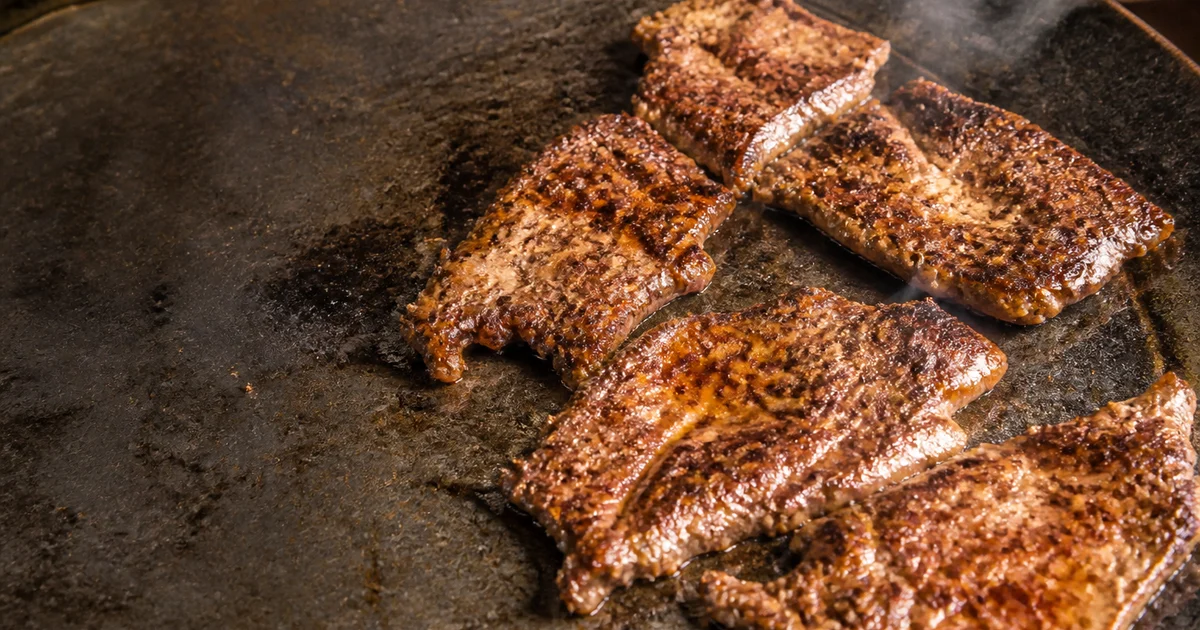
Commercial Beef Chaap Recipe
A commercial beef chaap recipe for 40 plates, covering controlled tenderising, slow tawa cooking, service holding and consistent portion yield.
- Yield:
- about 40 plates
- Total:
- 2 hr 20 min
- Difficulty:
- Medium
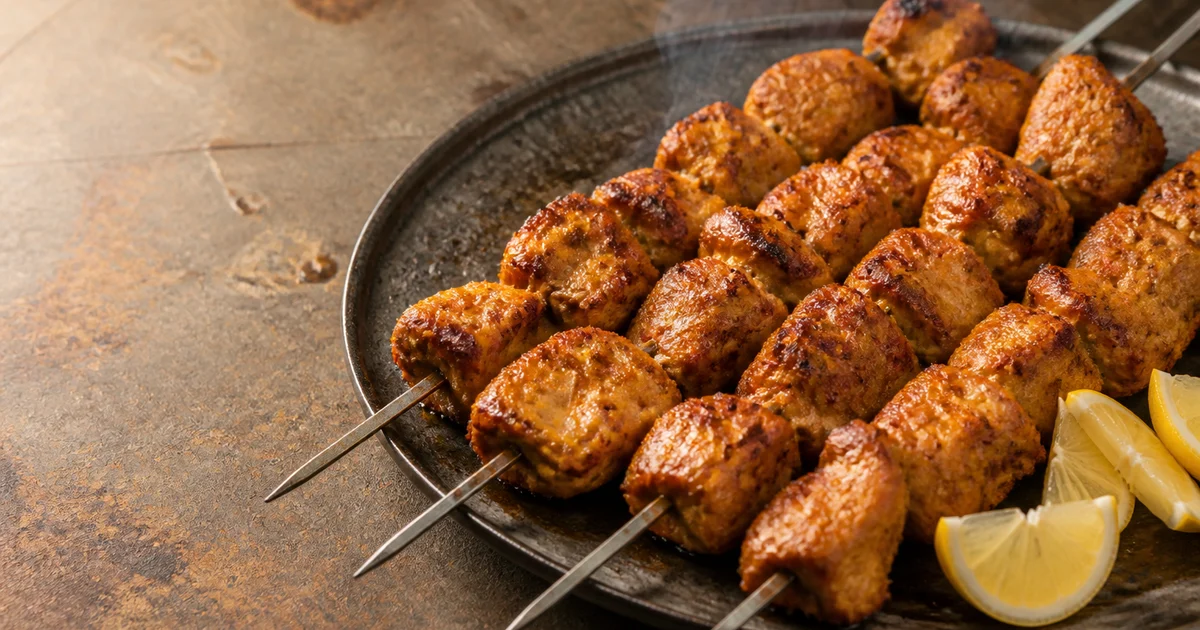
Commercial Chicken Boti Kebab
A 5 kg commercial chicken boti kebab batch with controlled cube size, papaya tenderising, high-heat grilling and practical service holding.
- Yield:
- about 40 portions
- Total:
- 5 hr 45 min
- Difficulty:
- Medium
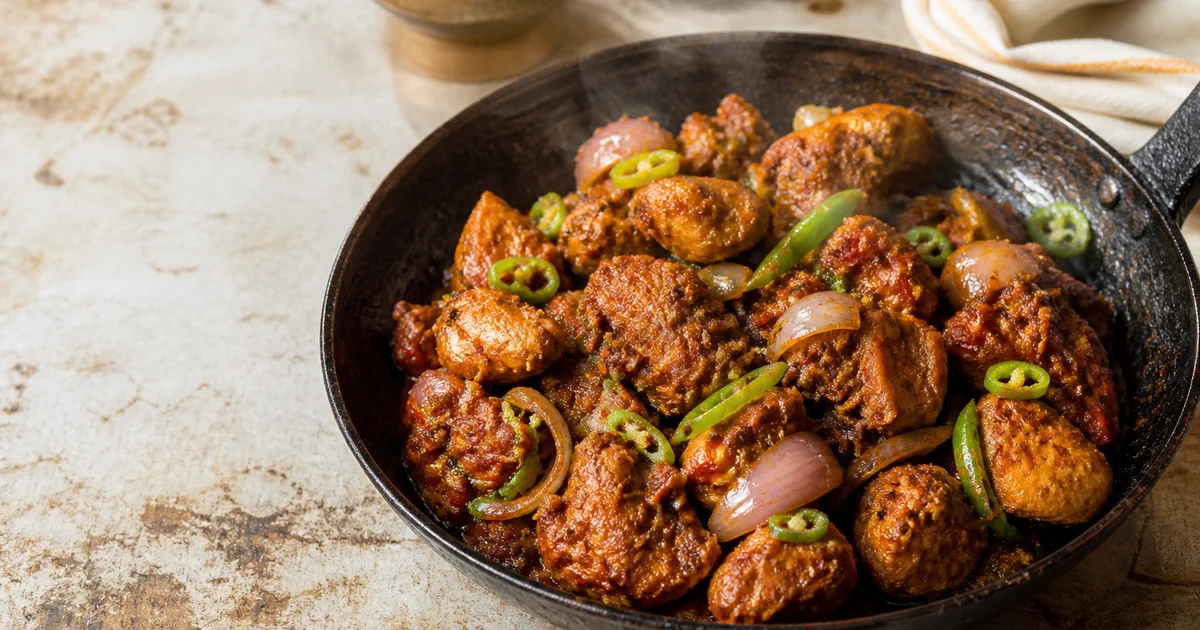
Commercial Chicken Jhal Fry Recipe
A commercial chicken jhal fry recipe for about 40 plates, using a fully cooked chicken base and a fast, spicy high-heat finish for each order.
- Yield:
- about 40 plates
- Total:
- 1 hr 15 min
- Difficulty:
- Medium
Run your restaurant on Rosuii
POS, menu, inventory, payroll and more — built for Bangladeshi restaurants.
Start free