
Restaurant Recipes
Commercial Bangladeshi Shemai Recipe
A commercial Bangladeshi shemai recipe for about 40 portions, with controlled roasting, milk reduction, Eid-scale production and service guidance.
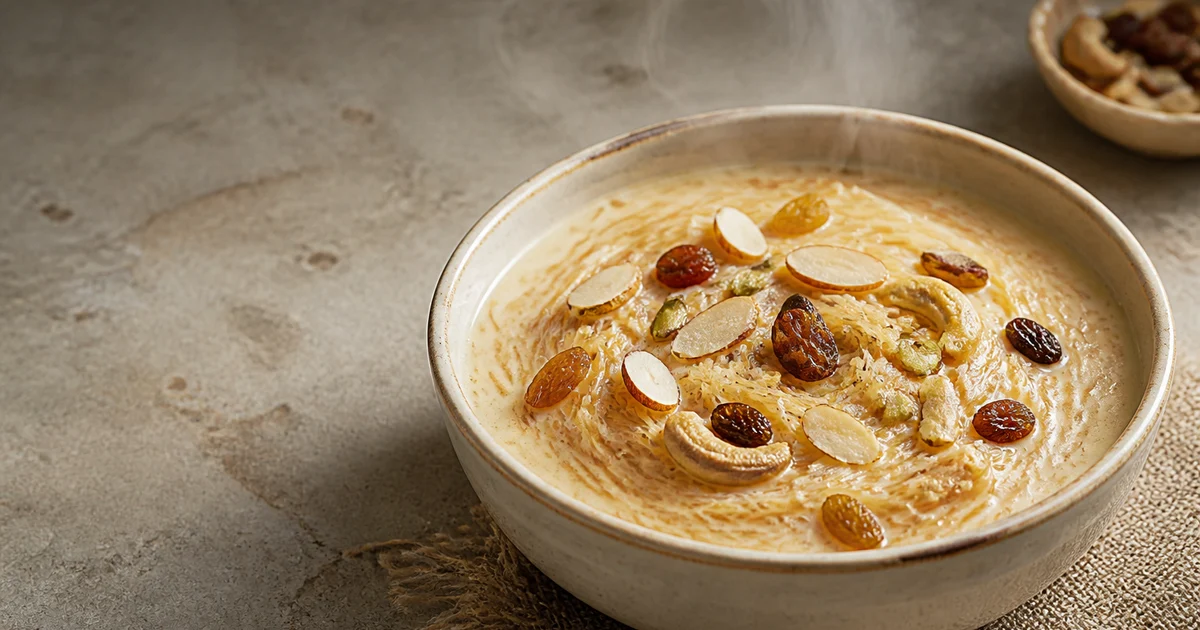
- Prep
- 25 min
- Cook
- 55 min
- Total
- 1 hr 20 min
- Yield
- about 40 plates at 180 g each
- Difficulty
- Medium
- Cuisine
- Bangladeshi
Method
- 1
Prepare the production batch
Weigh every ingredient before heating and record the empty stockpot weight. Reserve 500 ml cool milk for the milk powder slurry and keep the remaining milk chilled until required.
- 2
Toast nuts in ghee
Heat the roasting pan over medium-low heat and add the ghee. Fry the cashews at 140 to 150°C for 2 to 3 minutes until lightly golden, then remove them with a slotted spoon before they darken.
- 3
Roast the vermicelli
Add the vermicelli to the flavoured ghee and keep it moving with a flat spatula. Roast at approximately 145 to 155°C for 8 to 12 minutes until evenly light golden and nutty-smelling, with no black fragments.
- 4
Reduce the spiced milk
Heat 5.5 litres milk with bay leaves, cinnamon and cardamom in the stockpot. Bring it to 90 to 95°C, then simmer gently for 15 to 20 minutes while scraping the base and sides; the milk should smell aromatic and reduce slightly without browning.
- 5
Mix the milk slurry
Whisk the milk powder into the reserved 500 ml cool milk until completely smooth. Pour it slowly into the simmering milk while whisking, then cook for 4 to 5 minutes at 88 to 92°C.
- 6
Cook the roasted strands
Add the roasted vermicelli gradually while stirring so it does not form a solid mass. Simmer at 88 to 92°C for 7 to 10 minutes until the strands are soft but still visible and the mixture remains looser than the final serving texture.
- 7
Sweeten and finish cooking
Add the sugar and salt, then stir until fully dissolved. Return the mixture to a gentle simmer for 5 to 7 minutes; stop when it coats the spatula lightly but still flows back into the pot.
- 8
Add garnish and aroma
Remove the bay leaves and cinnamon pieces, then fold in the raisins and half of the toasted cashews. Turn off the heat, add the rose water and check that the finished batch weighs approximately 7.6 to 7.8 kg before reserving the remaining nuts and pistachios for portion garnish.
- 9
Hold or cool safely
For immediate service, transfer to a bain-marie and hold above 60°C for no more than 2 hours for best texture. For chilled service, portion into shallow containers and cool from 60°C to 21°C within 2 hours, then to 5°C or below within another 4 hours.
Notes for your kitchen
This commercial shemai recipe produces about 40 consistent dessert portions for restaurants, food carts and Eid service. The batch is designed as a rich milk shemai with roasted vermicelli, controlled sweetness and enough body to remain creamy after holding. It can be served warm in bowls or chilled in sealed cups, making it practical for dine-in, takeaway, catering and pre-order sales.
Why shemai suits commercial service
Shemai works commercially because it uses familiar ingredients, accepts advance preparation and can be portioned quickly during a rush. One trained cook can produce a large batch without specialist pastry equipment. The finished dessert also supports simple menu variations, such as plain, raisin, cashew or premium pistachio portions, without changing the base production.
Milk shemai is especially useful for Eid because customers already understand the product and serving size. For a food cart, pre-portioned cups reduce queue time and prevent serving staff from estimating portions. For restaurants, a measured ladle or digital scale keeps every bowl consistent. The main operational risks are uncontrolled roasting, excessive milk reduction and oversized servings rather than complicated preparation.
Ingredient selection and quality
The quality of the vermicelli and milk matters more than decorative garnish. Choose thin shemai with an even strand size and a clean wheat smell. Avoid packets containing excessive broken dust because the fine particles burn during roasting and later make the milk pasty. If using factory pre-roasted shemai, check its colour before adding more heat because brands vary considerably.
Use full-fat liquid milk when the menu promises rich milk shemai. Milk powder improves body and helps reduce variation between milk supplies, but it should support the liquid milk rather than hide sour or diluted milk. Sugar must be clean and dry, while cardamom should smell fresh when crushed. Old cardamom adds visible husk without useful aroma.
Where garnish matters
Premium nuts should be used where customers can see and taste them. Broken cashews are suitable inside the batch, while a few clean slices can be reserved for the top. Raisins should be sorted for stems and washed quickly before use. Pistachio is optional and can be limited to a premium variation because it can become a major cost driver.
Roasting the vermicelli correctly
Correct roasting gives shemai a nutty aroma without introducing burnt bitterness. Use a wide, heavy pan so the strands contact the hot surface evenly. Keep the pan around 145 to 155°C and turn the vermicelli continuously from the bottom with a flat spatula. The correct endpoint is an even light golden colour, a toasted wheat aroma and dry, separate strands.
Do not chase a dark brown colour. Residual heat continues roasting the thin strands after the burner is lowered, and burnt fragments remain bitter even after milk is added. Transfer roasted shemai out of the pan if the milk base is not ready. Leaving it in a hot pan is a common cause of inconsistent colour between batches.
Managing the milk base
The milk should reduce gently before the vermicelli is added so the final texture develops without overcooking the strands. A violent boil scorches milk solids on the base and creates skin around the sides of the pot. Maintain a controlled simmer, scrape the bottom regularly and wipe down cooked milk deposits before they fall back into the batch.
Add sugar only after the vermicelli has softened. Sugar draws water and firms the surface of wheat strands, so adding it too early increases cooking time and can leave a hard centre. Milk powder must first be mixed with cool or lukewarm reserved milk. Adding dry powder directly to the kettle creates white lumps that are difficult to remove during busy production.
Milk shemai versus dry shemai
Milk shemai and dry shemai require different liquid ratios and should be treated as separate finished products. Milk shemai remains spoonable and contains enough free dairy liquid to look creamy after cooling. Dry shemai uses much less liquid and is cooked until the sweetened liquid is absorbed, leaving separate, glossy strands.
For a dry version using 750 g vermicelli, begin with approximately 2 to 2.3 litres total milk or water and 700 to 900 g sugar, then adjust for the sweetness expected by the outlet. Roast the strands slightly more evenly because there is less liquid to soften dark spots. Dry shemai can be portioned on plates or into trays, while milk shemai is better controlled by weight in bowls or cups. Do not attempt to make dry shemai by simply holding the milk version until it becomes thick, because the strands will become swollen and pasty.
Scaling for Eid production
Large Eid orders should be scaled by repeated controlled batches, not by filling the largest available pot to the rim. Ingredient quantities can be multiplied directly, but heat transfer and evaporation do not scale at the same rate. Keep a kettle no more than about two-thirds full so staff can stir safely and prevent boil-over.
For a double batch, allow extra time for the milk to reach a simmer and judge the endpoint by finished weight and texture rather than the clock alone. For four or more batches, roast vermicelli in separate 750 g lots because a deep layer steams instead of roasting evenly. Prepare weighed production kits for sugar, milk powder and spices before service. Record the empty kettle weight and set a repeatable finished batch weight after the first successful production.
Do not combine one over-reduced batch with a thin batch unless both are still hot and can be mixed completely. Rosuii productions can be used to record raw materials converted into finished shemai, while wastage records help separate scorching, spills and unsold portions from normal production yield.
Holding and reheating
Hot shemai should be held above 60°C and stirred regularly, but its best service texture is normally within two hours. Use a bain-marie rather than direct burner heat. Keep the container covered between orders and stir from the bottom every 15 to 20 minutes. If it thickens, add measured hot milk in small additions rather than water, then record the addition so future batches can be adjusted.
For chilled sale, divide the batch into shallow containers and cool it rapidly from 60°C to 21°C within two hours, then to 5°C or below within a further four hours. Cover only after heavy steam has escaped, label the production time and refrigerate. Reheat once to at least 74°C, stirring frequently, and loosen with approximately 5 to 10 percent hot milk if necessary. Repeated warming and cooling damages both texture and food safety.
Portioning and yield control
A standard 180 g serving gives about 40 saleable portions while leaving a small operational allowance for pan residue and tasting. Weigh the first several bowls rather than relying immediately on a ladle. Once staff identify the correct fill line, use one dedicated ladle and check portions periodically during service.
Choose cups that hold the portion without appearing empty or overflowing after garnish. Nuts and raisins should have their own measured scoop because uncontrolled garnish can change the cost more quickly than the base. Compare actual portions sold with the recorded finished yield through regular portion control. If the batch regularly produces fewer portions, investigate serving size, kettle residue, staff tasting and unrecorded complimentary servings.
Mistakes that waste money
The most expensive shemai mistakes are burnt vermicelli, scorched milk, excessive reduction and inconsistent portions. Burnt vermicelli cannot be repaired with extra sugar or spice and should not be mixed into a good batch. Scorched milk must be transferred immediately without scraping the burnt base, although a strong burnt smell usually means the batch cannot be sold.
- Overfilling the pan: Vermicelli cooks unevenly and pale strands mix with burnt ones.
- Adding sugar too early: The strands take longer to soften and staff may overcook the milk.
- Using high heat: Milk solids catch on the bottom before sufficient evaporation occurs.
- Reducing to final serving thickness: The product becomes too stiff after cooling because vermicelli continues absorbing liquid.
- Unmeasured garnish: Premium nuts disappear faster than sales records suggest.
Keeping food cost stable
Stable shemai cost depends on controlling milk reduction, nut usage, purchase quality and finished portion weight. Track milk, vermicelli, sugar and garnish as separate stock items rather than treating dessert ingredients as a general kitchen expense. Compare suppliers on usable quality, not only packet weight, because dusty vermicelli and stale nuts create avoidable waste.
Maintain a written recipe costing sheet whenever the milk brand, garnish or portion size changes. Review the dessert's food cost percentage using actual portions sold and actual batch yield. If costs rise, adjust garnish levels or menu variations before reducing milk quality, since weak milk directly affects the product customers recognise.
What drives the cost
Liquid milk is the main base cost, while cashews and pistachios can dominate the garnish cost. The final cost moves with milk quality, seasonal nut prices, evaporation loss and whether staff control the 180 g serving size.
Ingredient rates move with the market, so this describes what drives the cost rather than quoting a figure.
Questions from kitchens
Can this shemai recipe be doubled in one pot?
How long can milk shemai be held for service?
Can pre-roasted shemai be substituted?
What is the refrigerated shelf life?
Why did the batch produce fewer than 40 portions?
Related recipes
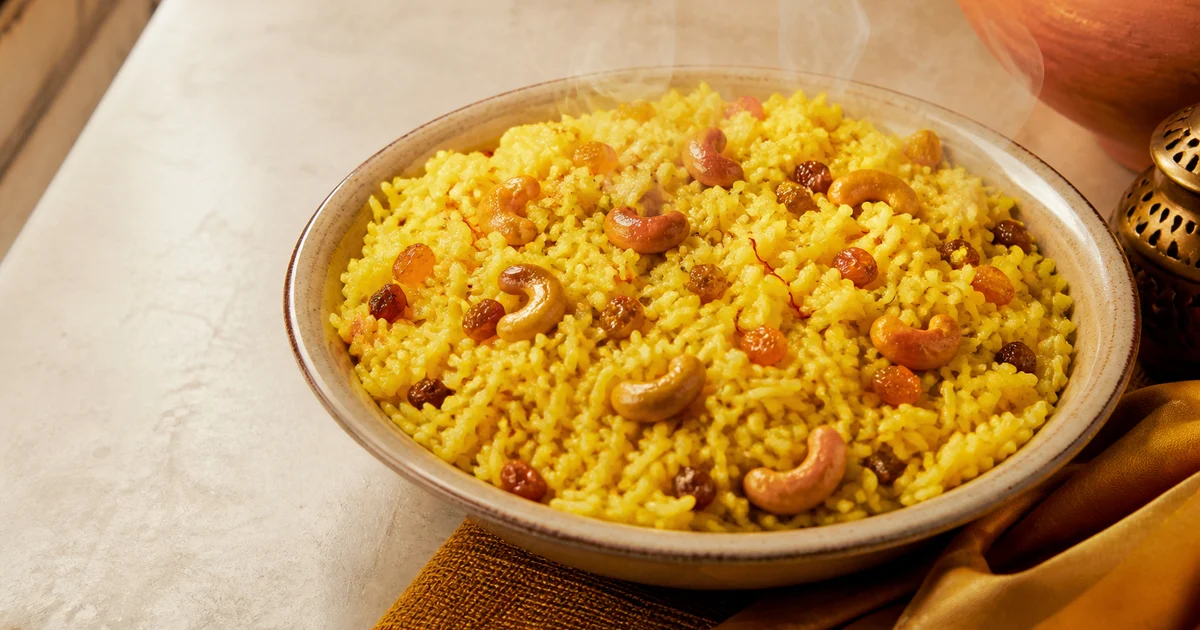
Commercial Basanti Polao Recipe
A 2 kg rice batch of golden, mildly sweet Basanti Polao for about 40 controlled portions, with practical cooking, holding and reheating guidance.
- Yield:
- about 40 plates
- Total:
- 1 hr 15 min
- Difficulty:
- Medium
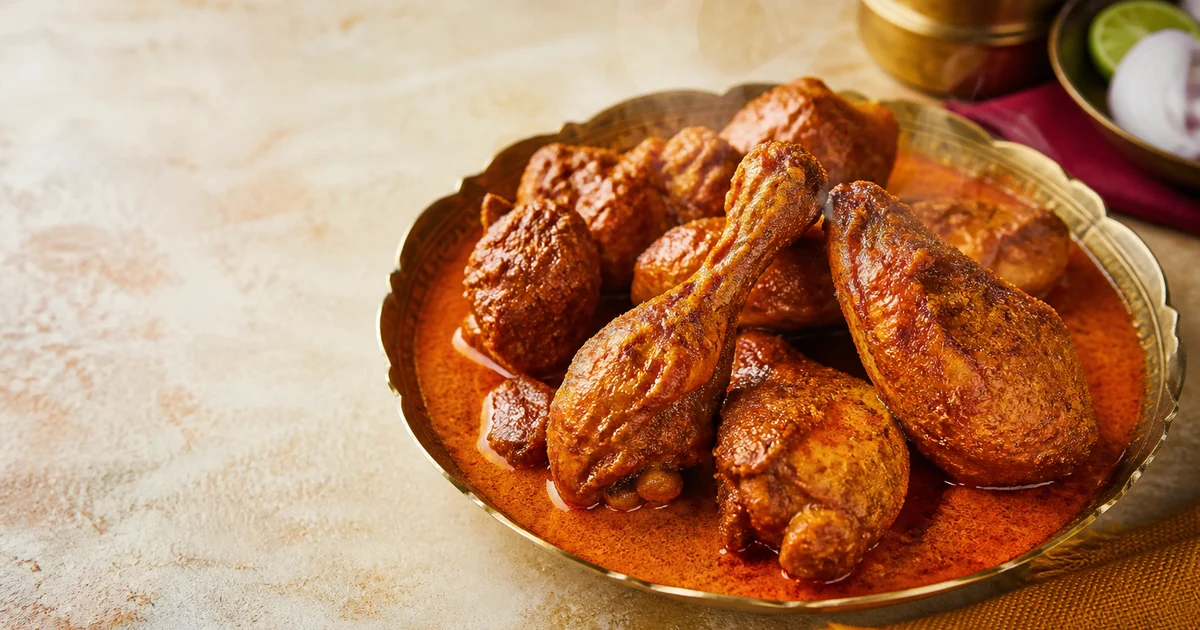
Commercial Bangladeshi Chicken Roast
A 40-portion biye-bari style chicken roast with first-fried chicken, controlled sweet-savoury gravy, catering yield guidance and service holding.
- Yield:
- about 40 plates
- Total:
- 2 hr 15 min
- Difficulty:
- Medium
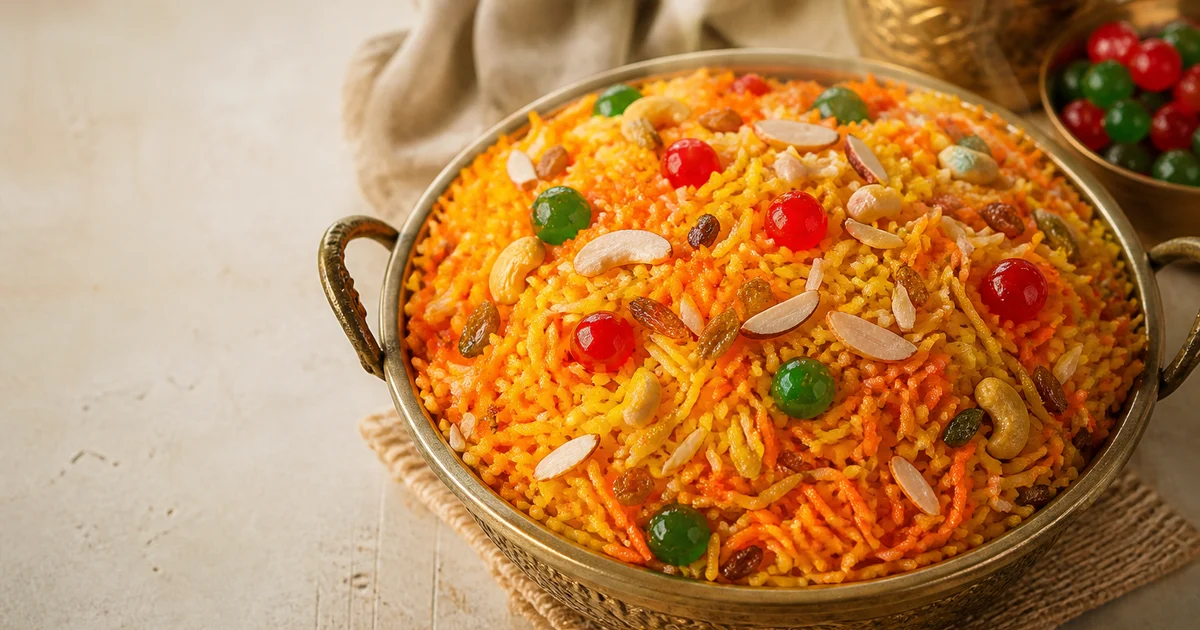
Commercial Jorda Recipe
A commercial jorda recipe for about 50 portions, with separate rice grains, controlled sugar syrup, even colour and practical wedding scaling.
- Yield:
- about 50 plates at 150 to 160 g
- Total:
- 1 hr 35 min
- Difficulty:
- Medium
Run your restaurant on Rosuii
POS, menu, inventory, payroll and more — built for Bangladeshi restaurants.
Start free