
Restaurant Recipes
Restaurant Style Dal
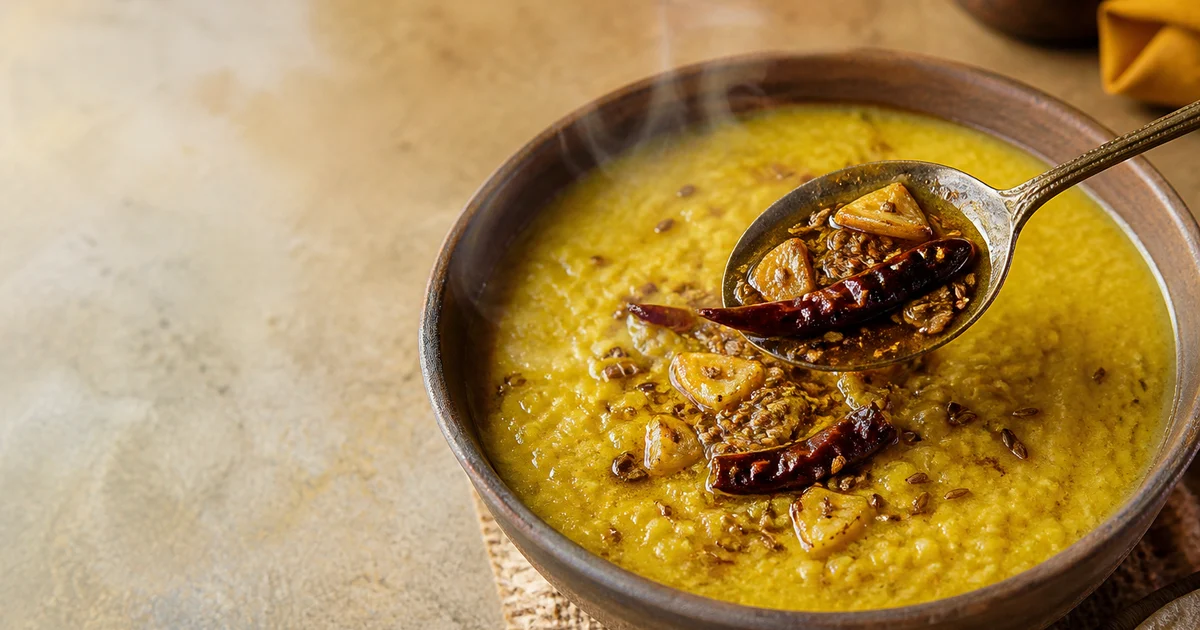
A commercial restaurant style dal recipe yielding about 40 side portions, with separate tempering, scaling rules, hot holding and portion control.
- Prep
- 30 min
- Cook
- 45 min
- Total
- 1 hr 15 min
- Yield
- about 40 plates
- Difficulty
- Medium
- Cuisine
- Bangladeshi
Method
- 1
Sort and roast lentils
Inspect both lentils separately and remove stones or damaged grains. Dry-roast the moong dal over medium heat for 6 to 8 minutes, stirring continuously, until pale golden and nutty but not brown. Cool for 2 minutes, then rinse it with the masoor dal until the drainage water is mostly clear.
- 2
Start the lentil base
Bring 7 litres of water to a rolling boil in the stockpot, add the drained lentils and return to the boil. Skim off the first foam, then add turmeric, ginger and 80 g salt. Reduce to a steady 92 to 96°C simmer with the lid slightly open.
- 3
Cook until fully soft
Simmer for 22 to 28 minutes, stirring from the bottom every 5 minutes. The masoor should collapse and the moong should crush easily between two fingers. Add a little boiling water if the lentils become too thick before they are tender.
- 4
Add fresh seasonings
Stir in the chopped tomato and slit green chillies only after the lentils are soft. Simmer at 92 to 96°C for another 7 to 10 minutes, until the tomato loses its raw smell. Lightly whisk or churn the dal while retaining a small amount of texture.
- 5
Heat the tempering oil
Heat the soybean oil in a frying pan to approximately 175°C. Add cumin seed and dried red chilli; they should crackle immediately without turning black. Fry for 20 to 30 seconds until fragrant.
- 6
Brown onion and garlic
Add the sliced onion and fry over medium-high heat for 5 to 7 minutes until evenly golden. Add the garlic and continue for 60 to 90 seconds until it is light golden. Reduce the heat, add red chilli powder and stir for no more than 10 seconds to prevent burning.
- 7
Finish with hot tempering
Carefully pour the hot tempering into the simmering dal and stir from the bottom. Add the ghee and simmer for 3 minutes at about 92°C so the fried flavours distribute through the batch. For staggered service, divide the base and prepare proportionate tempering rounds for each pan.
- 8
Standardise final volume
Add measured boiling water until the finished volume reaches approximately 7.6 litres and the dal pours in a continuous, lightly coating stream. Return it to a simmer for 2 minutes after each adjustment. Taste at serving temperature and add the remaining salt only if required.
- 9
Garnish and hold safely
Fold in the chopped coriander immediately before transferring the dal to service pans. Hold covered at 60°C or hotter, stirring every 15 to 20 minutes and checking that the bottom is not catching. Serve with a calibrated 180 ml ladle for approximately 40 portions.
Notes for your kitchen
This restaurant style dal recipe produces about 7.6 litres, enough for approximately 40 controlled side portions. It uses a standard lentil base and a separate aromatic tempering, allowing a restaurant or food cart to prepare volume efficiently without losing the fresh flavour customers expect.
Why dal works commercially
Restaurant style dal can be one of the highest gross-margin items on a Bangladeshi menu when portions and wastage are controlled. Lentils expand substantially during cooking, the preparation uses familiar local ingredients, and the finished dish supports rice, khichuri, bhorta, vegetables, fish and meat combinations. It also gives a set meal moisture and perceived completeness without requiring expensive protein in every serving.
The commercial advantage comes from producing one consistent base rather than cooking many small pots. A kitchen can prepare the base before service, divide it between service pans, and apply tempering close to the time each pan is needed. This keeps labour predictable and prevents the entire batch from losing its fried garlic, cumin and dried chilli aroma during a long holding period.
Dal is profitable only when the serving size is fixed. An uncontrolled ladle can turn a planned 180 ml portion into 230 ml or more, reducing the number of plates from every batch. The loss may appear small on one order but becomes significant across lunch combinations, staff meals and complimentary refills.
Ingredient quality and selection
Lentil freshness matters more than buying a premium-looking grade. Choose clean masoor dal with an even orange-red colour and no musty smell, insects, webbing or excessive broken dust. Old lentils take longer to soften, require more fuel and can produce a grainy batch even after extended cooking.
The smaller amount of moong dal gives roasted depth and a slightly fuller body. Roast it only until nutty and pale golden because dark brown moong can make the entire batch bitter. Sorting before washing is important in commercial kitchens, where one stone or hard foreign particle can create a customer complaint.
Quality is especially noticeable in the frying medium, garlic and dried chillies because these ingredients create the first aroma released from the serving bowl. Use neutral soybean oil that has not been repeatedly used for frying. Ghee adds a richer finish, but it should support the fried spices rather than dominate them. If ghee quality or supply is inconsistent, standardise an oil-only version instead of changing the flavour from day to day.
Tomatoes contribute acidity, colour and freshness, but very sour or watery tomatoes alter both taste and yield. Add acidic ingredients only after the lentils have softened. Salt, tomato acidity and chilli heat should be checked against a written batch standard rather than adjusted differently by every cook.
The base-plus-tempering method
The most reliable volume method is to cook a neutral lentil base first and add tempering separately. The base controls softness, salt and final thickness, while the tempering supplies the restaurant-style aroma. If onions, tomato or acidic seasonings are fried into the pot before the lentils soften, cooking can become slower and consistency may vary between batches.
Keep the dal at a controlled simmer rather than an aggressive boil. A violent boil creates excessive evaporation, pushes foam over the pot and makes the bottom more likely to catch. Stir from the base with a flat-edged paddle, particularly as the lentils break down and the mixture becomes heavier.
Do not blend the batch completely. A short whisk or light use of a dal ghotni should break most of the lentils while leaving a small amount of texture. Fully blending makes the dal appear smooth initially, but it can become gluey during hot holding and may require too much added water later.
The tempering pan must be hot enough to crackle cumin immediately without burning it. Frying onions too pale gives sweetness without depth, while taking them very dark creates bitterness that spreads through the whole pot. Garlic should reach light golden just before the tempering leaves the heat because it continues cooking in the hot oil.
Consistency control
Finished consistency must be judged at serving temperature, not immediately after boiling. Dal thickens as starch absorbs water and continues to thicken during service. The fresh batch should coat a ladle but still pour in a continuous stream, with no mound remaining after it lands in the bowl.
Use a marked dipstick, calibrated container or the pot's verified volume marks to finish every batch at the same volume. Add only boiling water for correction, then simmer and mix before checking again. Cold water drops the food temperature, interrupts service and can create a temporarily watery top layer over a thick base.
Scaling the batch
Scale lentils and seasoning by batch factor, but adjust water according to pot shape and evaporation. For a half batch, multiply the solid ingredients and tempering by 0.5 and use a smaller pot that still provides headspace. For a double batch, multiply by 2 but do not fill one pot beyond about two-thirds of its working capacity.
A wider pot loses more water than a tall, narrow pot, and a large burner can create heavier bottom heat. Start a scaled batch with slightly less adjustment water than the mathematical total, then bring it to the target finished volume near the end. Begin final salt correction at about 80 percent of the scaled amount because tomatoes, water and holding reduction affect the result.
Do not double the tempering in one overcrowded frying pan. Onion releases water when crowded and steams instead of browning. For larger production, fry the tempering in repeatable rounds, weighing the ingredients for each round so every service pan receives the same proportion.
Holding and reheating for service
Hold finished dal at 60°C or hotter and aim to use each service pan within four hours for best quality. Keep the pan covered between orders and stir from the bottom every 15 to 20 minutes. A bain-marie is gentler than direct flame, which can scorch the bottom while the surface appears normal.
For long lunch and dinner service, keep part of the cooked base chilled or separately hot-held and temper smaller pans as required. This preserves aroma and reduces repeated heating of the entire batch. Check thickness whenever a new pan enters service and correct it with measured boiling water, recording the amount so the next production can be improved.
Cooling and reheating
Unused dal must be cooled rapidly rather than left overnight in the cooking pot. Transfer it into shallow food-grade pans, reducing the depth to speed cooling. Cool from 60°C to 21°C within two hours and from 21°C to 5°C within a further four hours, then cover, label and refrigerate at 5°C or below.
Reheat only the quantity required for the next service. Bring it to at least 74°C throughout within two hours, stirring frequently to remove cold spots, then return it to hot holding above 60°C. Do not mix a small amount of yesterday's dal into a fresh batch simply to avoid recording waste.
Portioning and yield control
A 180 ml ladle gives approximately 40 saleable side portions from the finished batch. The slight difference between theoretical volume and saleable yield covers pan coating, tasting and normal transfer loss. If the menu uses a 150 ml rice-combo portion, define that as a separate variation rather than allowing servers to choose by eye.
Test the ladle with water and a graduated jug because nominal ladle sizes are not always accurate. Train staff to fill it level rather than heaped, and use the same bowl size at every station. The principles in this portion control guide help connect batch yield with actual plates sold.
Record finished production in litres and compare it with portions issued, staff consumption, returns and waste. Rosuii can record raw materials as a production converted into finished dal, while item-sales and wastage records help operators investigate unexplained yield gaps.
Common mistakes that cost money
The most expensive dal mistakes are scorching, uncontrolled dilution, oversized portions and unnecessary carryover. These problems reduce yield or force the kitchen to discard a batch that should have been profitable.
- Scorching the base: High direct heat and infrequent stirring create a burnt taste that cannot be removed by transferring the upper layer.
- Adding tomato too early: Acidity can delay softening, increasing fuel use and production time.
- Burning the tempering: Black garlic or cumin makes the full batch bitter, so discard a burnt tempering rather than mixing it in.
- Correcting with unmeasured water: Repeated random dilution changes salt, flavour, portion count and customer experience.
- Overproducing: Making a full batch for a quiet service increases cooling work and carryover risk. Use sales history to set production levels.
- Ignoring pan residue: Leaving thick dal in cooking and holding pans creates hidden waste that should be measured and addressed.
Keeping food cost stable
Stable dal cost comes from fixed purchasing specifications, measured yield and disciplined serving sizes. Track lentils, oil and ghee by weight or volume rather than packets, since supplier pack sizes and grades may change. Compare usable quality, cooking time and finished yield when changing a supplier instead of choosing only by the lowest purchase rate.
Create one batch sheet showing expected finished litres, standard portion size and acceptable adjustment water. Use recipe costing to update the ingredient contribution when lentil, oil or ghee rates move, then monitor the resulting food cost percentage. Accurate production records also reveal whether the real issue is purchasing cost, excessive staff portions, complimentary refills or unrecorded wastage.
What drives the cost
Masoor dal, moong dal and frying oil account for most of the base ingredient cost, while ghee can become significant if used generously. Cost moves mainly with lentil grade, oil and ghee market rates, supplier pack yield and uncontrolled serving size.
Ingredient rates move with the market, so this describes what drives the cost rather than quoting a figure.
Questions from kitchens
Can this restaurant style dal recipe be doubled in one pot?
How long can dal stay in hot holding?
Can the moong dal be replaced?
How long does cooked dal keep under refrigeration?
Why did the batch produce fewer than 40 portions?
Related recipes
Commercial Bhuna Khichuri Recipe
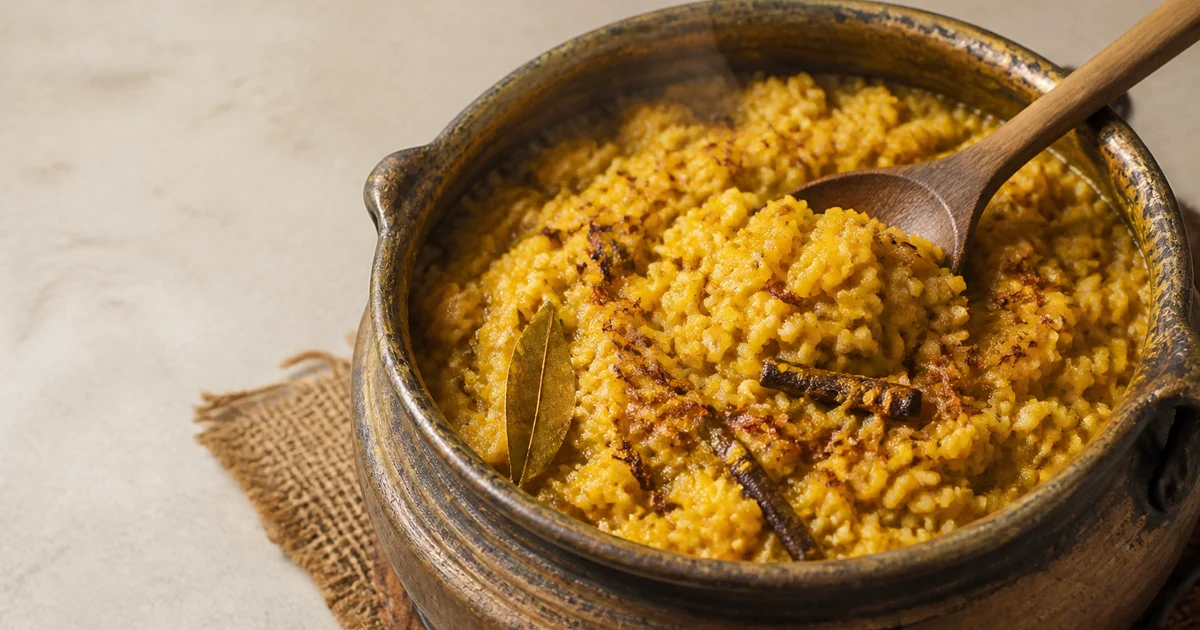
A commercial bhuna khichuri recipe for about 40 plates, with a 2:1 rice-to-dal ratio, controlled moisture, service holding and yield guidance.
- Yield:
- about 40 plates
- Total:
- 1 hr 40 min
- Difficulty:
- Medium
Commercial Dim Bhaji Recipe
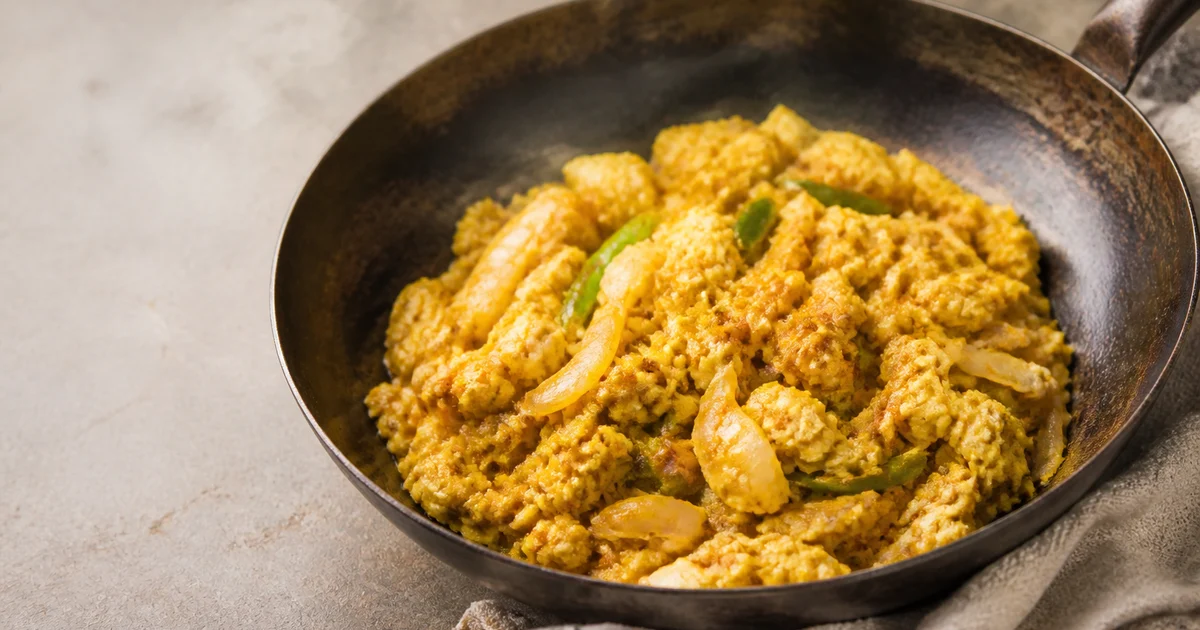
A commercial dim bhaji recipe yielding 40 controlled portions, designed for fast paratha-counter service, safe holding and stable egg cost.
- Yield:
- about 40 plates
- Total:
- 1 hr 5 min
- Difficulty:
- Easy
Commercial Beef Halim Recipe
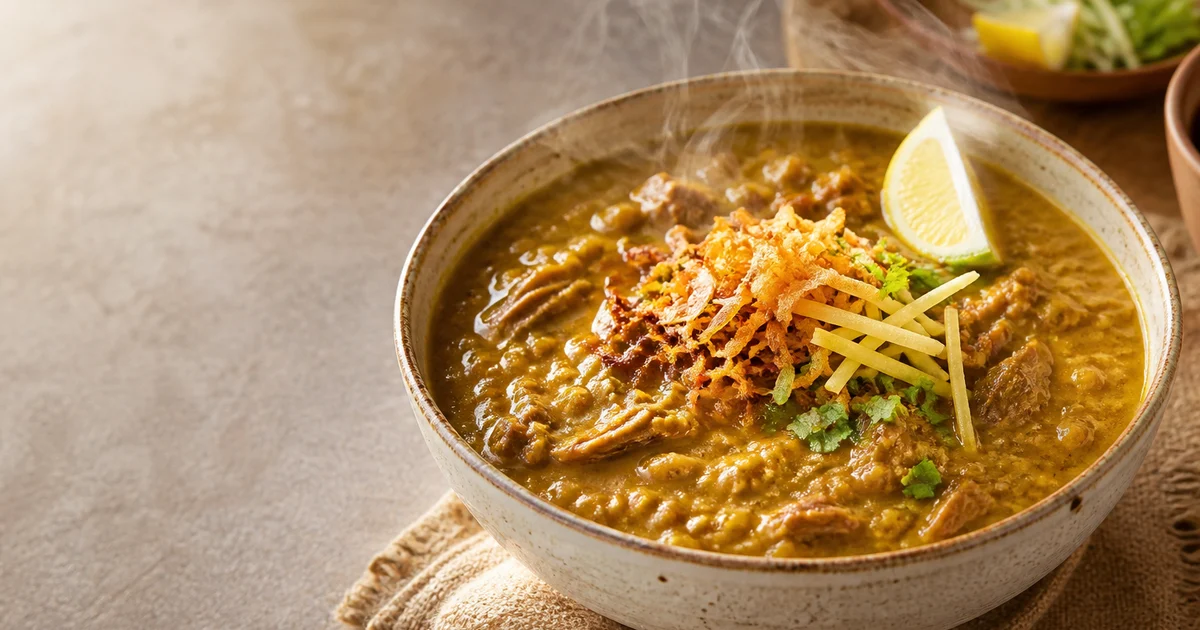
A commercial beef halim recipe for about 40 plates, with controlled grain ratios, slow-cooked beef, service holding, garnishes and yield checks.
- Yield:
- about 40 plates at 350 g
- Total:
- 8 hr 30 min
- Difficulty:
- Hard
Run your restaurant on Rosuii
POS, menu, inventory, payroll and more — built for Bangladeshi restaurants.
Start free