
Restaurant Recipes
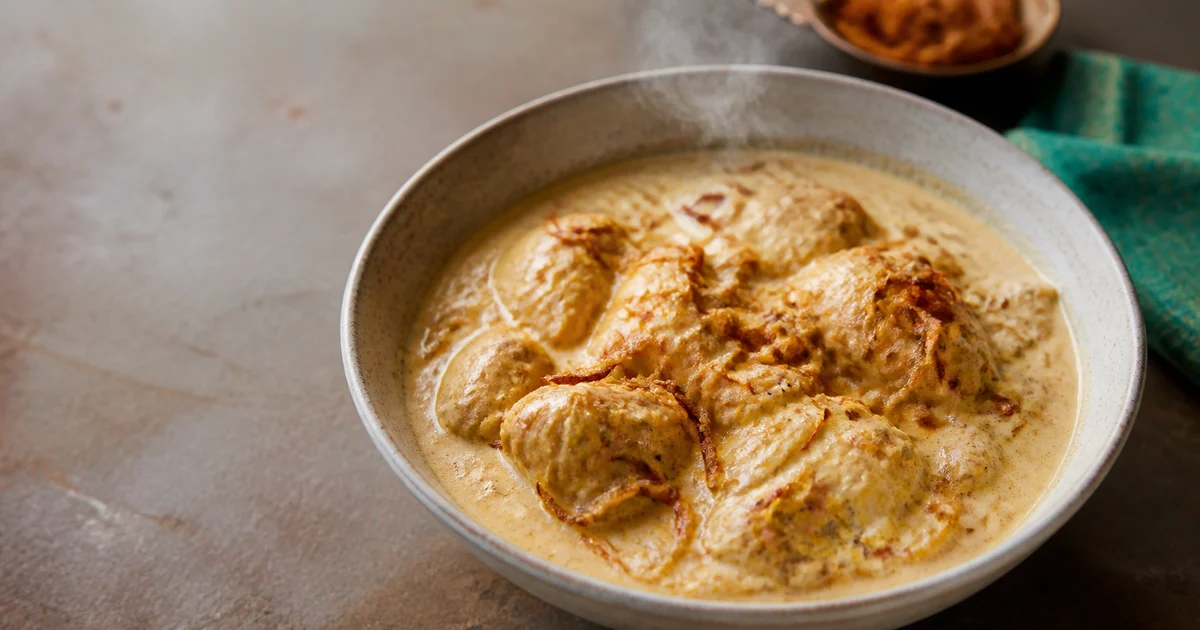
Commercial Murgir Korma Recipe
A commercial Bangladeshi chicken korma recipe for 40 plates, with pale yoghurt gravy, controlled portions and service-safe holding guidance.
- Prep
- 45 min
- Cook
- 1 hr 15 min
- Total
- 2 hr
- Yield
- about 40 plates
- Difficulty
- Medium
- Cuisine
- Bangladeshi
Method
- 1
Check and season chicken
Trim loose skin and count 80 usable curry pieces before cooking. Mix the chicken with 120 g salt and hold covered under refrigeration for 20 minutes; do not leave raw chicken at room temperature during the remaining preparation.
- 2
Prepare yoghurt mixture
Whisk the yoghurt until completely smooth and let it approach 18°C to 22°C. Mix the cashew paste with the milk in a separate bowl until no lumps remain.
- 3
Bloom whole spices
Heat the soybean oil and ghee in the stockpot to about 150°C. Add bay leaves, cinnamon, cardamom and cloves, then stir for 45 to 60 seconds until fragrant without allowing the spices to blacken.
- 4
Sweat onions without browning
Add the sliced onions and lower the pot to 120°C to 130°C. Cook for 12 to 15 minutes, stirring across the base, until the onions are translucent, collapsed and pale with no golden edges.
- 5
Cook the spice base
Add ginger paste and garlic paste, then cook for 3 to 4 minutes at medium-low heat. Stir continuously until the raw garlic smell disappears, then mix in the white pepper.
- 6
Temper the yoghurt carefully
Lower the sauce below a simmer, around 85°C to 90°C. Whisk about 1 kg of the warm onion base into the yoghurt in three additions, then return the tempered yoghurt gradually to the pot while stirring; cook for 7 to 8 minutes until smooth and lightly glossy.
- 7
Coat and cook chicken
Add the seasoned chicken and fold it through the yoghurt base without crushing the pieces. Cook uncovered for 8 to 10 minutes at 90°C to 95°C, turning the pieces twice, until their surfaces turn opaque and release some liquid.
- 8
Build the white gravy
Stir in the cashew and milk mixture, followed by 2.5 litres of hot water. Bring to a gentle 90°C to 95°C simmer, cover partially and cook for 30 to 40 minutes, stirring carefully every 8 minutes.
- 9
Check doneness and thickness
Check several large pieces near the bone with a probe thermometer; each must reach at least 74°C. Add measured hot water if the gravy is too thick, or simmer uncovered for 5 to 10 minutes if it is watery; the finished sauce should coat a ladle.
- 10
Finish and rest batch
Add the remaining salt as needed, sugar and green chillies, then simmer for 3 minutes. Turn off the heat, stir in kewra and rose water, and rest covered for 15 minutes before weighing the yield and transferring it to hot holding above 60°C.
Notes for your kitchen
This chicken korma recipe produces about 40 controlled restaurant or event portions from a 10 kg bone-in chicken batch. The finished korma has a mild, pale gravy suited to polao, wedding service, catering trays and food-cart meal boxes. It is rich without being aggressively sweet or spicy, and the method protects the yoghurt from splitting.
Why murgir korma works commercially
Murgir korma works commercially because it can be batch-cooked, portioned by piece count and held without losing its identity. Unlike a dry chicken item, its gravy protects the meat during short hot holding and makes a complete plate when served with polao. The mild flavour also suits mixed event crowds, including children and guests who avoid hot chilli.
For predictable service, order chicken by dressed weight and cut specification rather than accepting random pieces. A 10 kg batch should provide 80 serviceable curry-cut pieces, allowing two pieces for each of 40 plates. Wings, necks and tiny back fragments should not be counted as full plated pieces. Use those trimmings for staff food or stock and record them separately.
Ingredient quality that matters
Fresh chicken, low-sour yoghurt and clean-tasting ghee have the greatest effect on korma quality. Use chilled broiler chicken with firm flesh, no stale smell and limited retained water. Excess surface water weakens the gravy and makes the batch take longer to reduce.
Choose plain full-fat tok doi that is smooth and only lightly sour. Very acidic or low-fat yoghurt splits more easily and can make the gravy sharp. Bring it close to room temperature before cooking, then whisk until no lumps remain. Do not use sweetened yoghurt.
The onions must be fresh and white inside. Sprouted or damaged onions can taste bitter and darken quickly. Cashew paste should be smooth enough to pass through a ladle without visible grit. Use real kewra water sparingly because too much gives the batch a medicinal aroma. Ghee quality matters, but the full cooking fat does not need to be ghee; combining soybean oil and ghee controls richness and reduces scorching.
How to keep the gravy pale
A white korma gravy comes from controlling browning, spice colour and cooking temperature. Sweat the onions until translucent and fully soft, not golden. Keep the pan around 120°C to 130°C during this stage and stir across the bottom so that no patch catches. Even a small amount of dark onion can tint the whole batch.
Do not add holud, red chilli powder, dark garam masala or commercial curry powder. White pepper supplies mild heat without red specks. Whole cardamom, cinnamon, cloves and bay leaves provide aroma while keeping the sauce light. If the onion base begins sticking, lower the flame and add a small splash of hot water instead of pouring in more oil.
Yoghurt tempering and sauce control
Yoghurt stays smooth when its temperature rises gradually and the pot is below a hard boil. First remove some warm onion and spice base and whisk it into the yoghurt in several additions. This narrows the temperature difference. Return the tempered mixture gradually while stirring continuously, keeping the sauce at about 85°C to 90°C until the fat begins to show around the edge.
Boiling cold yoghurt directly in hot fat causes protein curds and an oily surface. If slight graininess appears, stop the boil, whisk firmly and add a little warm milk. A badly split batch cannot be made fully smooth by adding more ghee.
The gravy should finish thick enough to coat a chicken piece but loose enough to flow from a service ladle. Cashew continues thickening as the korma rests, so stop reduction slightly before the final serving consistency. Add only hot water during cooking because cold water slows the pot and can tighten the chicken.
Scaling the batch safely
Scale chicken, yoghurt, onion and salt by weight, but adjust water and aromatic flavourings more cautiously. For a half batch, use a smaller pot so the sauce remains deep enough to simmer gently. For a double batch, use two pots unless the kitchen has a wide steam-jacketed kettle or tilting pan with reliable bottom heat.
A very deep 20 kg chicken batch cooks unevenly in a narrow pot. Pieces at the bottom can break while pieces near the top remain undercooked. Divide large batches, keep the same chicken-to-yoghurt ratio and begin with about 15 percent less water than a straight multiplication suggests. Add more hot water only after the chicken releases its own liquid.
Kewra, rose water, cloves and cinnamon do not always taste balanced when doubled exactly. Start large batches with about three-quarters of the calculated aromatic quantity, taste near completion and adjust. Salt must still be weighed, divided and checked after reduction.
Holding and reheating for service
Hold finished korma at 60°C or hotter and use it within four hours for the best chicken texture. Keep the pot covered and stir gently every 20 to 30 minutes, lifting from the bottom without breaking the pieces. A bain-marie is safer than leaving the cooking pot over a direct flame, which reduces the gravy and scorches the dairy solids.
For later service, move leftovers into shallow food-grade pans rather than cooling a full stockpot. Cool from 60°C to 21°C within two hours and from 21°C to 5°C within a further four hours. Refrigerate at 5°C or colder and use within 48 hours. Reheat once to at least 74°C throughout within two hours, loosening with a measured amount of hot water or milk if necessary.
Do not mix a previously held remainder into a fresh batch. Label production time, cooling time and expected disposal time. For high-volume kitchens, Rosuii can record the batch as a production that converts raw stock into finished korma and can record any measured wastage.
Portioning and yield control
The standard event portion is two chicken pieces with 120 to 150 g of gravy beside polao. Count usable pieces before marination and again when transferring the cooked batch to service pans. Place an equal mix of breast, leg and bony pieces across the pans so early guests do not receive all the high-meat portions.
Use one fixed ladle and verify its filled weight on a digital scale. Staff should lift two pieces first and add gravy second, rather than searching through the pot with a full ladle. This protects the chicken and keeps the last ten plates from becoming gravy-only servings.
Weigh the complete finished batch after removing whole spices if practical, then record the actual yield. Connect that figure to your portion control standard. If a batch regularly misses 40 portions, check raw piece count, unmeasured tasting, evaporation and oversized ladles before changing the recipe.
Keeping cost stable
Stable korma cost depends on fixed chicken specifications, measured dairy and disciplined gravy portions. Chicken normally dominates the batch cost, while ghee, cashew and yoghurt are the important secondary drivers. Bone ratio, dressed yield, supplier consistency and seasonal dairy prices can move the cost even when the purchase weight stays unchanged.
Maintain a written purchase specification for bird size and number of cuts. Compare suppliers on usable plated pieces, not only the price per kilogram. Update recipe costing whenever the chicken specification, yoghurt brand or portion standard changes, then monitor the resulting food cost percentage.
Mistakes that waste money
The most expensive korma mistakes are split yoghurt, dark onions, broken chicken and uncontrolled service ladles. Split sauce is often hidden with extra ghee or cashew, raising cost without properly repairing texture. Dark onions force the kitchen to accept a brown gravy or restart the base.
- Overcrowding: Chicken steams unevenly and staff stir too aggressively, breaking pieces.
- Hard boiling: Dairy separates, breast meat dries out and water evaporates faster than planned.
- Unmeasured dilution: Adding water by eye changes both flavour and plate yield.
- Early floral flavouring: Kewra and rose aromas disappear during prolonged boiling, encouraging repeated additions.
- Mixed piece sizes: Small pieces overcook before large bone-in pieces reach 74°C.
Serving korma with polao
For event service, keep korma gravy moderate so it moistens polao without flooding the plate. Taste the combination together before dispatch because sweet polao can make the korma seem sweeter than it tastes alone. If the polao contains raisins or substantial sugar, keep the korma sugar at the lower end and rely on onion, dairy and cardamom for roundness.
Transport in covered insulated food pans, with chicken distributed under the gravy to reduce drying. Keep green chillies visible but limited, and remove loose cinnamon or bay leaves from plated portions. Reserve a small amount of hot adjusted gravy for correcting pans that thicken during service.
What drives the cost
Bone-in chicken is the main cost driver, followed by ghee, cashew and full-fat yoghurt. Cost moves with dressed chicken yield, bone ratio, supplier consistency and seasonal changes in dairy and nut prices.
Ingredient rates move with the market, so this describes what drives the cost rather than quoting a figure.
Questions from kitchens
Can this chicken korma recipe be doubled to 80 plates?
How long can murgir korma stay in hot holding?
Can cashew paste be omitted?
What is the refrigerated shelf life?
What should I do if the batch gives fewer than 40 portions?
Related recipes
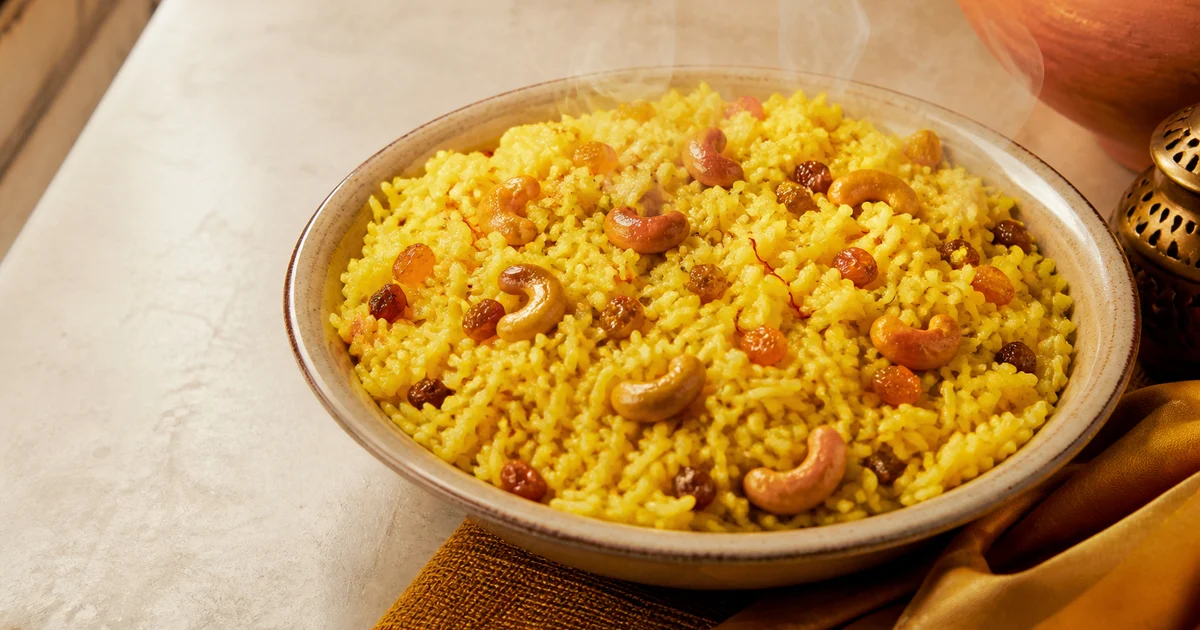
Commercial Basanti Polao Recipe
A 2 kg rice batch of golden, mildly sweet Basanti Polao for about 40 controlled portions, with practical cooking, holding and reheating guidance.
- Yield:
- about 40 plates
- Total:
- 1 hr 15 min
- Difficulty:
- Medium
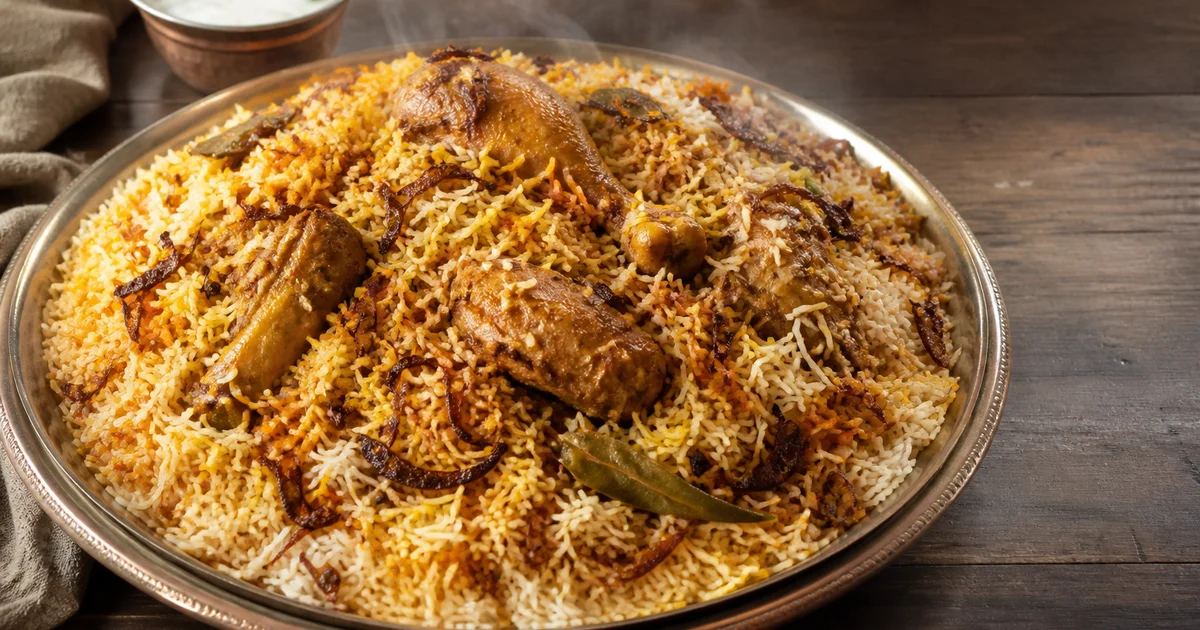
Commercial Chicken Biryani Recipe
A commercial pakki chicken biryani recipe yielding about 40 controlled portions, with guidance on par-cooking rice, dum, holding and scaling.
- Yield:
- about 40 plates
- Total:
- 4 hr 35 min
- Difficulty:
- Medium
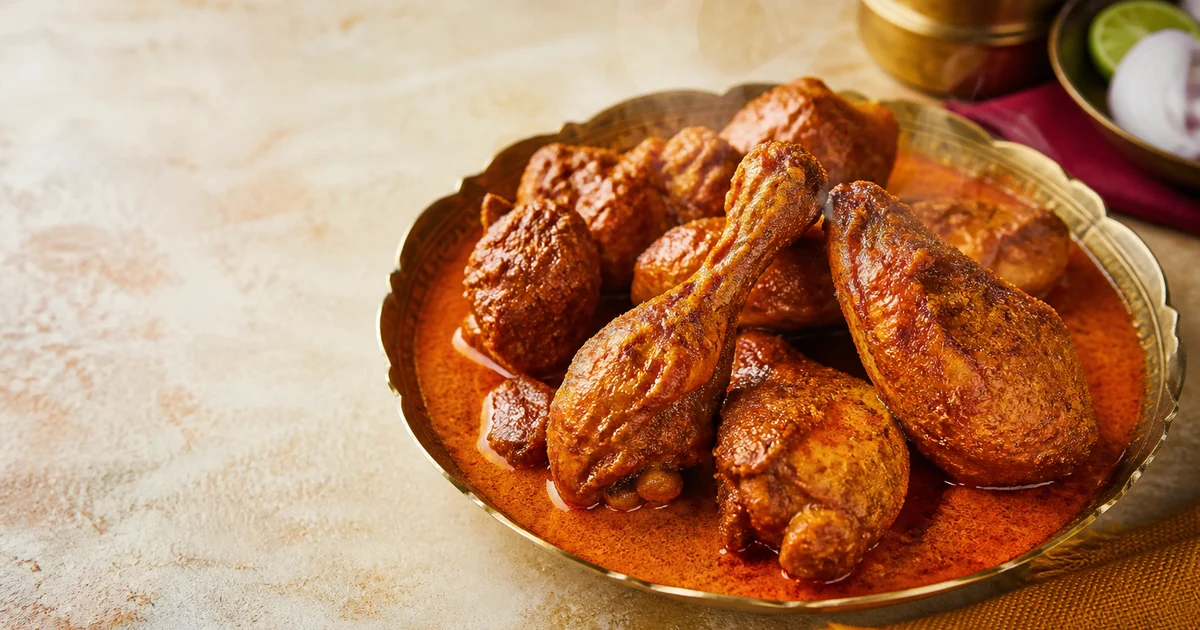
Commercial Bangladeshi Chicken Roast
A 40-portion biye-bari style chicken roast with first-fried chicken, controlled sweet-savoury gravy, catering yield guidance and service holding.
- Yield:
- about 40 plates
- Total:
- 2 hr 15 min
- Difficulty:
- Medium
Run your restaurant on Rosuii
POS, menu, inventory, payroll and more — built for Bangladeshi restaurants.
Start free