
Restaurant Recipes
Chinese Fried Rice Recipe
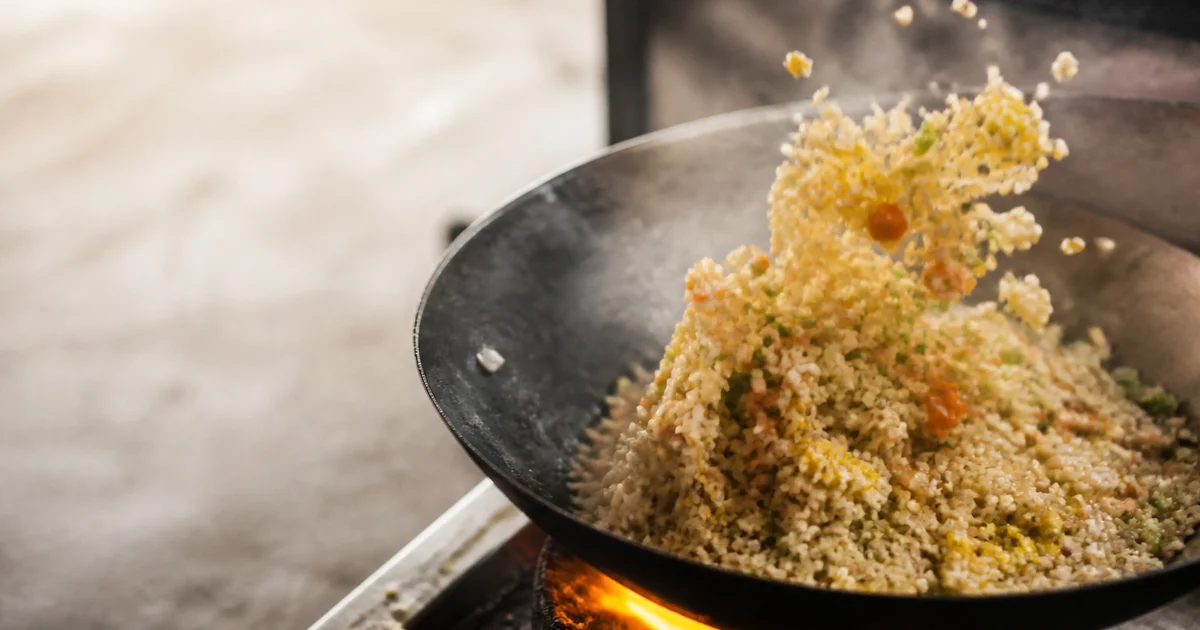
A commercial Chinese fried rice recipe for about 40 plates, using properly chilled rice, controlled wok batches and pre-cooked components for fast service.
- Prep
- 30 min
- Cook
- 45 min
- Total
- 1 hr 15 min
- Yield
- about 40 plates
- Difficulty
- Medium
- Cuisine
- Chinese
Method
- 1
Cook and chill rice
Cook the washed rice with 5.2 litres of water at 95 to 100°C until the water is absorbed and the grains are just tender, about 14 to 18 minutes after simmering begins. Rest covered for 15 minutes, then spread on shallow trays no deeper than 5 cm. Cool rapidly to 5°C or below and refrigerate for 12 to 24 hours.
- 2
Marinate diced chicken
Mix the chicken with 80 ml soy sauce, cornflour and 20 g salt, then refrigerate for 20 minutes. The coating should be thin and even, with no dry cornflour visible. Keep the marinated chicken at 5°C or below until cooking.
- 3
Blanch and drain vegetables
Blanch the carrots and beans in boiling water for 60 to 90 seconds, adding the peas for the final 30 seconds. Cool immediately in clean chilled water, then drain for at least 10 minutes. The vegetables should remain brightly coloured, firm and free of surface water.
- 4
Cook chicken until safe
Heat the wok to about 200 to 220°C, add approximately 250 ml oil in controlled additions and cook the chicken in three or four small batches. Stir-fry each batch for 3 to 4 minutes until lightly coloured and at least 74°C at the centre. Transfer to a clean shallow tray and cool promptly if not going directly into service.
- 5
Soft-scramble the eggs
Lower the wok surface to about 180 to 190°C and use approximately 150 ml oil across several batches. Cook the beaten egg for 45 to 60 seconds, folding until softly set but still moist. Break it into small pieces and remove before it browns.
- 6
Set up wok batches
Divide the cold rice, cooked chicken, vegetables and egg into eight approximately equal production sets. Reserve the remaining oil, soy sauce, aromatics and dry seasonings for measured additions. Each complete wok load should remain close to 1.8 to 2 kg.
- 7
Fry aromatics and rice
Heat the clean wok to 210 to 230°C until a faint haze appears, then add about 50 ml oil for one batch. Fry one-eighth of the garlic and spring onion whites for 10 to 15 seconds, then add one rice portion. Toss and press apart clumps for 90 seconds to 2 minutes until the rice is steaming hot and individual grains move freely.
- 8
Add components and seasoning
Add one portion each of chicken, vegetables and egg, then toss for 60 to 90 seconds. Pour one-eighth of the remaining soy sauce around the hot wok wall and season with the remaining salt, white pepper and optional monosodium glutamate. Continue tossing for 30 to 45 seconds until the colour is even and there is no liquid at the wok base.
- 9
Finish and portion immediately
Add one-eighth of the sesame oil and spring onion greens, then toss for 15 to 20 seconds. Check that the finished batch reaches at least 74°C if chilled components were used. Portion approximately 360 g per plate or transfer immediately to hot holding at 60°C or above.
- 10
Cool leftovers safely
Spread any approved leftover fried rice in trays no deeper than 5 cm instead of leaving it in the wok or a deep pan. Cool from 60°C to 21°C within 2 hours and to 5°C within a further 4 hours. Label, refrigerate and reheat only once to at least 74°C.
Notes for your kitchen
Why this dish suits commercial service
Chinese fried rice works commercially because most components can be prepared before opening and finished to order in a few minutes. Properly chilled rice, cooked chicken, blanched vegetables and beaten egg can be kept ready in separate covered containers. The service cook then handles measured wok kits instead of cutting, cooking and seasoning every component from raw.
The dish also accepts controlled variations without changing the core production system. Chicken can be omitted for egg fried rice, or replaced with cooked prawns or beef prepared under a separate specification. Keep the rice weight and wok load consistent so that every variation cooks at the same speed.
Ingredient quality that affects the result
The rice, soy sauce and condition of the cooking oil matter more than expensive garnish. Choose an aged, long-grain rice that remains separate after cooking. Avoid strongly aromatic chinigura for this version because its short grains and fragrance produce a different texture, while very starchy broken rice clumps under wok pressure.
Test every new rice brand before committing to a large production batch. Water absorption changes by variety, age and washing method. The stated water quantity is a starting specification, but a new brand may require an adjustment of 100 to 200 ml per kilogram of dry rice.
Use light soy sauce with a clean savoury flavour rather than relying on dark soy sauce for colour. Too much dark sauce makes the rice wet, salty and nearly black. Boneless chicken thigh stays juicier during reheating than breast, although well-trimmed breast works when cooking time is tightly controlled. Use neutral fresh soybean oil and replace any oil that smells burnt or carries flavours from fish frying.
Why day-old rice fries better
Day-old rice works because refrigeration dries and firms the grain surface, allowing it to separate in the wok. Fresh hot rice releases steam, absorbs oil unevenly and turns soft when soy sauce is added. Day-old does not mean rice left at room temperature overnight; it means rice cooled rapidly, covered and refrigerated at 5°C or below.
Cook the grains until just tender, not soft. Spread them on shallow trays no deeper than 5 cm so heat can escape quickly. Cool from 60°C to 21°C within 2 hours and from 21°C to 5°C within a further 4 hours. Break up large masses only after the rice is cold, using gloved hands or a clean rice paddle without crushing the grains.
Wok heat and ingredient order
A hot wok and a restricted batch size are the main controls against greasy, steamed fried rice. A 45 to 50 cm carbon-steel wok over a high-output burner should carry no more than about 1.8 to 2 kg of total food per batch. A weaker burner may require a smaller load even when the wok is physically large.
Heat the empty wok until a faint haze appears, add oil and rotate it over the cooking surface. The oil should flow freely but must not smoke heavily. Aromatics go in briefly, followed by cold rice, which needs direct contact with the metal before moist seasonings are introduced. Press gently to separate clumps, then toss rather than continuously stirring.
Cooked chicken and drained vegetables enter only after the rice is hot. Soy sauce should be poured around the hot inner wall instead of directly onto one patch of rice, helping it spread and evaporate. Egg, pepper and optional monosodium glutamate follow near the end. Sesame oil and spring onion greens are finishing ingredients because prolonged high heat weakens their aroma.
Scaling without losing wok performance
Scale the preparation quantities, but do not scale the amount placed in one wok. This recipe is designed as eight controlled wok loads. For an 80-plate production, double the prepared components and cook approximately sixteen loads rather than filling the wok twice as deeply.
When scaling down, retain the same ratio of rice, protein, vegetables, oil and seasoning. Weigh awkward ingredients such as beaten egg rather than estimating half an egg. Run one test batch whenever the rice variety, wok, burner pressure or cook changes, then record the approved load and cooking time.
A second wok station increases output more reliably than an oversized batch. If one cook must handle high-volume service, fry completed loads continuously and transfer them to hot holding, but keep the holding window short to protect texture.
Preparing for a fast counter
A fast counter depends on pre-portioned components placed in the exact order the cook uses them. Divide cold rice into covered batch tubs and place cooked chicken, drained vegetables, egg, aromatics and measured seasoning within one reach of the burner. Keep raw and cooked chicken containers physically separate, with separate utensils.
Blanched vegetables must be thoroughly drained before storage because surface water cools the wok. Cook chicken and egg in advance during prep, cool them safely and hold at 5°C or below. Do not combine everything into one tub hours before service, as salt draws out moisture and makes accurate substitution or wastage tracking difficult.
Holding and reheating for service
Fried rice is best served immediately, but it may be hot-held at 60°C or above for a short service period. Use shallow covered hotel pans and add fresh loads rather than mixing new rice into an old pan. Texture is best within 60 to 90 minutes; establish a maximum service window of 2 hours for quality even when safe holding temperature is maintained.
Do not leave cooked rice in the temperature danger zone because spores of Bacillus cereus can survive cooking and grow during slow cooling. If finished rice will be reused, cool it rapidly in shallow trays and refrigerate at 5°C or below. Reheat only once to a core temperature of at least 74°C, preferably in a hot wok with a small amount of oil. Discard rice that has been held without reliable time and temperature records.
Portioning and yield control
A standard main-course portion for this batch is about 360 g of finished fried rice. The expected finished yield is approximately 14.4 kg, allowing about 40 plates. Actual yield moves with rice absorption, chicken trimming, vegetable drainage and food left in trays or the wok.
Weigh the first five plates of every service and check the average against the specification. A digital scale is more reliable than a bowl or ladle, although a verified portion scoop can be used during a rush. Follow a written portion control system and record the final batch yield instead of assuming every production gives exactly the same weight.
Mistakes that cost money
The most expensive mistakes are oversized wok loads, wet rice, unmeasured sauce and poor cooling. An overloaded wok loses heat and steams the ingredients, forcing the cook to add more oil and cook longer. Wet vegetables create the same problem, while excess soy sauce can make an entire batch too salty to sell.
- Crushing rice: Aggressive stirring breaks grains and produces a sticky surface.
- Using fresh hot rice: Steam prevents frying and creates clumps.
- Overcooking chicken: Small pieces become dry during final wok heating.
- Mixing old and new stock: This hides holding time and weakens stock rotation.
- Guessing portions: A small over-serve across 40 plates removes one or more sellable portions.
Keeping food cost stable
Stable cost comes from fixed batch weights, approved suppliers and recorded production yield. Chicken and eggs usually drive more cost movement than rice or vegetables, while oil loss, trimming and accidental over-portioning quietly reduce margin. Compare supplier pack quality as well as purchase rate because excess chicken trimming or watery vegetables lower usable yield.
Maintain stock specifications for rice grade, chicken cut and soy sauce pack size as part of inventory management. Complete regular recipe costing with current purchase records rather than an old assumed rate. Rosuii can record raw materials through productions as finished prep batches and capture wastage, item sales and profit-and-loss information without treating each sale as automatic recipe deduction.
What drives the cost
Chicken and eggs are the main variable-cost ingredients, followed by rice and cooking oil. Cost moves with chicken trimming yield, egg market rates, rice grade, oil absorption and whether portions are weighed consistently.
Ingredient rates move with the market, so this describes what drives the cost rather than quoting a figure.
Questions from kitchens
Can this Chinese fried rice recipe be doubled for 80 plates?
How long can fried rice stay in hot holding?
Can chicken be replaced with prawns or beef?
How long can the chilled rice be stored before frying?
What should the finished batch yield?
Related recipes
Commercial Chicken Corn Soup Recipe
A commercial chicken corn soup recipe yielding 12 litres, with controlled stock, cornflour thickening, safe hot holding and 250 ml portions.
- Yield:
- about 48 bowls of 250 ml
- Total:
- 2 hr 35 min
- Difficulty:
- Medium
Commercial Chicken Fried Rice Recipe
A commercial chicken fried rice recipe for about 40 plates, with controlled wok batches, safe pre-cooked chicken, day-old rice and fixed portions.
- Yield:
- about 40 plates
- Total:
- 1 hr 15 min
- Difficulty:
- Medium
Restaurant Chicken Soup Recipe for 40 Portions
A commercial chicken soup recipe producing about 10 litres, with daily chicken stock, controlled cornflour thickening, egg ribbons and safe hot holding.
- Yield:
- about 40 plates
- Total:
- 2 hr 30 min
- Difficulty:
- Medium
Run your restaurant on Rosuii
POS, menu, inventory, payroll and more — built for Bangladeshi restaurants.
Start free